The First General Assembly of the United Nations
1946 · London, United Kingdom
The first General Assembly of the United Nations opens in London.
December 15, 1946
The first meeting of the General Assembly of the United Nations took place, marking the establishment of the UN's central forum for member states to discuss international issues.
London, United Kingdom | United Nations
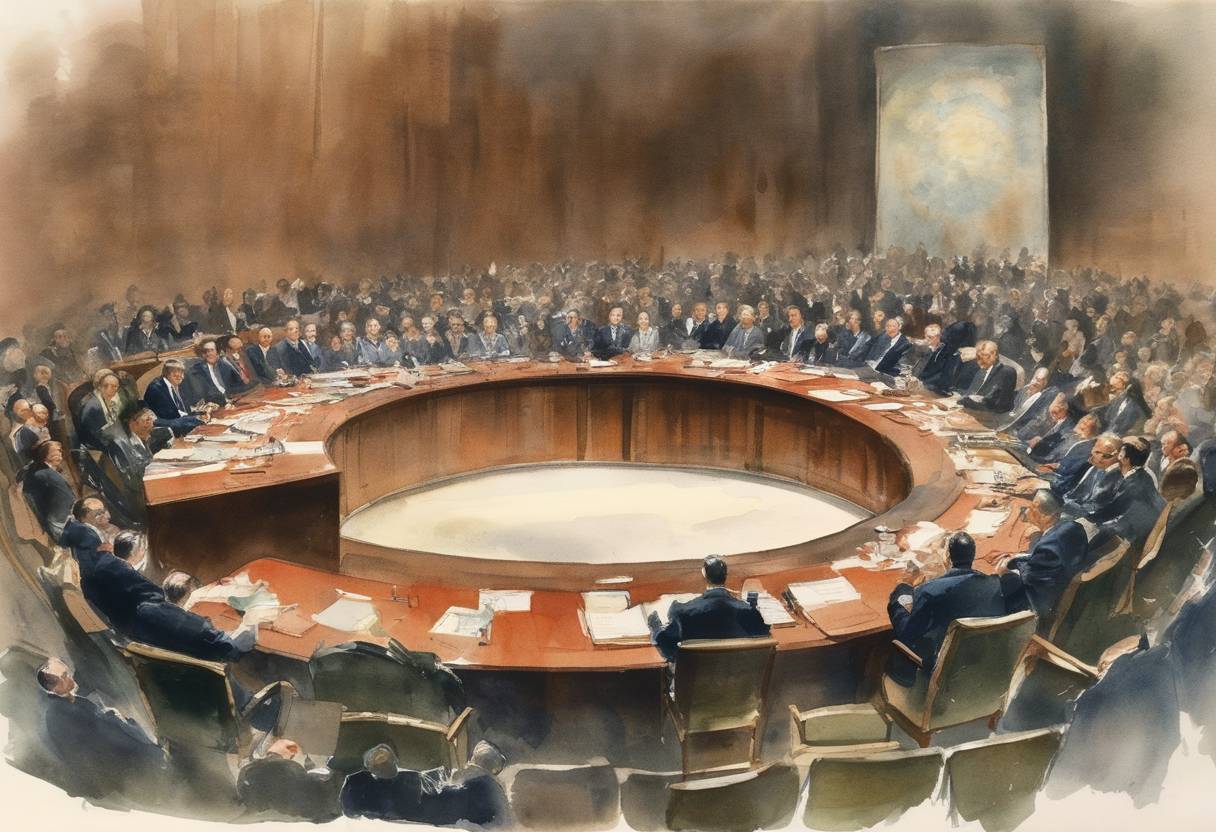
On January 10, 1946, the first session of the United Nations General Assembly convened at Central Hall in Westminster, London. This significant event marked the establishment of the UN’s central deliberative forum, intended to enable member states to discuss and address international issues of common concern.
The United Nations was founded on October 24, 1945, following the end of World War II, with the aim of preventing future conflicts and fostering international cooperation. The UN Charter, signed in San Francisco on June 26, 1945, outlined the structure and functions of the United Nations, including the General Assembly.
The first session established operational norms for the Assembly and started crafting the framework for its future role in issues like human rights, security, and economic development. It was a stepping stone towards the United Nations becoming a central arena for fostering diplomacy and resolving international discord.
Since its inception, the General Assembly has been a vital forum for international discourse, addressing a wide array of issues over the decades, from decolonization to environmental sustainability. It has evolved to include almost every nation, shaping it into a pivotal platform for multilateral dialogue and cooperation on a global scale.
Source: www.un.org