Ferdinand Magellan Reaches the Philippines - March 16, 1521
1521 · , Philippines
Ferdinand Magellan reaches the Philippines during his expedition to circumnavigate the globe, marking the first European contact with the islands.
April 7, 1521
Ferdinand Magellan arrives at Cebu in the Philippines during his circumnavigation of the globe.
Cebu, Philippines | Spanish Empire
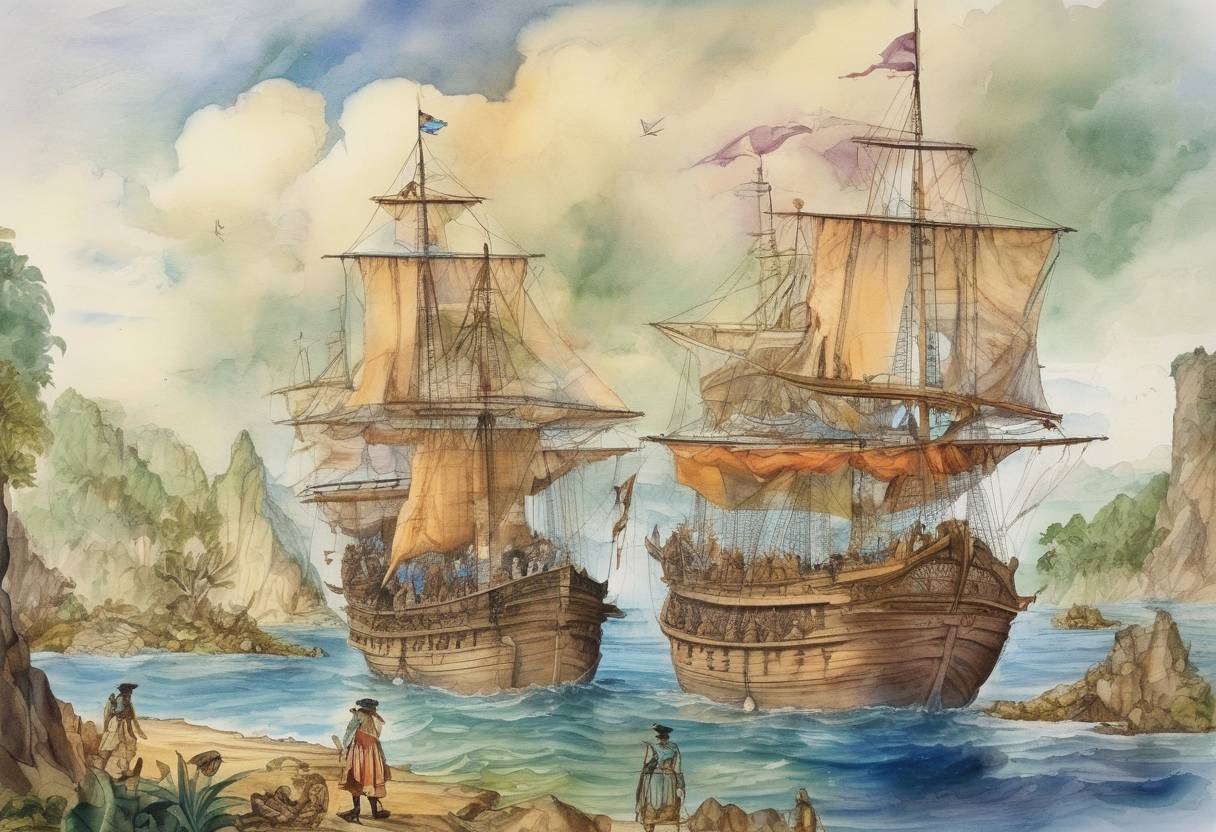
On April 7, 1521, the Portuguese explorer Ferdinand Magellan, leading a Spanish expedition, arrived at the island of Cebu in the Philippines. This event was a significant milestone in Magellan’s ambitious attempt to circumnavigate the globe, a journey that would have profound implications for global exploration and trade.
Ferdinand Magellan set sail from Spain on September 20, 1519, with a fleet of five ships known as the Armada de Molucca. His mission, sanctioned by King Charles I of Spain, was to find a westward route to the Spice Islands (the Moluccas) in present-day Indonesia. This was part of Spain’s efforts to establish a direct trade route to the lucrative spice markets, bypassing the Portuguese-controlled routes around Africa.
Crossing the Atlantic and South America: Magellan’s fleet crossed the Atlantic Ocean and navigated the treacherous straits at the southern tip of South America, later named the Strait of Magellan. This passage marked the first European navigation from the Atlantic to the Pacific Ocean.
Pacific Crossing: After entering the Pacific Ocean, Magellan’s fleet endured a grueling three-month journey across the vast and uncharted waters, suffering from scurvy and starvation.
Arrival in the Philippines: On March 16, 1521, Magellan’s expedition reached the island of Homonhon in the Philippines. This marked the first European contact with the archipelago.
Upon arriving at Cebu on April 7, 1521, Magellan and his crew were initially welcomed by the local ruler, Rajah Humabon. The arrival was marked by a series of diplomatic exchanges and the establishment of friendly relations. Magellan’s crew engaged in trade with the locals and introduced Christianity to the island.
Conversion to Christianity: Magellan played a pivotal role in converting Rajah Humabon, his wife, and hundreds of his followers to Christianity. This was symbolized by the mass baptism conducted by the expedition’s chaplain.
Strategic Alliances: Magellan sought to establish strategic alliances with local leaders, which he believed would aid in securing Spanish influence in the region.
Battle of Mactan: The friendly relations with Cebu were short-lived. On April 27, 1521, Magellan was killed in the Battle of Mactan, a conflict with local chieftain Lapu-Lapu. This marked a significant setback for the expedition.
Continuation of the Expedition: Despite Magellan’s death, the expedition continued under the command of Juan Sebastián Elcano. In 1522, Elcano successfully completed the circumnavigation, returning to Spain with the remaining ship, the Victoria.
Historical Significance: Magellan’s expedition was the first to circumnavigate the globe, proving the Earth’s roundness and the vastness of the Pacific Ocean. It paved the way for future global exploration and the eventual Spanish colonization of the Philippines.
Magellan’s arrival at Cebu and the subsequent events highlight the complex interactions between European explorers and indigenous peoples, setting the stage for the age of global exploration and colonial expansion.
Source: en.wikipedia.org