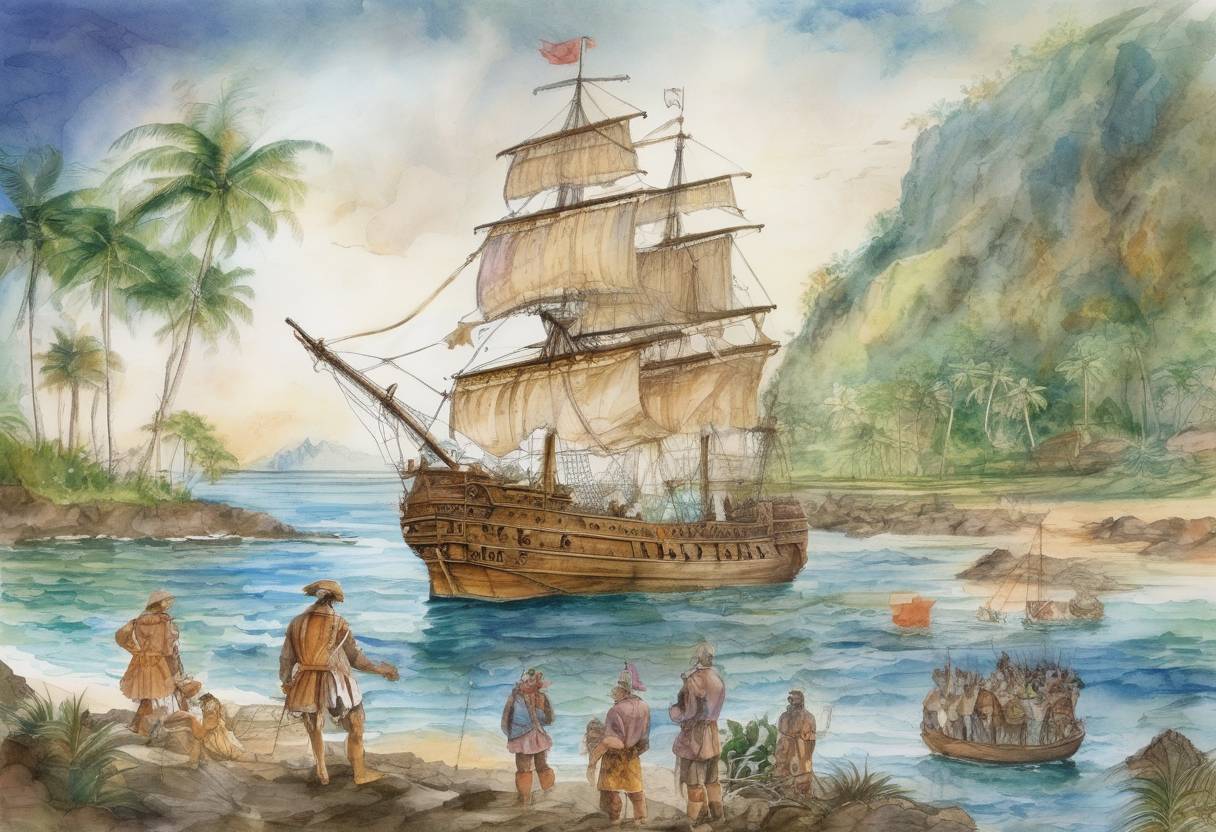
Ferdinand Magellan Arrives at Guam - March 6, 1521
On March 6, 1521, the Portuguese explorer Ferdinand Magellan, leading a Spanish expedition, arrived at the island of Guam. This event was a significant milestone in his historic circumnavigation of the globe, marking the first European contact with the island.
Background
Ferdinand Magellan set sail from Spain on September 20, 1519, with a fleet of five ships, known as the Armada de Molucca. His mission, commissioned by King Charles I of Spain, was to find a westward route to the Spice Islands (the Moluccas) in present-day Indonesia. This journey was part of the broader European Age of Exploration, driven by the desire for new trade routes and the acquisition of valuable spices.
Journey to Guam
After navigating the treacherous straits at the southern tip of South America, now known as the Strait of Magellan, the expedition entered the Pacific Ocean in November 1520. The crossing of the Pacific was arduous, with the fleet suffering from scurvy and starvation due to the lack of fresh food and water.
Arrival at Guam
Upon reaching Guam on March 6, 1521, Magellan and his crew were greeted by the indigenous Chamorro people. The island was part of the Mariana Islands, located in the western Pacific Ocean. The Chamorros approached the ships in canoes, offering fruits and other provisions, which were desperately needed by the weary sailors.
However, the initial encounter was marred by misunderstandings and cultural differences. The Chamorros, unfamiliar with European customs, took items from the ships, leading Magellan to label the islands as “Islas de los Ladrones” or “Islands of Thieves.” Despite this rocky start, the stop at Guam provided essential relief for the expedition, allowing the crew to replenish their supplies.
Significance and Aftermath
Magellan’s arrival at Guam was a crucial step in his circumnavigation, demonstrating the vastness of the Pacific Ocean and the challenges of long-distance sea travel. The expedition continued westward, eventually reaching the Philippines, where Magellan met his demise in the Battle of Mactan on April 27, 1521.
Despite Magellan’s death, the expedition continued under the command of Juan Sebastián Elcano. The journey culminated in the return to Spain on September 6, 1522, with only one ship, the Victoria, and 18 of the original 270 crew members completing the first circumnavigation of the Earth.
This monumental voyage provided valuable information about global geography and paved the way for future exploration and trade routes, significantly impacting European navigation and colonial ambitions.