Iraq's First Parliamentary Election Post-U.S. Invasion: December 15, 2005
2005 · Baghdad, Iraq
Iraq held its first parliamentary election since the U.S.-led invasion in 2003, marking a significant step in the country's political transition.
June 28, 2004
The United States formally transferred sovereignty to the Iraqi interim government, marking the end of the Coalition Provisional Authority's administration in Iraq.
Baghdad, Iraq | Coalition Provisional Authority
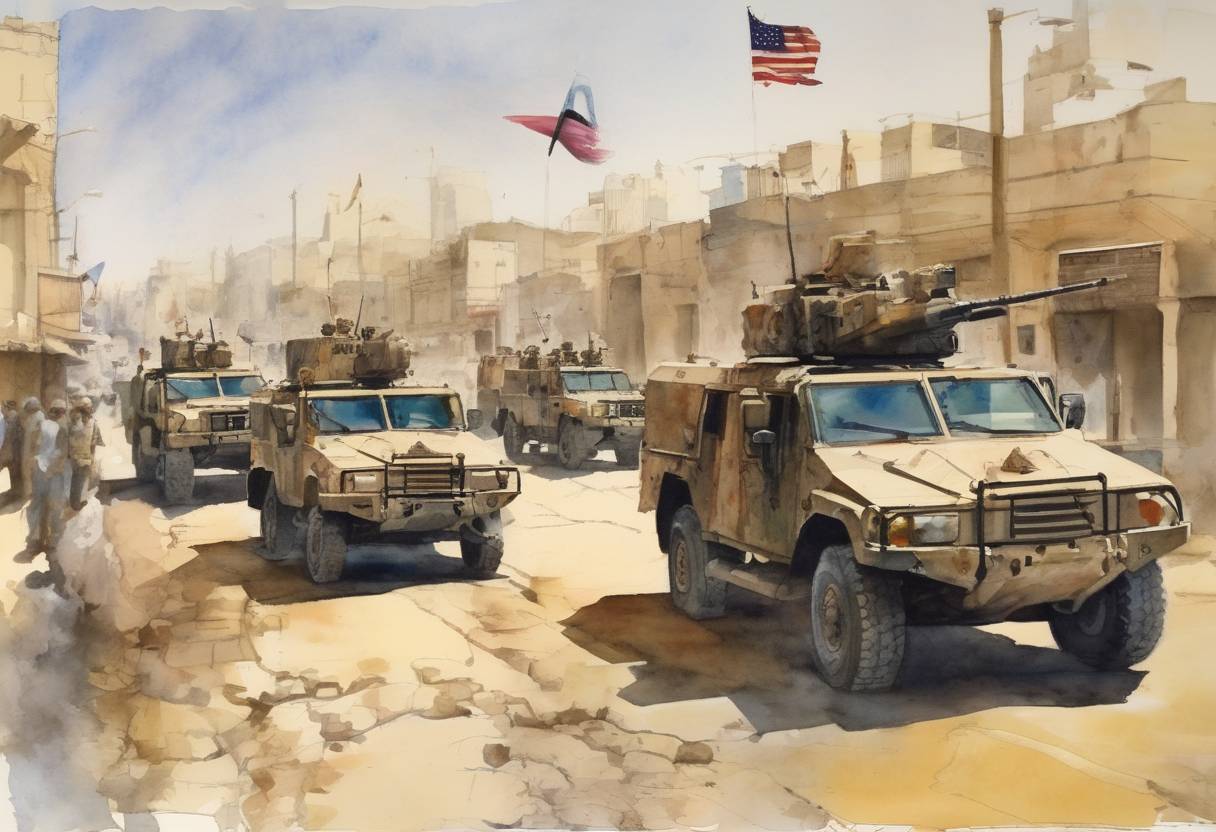
On June 28, 2004, a significant milestone in the history of Iraq and U.S. foreign policy occurred when the United States formally transferred sovereignty to the Iraqi interim government. This event marked the end of the Coalition Provisional Authority’s (CPA) administration in Iraq, which had been established following the U.S.-led invasion in 2003.
Invasion of Iraq (2003): The U.S. and coalition forces invaded Iraq in March 2003, leading to the toppling of Saddam Hussein’s regime. The invasion was justified by the U.S. on the grounds of eliminating weapons of mass destruction (WMDs) and ending Hussein’s support for terrorism, although no WMDs were found.
Establishment of the CPA: Following the invasion, the CPA was established as a transitional government to manage Iraq’s reconstruction and political transition. Led by U.S. diplomat Paul Bremer, the CPA was responsible for administering Iraq and overseeing the rebuilding of its political and economic systems.
Date and Process: The transfer of sovereignty was originally scheduled for June 30, 2004, but was moved up to June 28 to preempt potential insurgent attacks. The handover ceremony was conducted in a low-key manner to ensure security, with Bremer handing over a letter to Iraqi officials signifying the transfer.
Iraqi Interim Government: The interim government, led by Prime Minister Iyad Allawi, was tasked with governing Iraq until elections could be held. This government was composed of various Iraqi political figures and was intended to represent a broad spectrum of Iraqi society.
End of CPA: The dissolution of the CPA marked the end of direct U.S. administration in Iraq, transitioning authority to Iraqis themselves. This was a crucial step in Iraq’s path towards self-governance and democratic elections.
Challenges Ahead: Despite the transfer, Iraq faced significant challenges, including ongoing violence, political instability, and the task of rebuilding its infrastructure and institutions. Insurgent attacks and sectarian violence continued to plague the country.
Elections and Political Transition: The interim government was responsible for preparing the country for democratic elections, which were held in January 2005. These elections were a pivotal moment in Iraq’s political transition, leading to the formation of a permanent government.
The transfer of sovereignty was a critical juncture in the Iraq War and U.S. foreign policy. It highlighted the complexities of nation-building and the challenges of establishing democracy in a post-conflict environment. The event also underscored the ongoing debates about the U.S.’s role in Iraq and the broader Middle East.
In summary, the transfer of sovereignty on June 28, 2004, was a key moment in Iraq’s modern history, symbolizing a shift from foreign administration to Iraqi self-governance, albeit with significant hurdles still to overcome.
Source: www.britannica.com