The Polish November Uprising of 1830
Background
The November Uprising, also known as the Cadet Revolution, was a pivotal moment in Polish history. It began on November 29, 1830, in Warsaw, then part of the Congress Kingdom of Poland, which was under the control of the Russian Empire. The uprising was fueled by a growing sense of nationalism among Poles and dissatisfaction with Russian rule, which was seen as oppressive and dismissive of Polish autonomy and cultural identity.
Key Events Leading Up to the Uprising
Congress of Vienna (1815): After the Napoleonic Wars, the Congress of Vienna established the Congress Kingdom of Poland, a constitutional monarchy in personal union with the Russian Empire. However, the autonomy promised was largely ignored by the Russian authorities.
Russian Policies: Tsar Nicholas I’s policies were increasingly autocratic, with censorship and the suppression of Polish political freedoms. The Polish army, though maintained, was under Russian command, and the Polish constitution was frequently violated.
Economic Hardships and Political Discontent: Economic difficulties and political repression led to widespread discontent among various social classes in Poland, including the nobility, the intelligentsia, and the military.
The Uprising
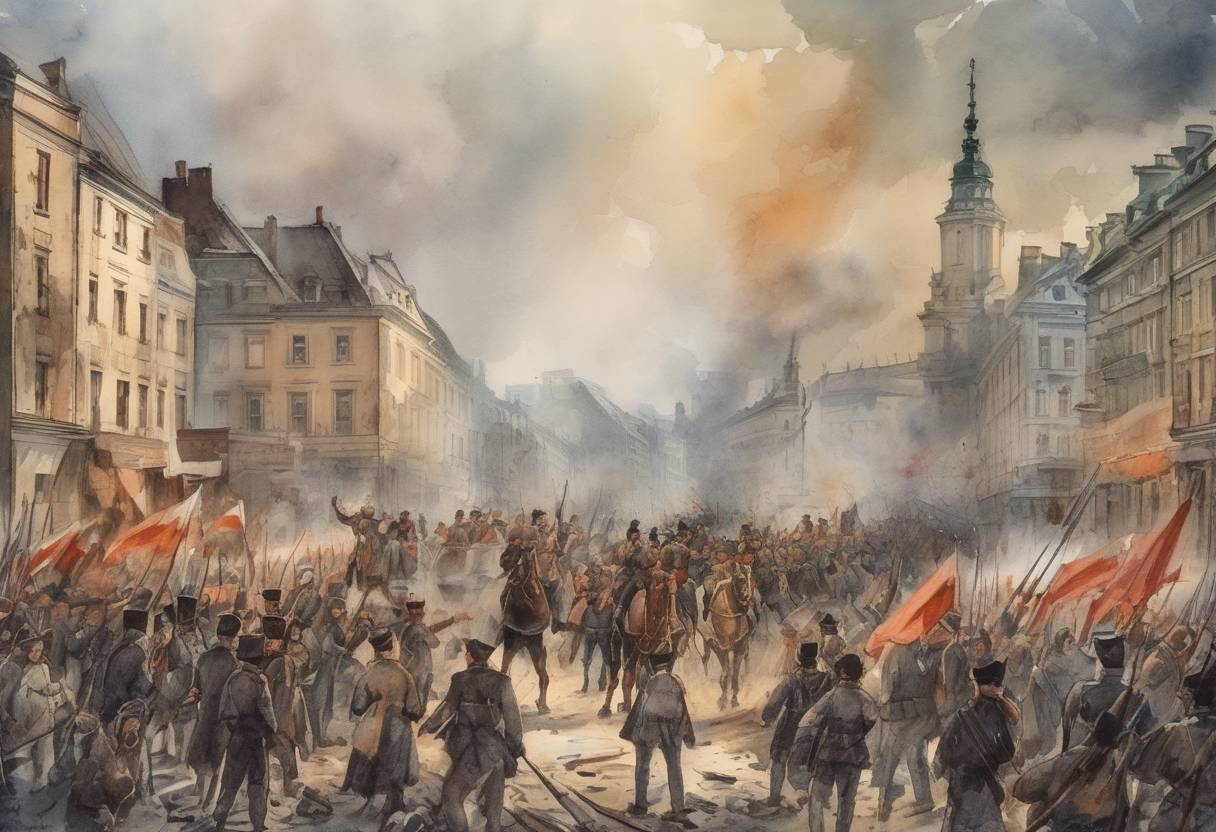
November 29, 1830: The uprising began with a group of young Polish officers from the Warsaw Military Academy, led by Piotr Wysocki. They initiated the revolt by attacking the Belweder Palace, the residence of the Russian-appointed Grand Duke Constantine Pavlovich.
Spread of the Insurrection: The initial success in Warsaw inspired widespread support across the Kingdom of Poland and parts of Lithuania, Belarus, and Ukraine. The Polish Sejm (parliament) declared the deposition of Tsar Nicholas I as King of Poland in January 1831.
Military Engagements: The Polish forces, though initially successful in several battles, were ultimately outmatched by the larger and better-equipped Russian army. Key battles included the Battle of Stoczek, the Battle of Olszynka Grochowska, and the Battle of Ostrołęka.
Aftermath and Consequences
Suppression of the Uprising: By October 1831, the Russian forces had crushed the uprising. The fall of Warsaw in September marked the end of significant organized resistance.
Repercussions: In the aftermath, the Russian Empire imposed harsh reprisals. The Polish constitution was abolished, the Polish army disbanded, and the Kingdom of Poland was fully integrated into the Russian Empire. Many Polish leaders and intellectuals were exiled or imprisoned.
Cultural Impact: Despite its failure, the uprising had a lasting impact on Polish national consciousness. It inspired future generations to continue the struggle for independence and contributed to the development of Polish Romanticism in literature and arts.
Broader Historical Significance
The November Uprising was part of a series of 19th-century nationalistic movements across Europe, reflecting the growing desire for self-determination and resistance against imperial domination. It highlighted the tensions between the Polish desire for independence and the geopolitical interests of the Russian Empire, setting the stage for future conflicts and uprisings in the region.