Insulin's First Use in Treating Diabetes: January 11, 1922
1922 · Toronto, Canada
Insulin was first used to treat diabetes in a human patient.
July 27, 1921
Researchers at the University of Toronto, led by Frederick Banting and Charles Best, successfully isolated insulin, leading to a breakthrough in diabetes treatment.
Toronto, Canada | University of Toronto
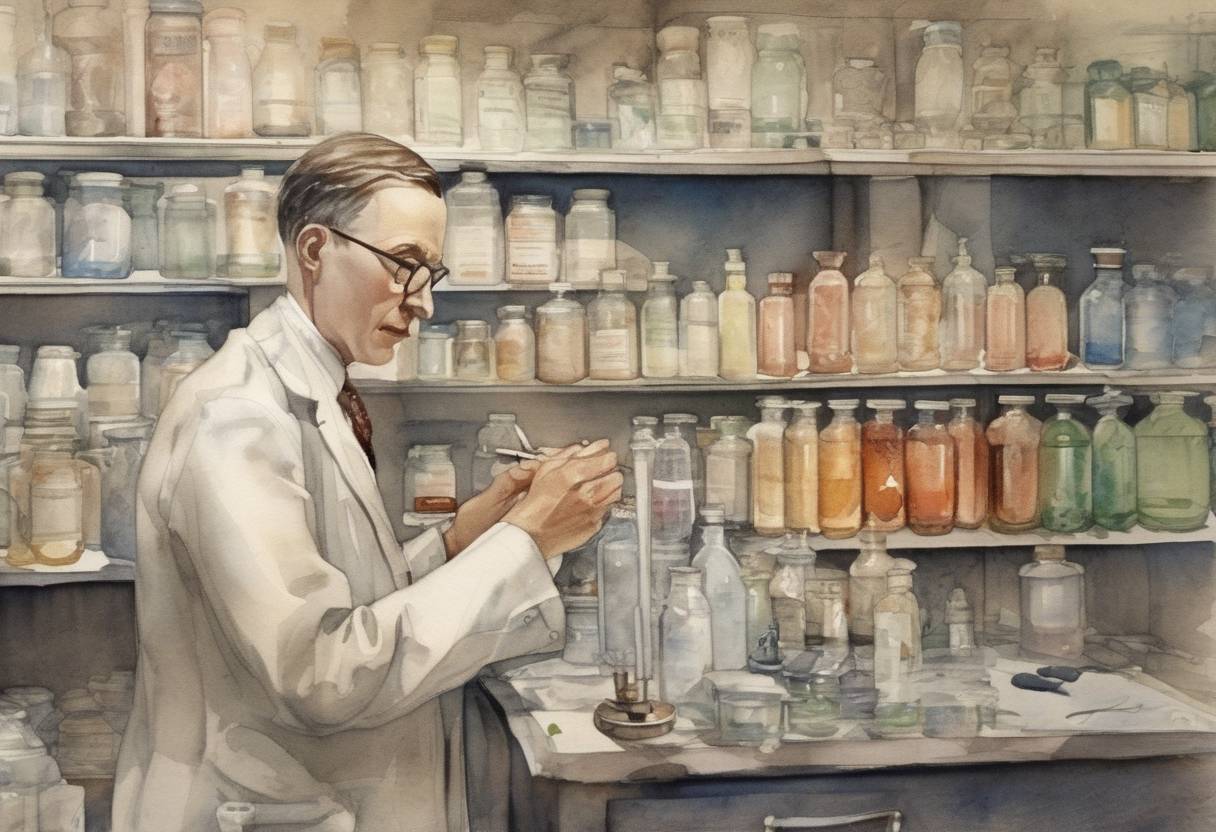
On July 27, 1921, a pivotal moment in medical history occurred when researchers at the University of Toronto, led by Frederick Banting and Charles Best, successfully isolated insulin. This groundbreaking discovery marked a significant advancement in the treatment of diabetes, a condition that had previously been a death sentence for many.
Before the discovery of insulin, diabetes mellitus was a poorly understood disease with limited treatment options. Patients often faced severe symptoms and a drastically reduced life expectancy. The primary treatment involved a strict diet that only slightly prolonged life, but did not prevent the eventual fatal outcome.
The team was supported by J.J.R. Macleod, a professor of physiology at the University of Toronto, who provided the laboratory space and resources necessary for their research. Later, James Collip, a biochemist, joined the team to help refine the insulin extract.
Banting and Best conducted their experiments on dogs, surgically removing the pancreas to induce diabetes. They then extracted a substance from the islets of Langerhans in the pancreas, which they hypothesized contained the hormone responsible for regulating blood sugar. When they administered this extract to the diabetic dogs, they observed a significant reduction in blood glucose levels, effectively controlling the symptoms of diabetes.
The isolation of insulin was a monumental breakthrough in medical science. It transformed diabetes from a fatal disease into a manageable condition. The discovery led to the development of insulin therapy, which has since saved millions of lives worldwide.
In recognition of their work, Frederick Banting and J.J.R. Macleod were awarded the Nobel Prize in Physiology or Medicine in 1923. Banting shared his prize money with Charles Best, acknowledging his crucial role in the discovery.
The successful isolation and subsequent production of insulin revolutionized diabetes treatment and opened new avenues for research in endocrinology and metabolic diseases. Insulin therapy became widely available, and over the years, advancements in its formulation and delivery have continued to improve the quality of life for individuals with diabetes.
The discovery of insulin remains one of the most significant achievements in medical history, underscoring the importance of scientific research and collaboration in addressing complex health challenges.
Source: en.wikipedia.org