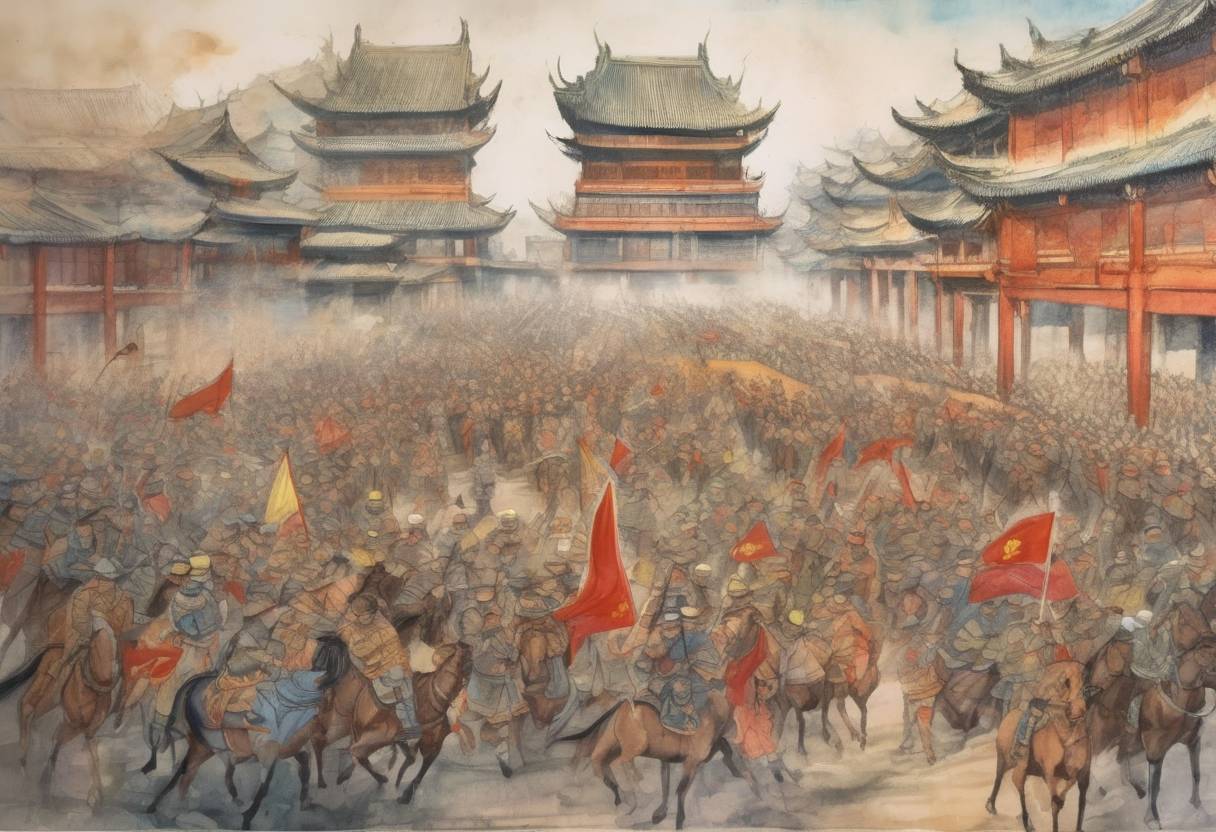
Recapture of Luoyang during the An Lushan Rebellion
On November 20, 762, the Tang dynasty successfully recaptured the city of Luoyang from rebel forces during the An Lushan Rebellion, a pivotal moment in one of China’s most devastating uprisings.
Background
The An Lushan Rebellion began in 755 when An Lushan, a general of the Tang dynasty, declared himself emperor of a new dynasty, the Yan, and led a rebellion against the Tang. The rebellion was fueled by discontent with the Tang administration, which was plagued by corruption, heavy taxation, and internal strife. An Lushan’s forces quickly captured the eastern capital of Luoyang and later the primary capital, Chang’an (modern-day Xi’an), dealing significant blows to the Tang dynasty.
The Significance of Luoyang
Luoyang, one of the ancient capitals of China, held strategic and symbolic importance. Its capture by An Lushan’s forces marked a significant early victory for the rebels, providing them with a stronghold and a base for further operations. The city’s recapture by Tang forces was thus crucial in turning the tide of the rebellion.
The Recapture
By 762, the rebellion had fragmented following An Lushan’s assassination in 757 and the subsequent death of his son and successor, An Qingxu. The Tang dynasty, with the help of allied forces such as the Uighurs, began to regain control over lost territories. The recapture of Luoyang was part of a broader campaign to restore Tang authority.
The operation to retake Luoyang was led by Tang generals who capitalized on the weakened state of the rebel forces. The Tang army, bolstered by Uighur cavalry, launched a coordinated assault on the city. The rebels, unable to withstand the renewed offensive, were eventually driven out, allowing the Tang to reclaim Luoyang.
Aftermath and Consequences
The recapture of Luoyang marked a turning point in the rebellion, signaling the beginning of the end for the Yan dynasty. It restored a measure of stability to the region and allowed the Tang dynasty to focus on consolidating power and rebuilding the empire. However, the rebellion had lasting effects on the Tang dynasty, severely weakening its central authority and contributing to its eventual decline.
The An Lushan Rebellion is remembered as one of the deadliest conflicts in history, with millions of lives lost. The recapture of Luoyang was a significant step in the Tang dynasty’s efforts to restore order, but the empire would never fully recover its former glory.
Broader Historical Significance
The events surrounding the An Lushan Rebellion, including the recapture of Luoyang, highlight the vulnerabilities of even the most powerful empires to internal dissent and the complexities of maintaining control over vast territories. The rebellion and its aftermath underscore the importance of effective governance and the dangers of political and military fragmentation.
In summary, the recapture of Luoyang on November 20, 762, was a crucial victory for the Tang dynasty during the An Lushan Rebellion, marking a significant step towards restoring imperial control and stability in China.