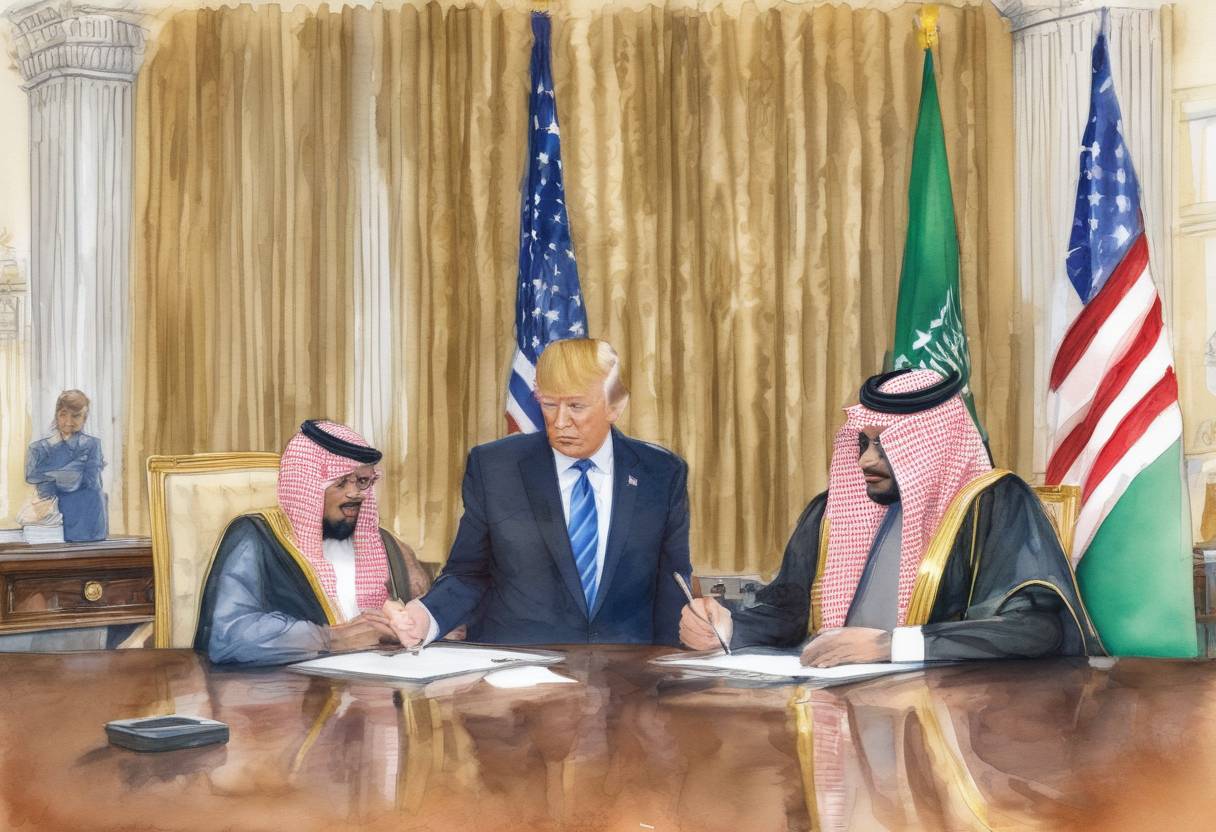
U.S. President Donald Trump and Saudi Arabia’s King Salman Sign a $110 Billion Arms Deal
Date: May 21, 2017
Context
On May 21, 2017, during his first international trip as President of the United States, Donald Trump visited Riyadh, Saudi Arabia. This visit was part of a broader Middle Eastern tour aimed at strengthening alliances and addressing regional security concerns. The trip was significant as it marked a shift in U.S. foreign policy towards a more traditional alignment with Gulf Arab states, particularly Saudi Arabia, after a period of strained relations during the previous administration.
The Arms Deal
Value and Scope: The arms deal signed between the United States and Saudi Arabia was valued at approximately $110 billion. It was one of the largest arms agreements in history, encompassing a wide array of military equipment and services.
Components: The deal included advanced weaponry such as tanks, artillery, ships, helicopters, missile defense systems, and cybersecurity technology. It was designed to enhance Saudi Arabia’s military capabilities and support its defense needs.
Strategic Objectives: The agreement aimed to bolster Saudi Arabia’s defense against regional threats, particularly from Iran, and to support its military operations in Yemen. It also sought to strengthen the strategic partnership between the U.S. and Saudi Arabia, reinforcing their mutual interests in regional stability and counterterrorism efforts.
Broader Implications
Economic Impact: The deal was expected to have significant economic implications, potentially creating thousands of jobs in the U.S. defense sector. It also underscored the economic ties between the two nations.
Regional Dynamics: The arms sale was part of a broader U.S. strategy to counter Iranian influence in the Middle East. It was intended to reassure Gulf allies of U.S. commitment to their security amidst rising tensions in the region.
Criticism and Concerns: The deal faced criticism from various quarters, including human rights organizations and some U.S. lawmakers, who expressed concerns about Saudi Arabia’s military intervention in Yemen and the potential for exacerbating the humanitarian crisis there.
Aftermath
The arms deal marked a significant moment in U.S.-Saudi relations, reflecting a renewed commitment to a longstanding alliance. It also highlighted the complexities of U.S. foreign policy in the Middle East, balancing strategic interests with ethical considerations. The agreement continued to influence U.S.-Saudi interactions and regional geopolitics in subsequent years.
Conclusion
The signing of the $110 billion arms deal between the U.S. and Saudi Arabia on May 21, 2017, was a pivotal event in international relations, with far-reaching implications for defense, economics, and regional security. It underscored the enduring strategic partnership between the two nations while also drawing attention to the challenges and controversies inherent in such large-scale military agreements.