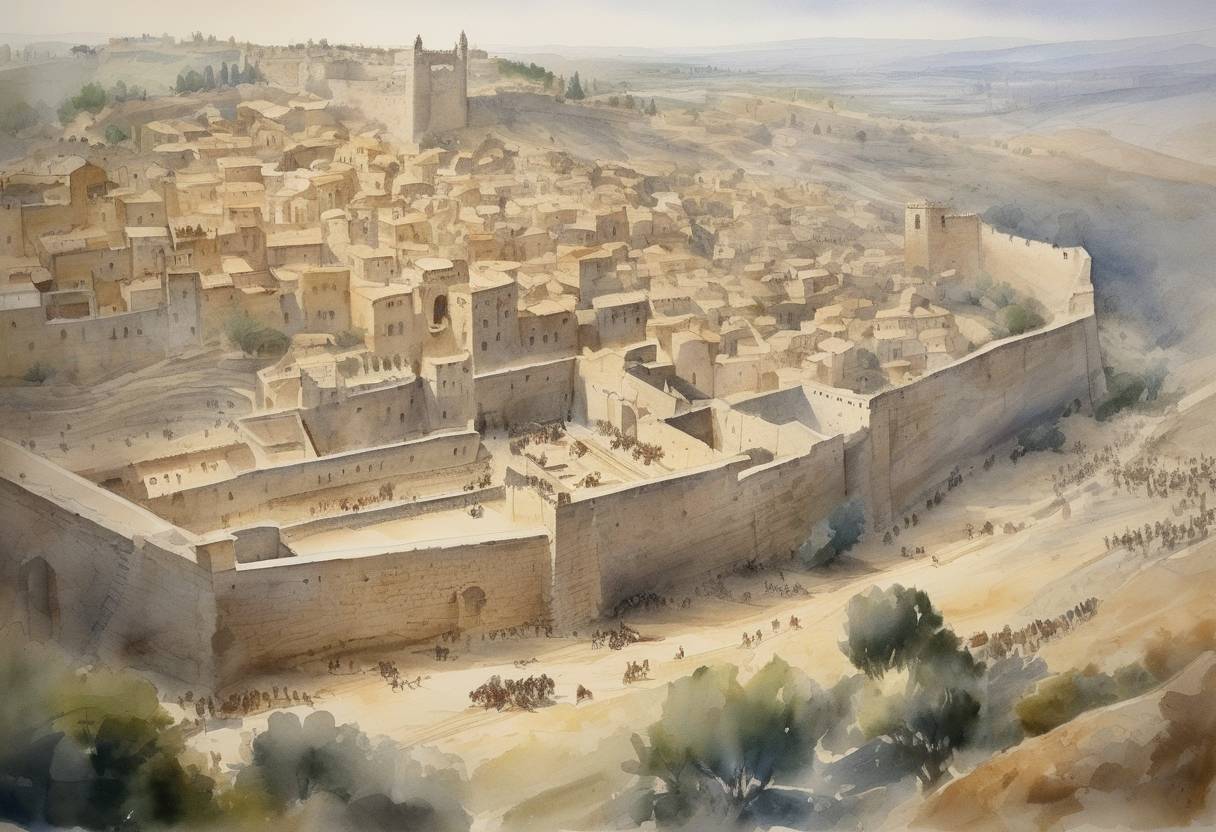
Fall of Jerusalem - August 30, 70 CE
On August 30, 70 CE, the city of Jerusalem fell to the Roman forces led by General Titus, son of Emperor Vespasian, marking a crucial turning point in the First Jewish–Roman War. This momentous event followed a brutal and protracted siege that had commenced in April of the same year.
Background
The siege of Jerusalem was part of the larger Jewish revolt against Roman occupation which had begun in 66 CE. Frustrations stemming from heavy taxation, religious oppression, and Roman disrespect towards Jewish traditions fueled the uprising. The rebellion initially saw several victories for the Jewish fighters, but Roman military might eventually staged a comeback under Vespasian, who was soon succeeded by his son Titus once Vespasian assumed the imperial throne.
The Siege
The siege of Jerusalem was characterized by severe hardships for those within the city walls. Titus employed traditional Roman siege tactics, including building siege towers and breach attempts. The Romans encircled the city with a trench and earthworks, effectively cutting off Jerusalem from any possible reinforcements or supplies. This blockade led to extreme famine and desperation inside the city, resulting in internal strife among the Jewish factions fighting against Roman encroachment.
The Fall
After months of resistance, the Roman forces breached the city’s defenses in August 70 CE. On August 30, the forces of Titus captured and subsequently destroyed the Second Temple, an event that is still mourned in Jewish tradition. The fall of Jerusalem was marked by widespread destruction and significant loss of life. The Temple’s destruction was a symbolically devastating blow to the Jewish people and marked the culmination of the Roman campaign to quell the Judean rebellion.
Aftermath and Significance
The fall of Jerusalem effectively sealed the end of the First Jewish–Roman War. In the wake of their victory, Roman forces decimated much of the remaining resistance in Judea. The impact of Jerusalem’s fall was profound:
- The Jewish Diaspora expanded as survivors either fled or were enslaved and relocated throughout the Roman Empire.
- Roman architectural triumphs, such as the Arch of Titus in Rome, were erected to commemorate Titus’s victories.
- The destruction of the Second Temple fundamentally altered Jewish religious practice, shifting the focus to Rabbinic Judaism centered around the Torah and synagogue worship, rather than Temple rituals.
The capture and subsequent destruction of Jerusalem marked a pivotal moment in Jewish and Roman history, illustrating the might of the Roman Empire and precipitating significant shifts in Jewish culture and religious life.