Signing of the New Afghan Constitution - January 26, 2004
2004 · Kabul, Afghanistan
President Hamid Karzai signs the new constitution of Afghanistan into law, establishing a presidential system of government.
October 11, 2006
The United Nations Office on Drugs and Crime launched a report indicating that the cultivation of opium poppies in Afghanistan surged by 59% from the previous year, despite international efforts to control it.
Kabul, Afghanistan | United Nations Office on Drugs and Crime
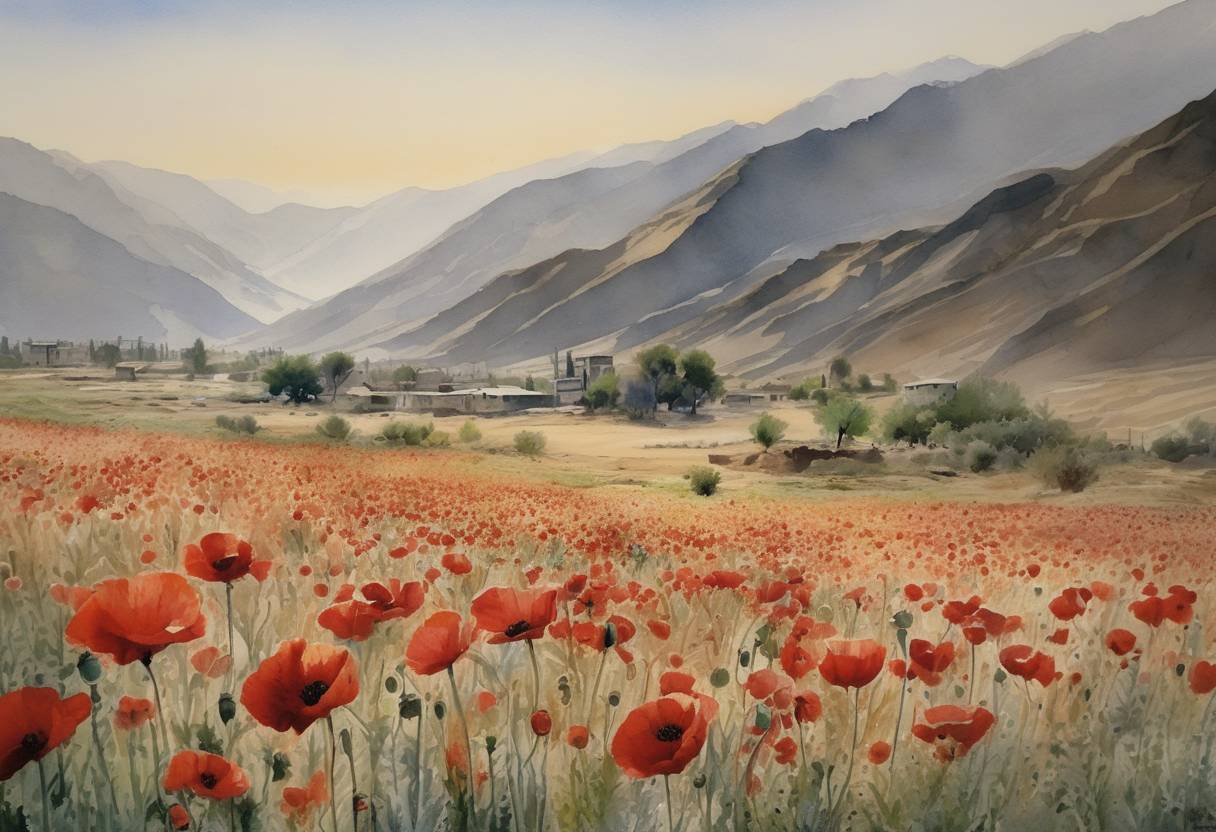
On October 11, 2006, the United Nations Office on Drugs and Crime (UNODC) published a report highlighting a significant increase in the cultivation of opium poppies in Afghanistan. The report revealed a dramatic surge of 59% in opium poppy cultivation compared to the previous year, despite substantial international efforts to curb this growth.
Afghanistan has long been a leading global producer of opium, the raw material for heroin. The country’s terrain, economic conditions, and ongoing conflict have contributed to the resilience and expansion of poppy cultivation. The period leading up to the 2006 report saw various international initiatives aimed at reducing Afghanistan’s dependency on opium production. These efforts included crop substitution programs, law enforcement operations, and community development projects.
The UNODC report outlined several critical findings regarding the spike in opium cultivation:
Despite extensive international cooperation and funding to combat opium production, the report highlighted the complexity and challenges of the issue:
The findings of this report prompted renewed discussions on international strategies to combat drug production and trafficking in Afghanistan. The increase underscored the need for comprehensive approaches that integrated security, development, and governance. The persistence of opium poppy cultivation remained a major concern, affecting regional security and contributing to the complexity of Afghan peacebuilding efforts.
Overall, the UNODC’s 2006 report highlighted the multifaceted challenges in reducing opium cultivation in Afghanistan and served as a critical document for policymakers engaged in drug control and Afghan development strategies.
Source: www.unodc.org