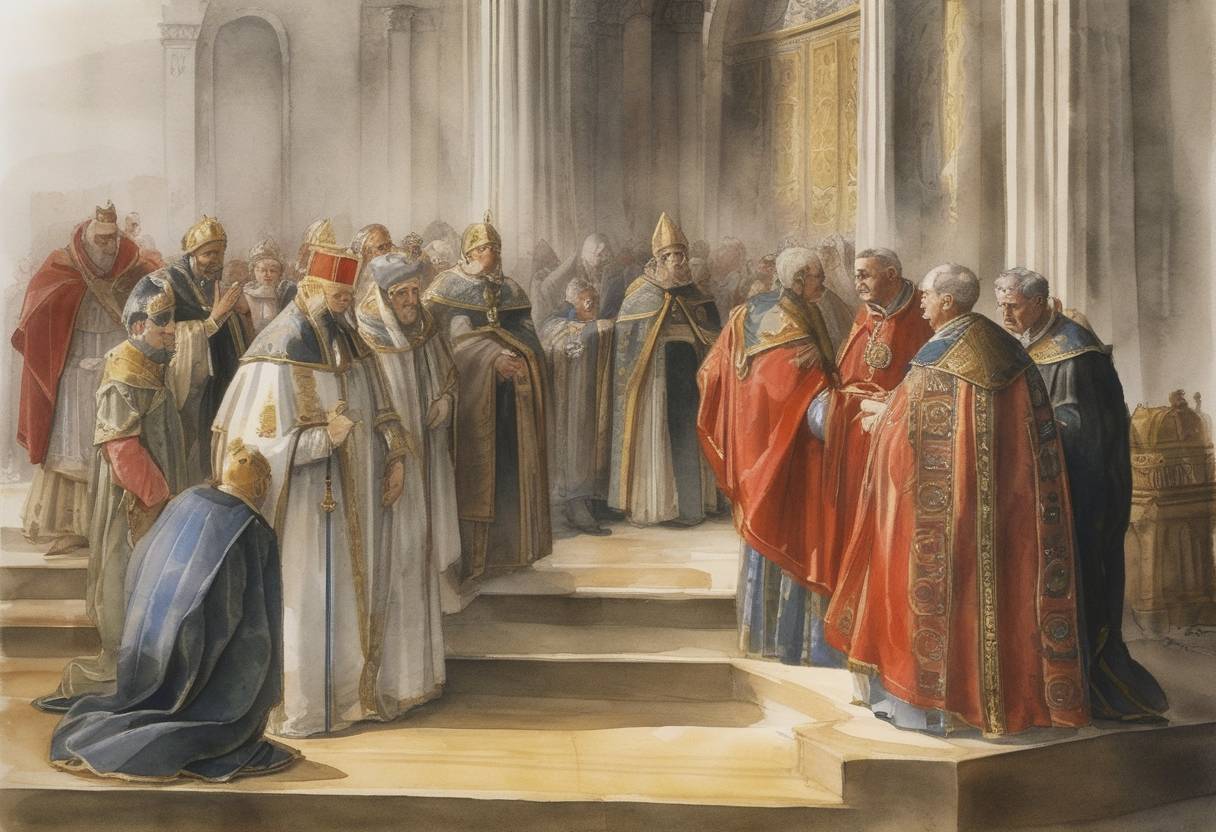
The Council of Pisa and the Election of Antipope Alexander V
On June 8, 1409, the Council of Pisa, convened in Pisa, Italy, concluded its meetings with the election of a new pope, Antipope Alexander V. This event was a significant episode in the complex saga of the Western Schism (1378-1417), a period marked by multiple claimants to the Papacy and deep divisions within the Christian Church.
Context Leading to the Council
The Western Schism began in 1378 following the death of Pope Gregory XI. Upon his passing, the election of Urban VI was contested, leading to the formation of rival papacies in Rome and Avignon. Urban VI was recognized by Rome, while Clement VII established his papacy in Avignon. This division created lasting tensions and loyalties divided across Christendom.
By the early 15th century, attempts to resolve the schism through negotiation or resignation of the contending popes had failed. At the forefront of the discussions for resolution was the notion of calling an ecumenical council to address the legitimacy of the papal claimants and restore a single papal line.
The Council’s Goals and Proceedings
The Council of Pisa was called by cardinals from both the Roman and Avignon factions, with the intention to adjudicate the pending papal disputes and end the schism. It opened on March 25, 1409, drawing significant attendance from ecclesiastical and secular leaders across Europe.
Throughout its proceedings, the council declared the deposits of both Popes Benedict XIII of Avignon and Gregory XII of Rome. The council deemed them as schismatic and contumacious, due to their failure to resolve their disputes and their contribution to the ongoing division within the Church.
Election of Alexander V
On June 8, 1409, the council resolved to elect a new pope in an effort to reconcile the fractured church. Peter Philarghi, a Greek and Franciscan cardinal, was elected and took the papal name Alexander V. This election introduced a third line to the papal succession, thus temporarily expanding rather than resolving the schism, as neither Gregory XII nor Benedict XIII recognized him.
Aftermath and Consequences
The election of Alexander V failed to secure immediate resolution to the Western Schism. Instead of resolving the crisis, the Council of Pisa ended up escalating the complexity, as the existence of now three concurrent claimants to the papacy deepened existing divisions.
Although Alexander V’s reign was short-lived, ending with his death in 1410, the schism continued until the Council of Constance (1414-1418) succeeded in restoring unity with the election of Pope Martin V in 1417. Nevertheless, the Pisane Council was a notable effort in the series of attempts to address and resolve one of the most significant crises in the medieval Church.
The events surrounding the Council of Pisa highlight the intricate and often contentious nature of Church politics during the Middle Ages, and serve as a poignant reminder of the challenges in achieving ecclesiastical unity.