The Exposition Universelle of 1889
1889 · Paris, France
The Exposition Universelle opened in Paris, France, marking the completion of the Eiffel Tower and showcasing technological advancements of the era.
January 10, 1889
French engineer Gustave Eiffel completed the assembly of the Eiffel Tower in Paris, marking the culmination of a major architectural and engineering feat.
Paris, France | Eiffel Tower Construction Project
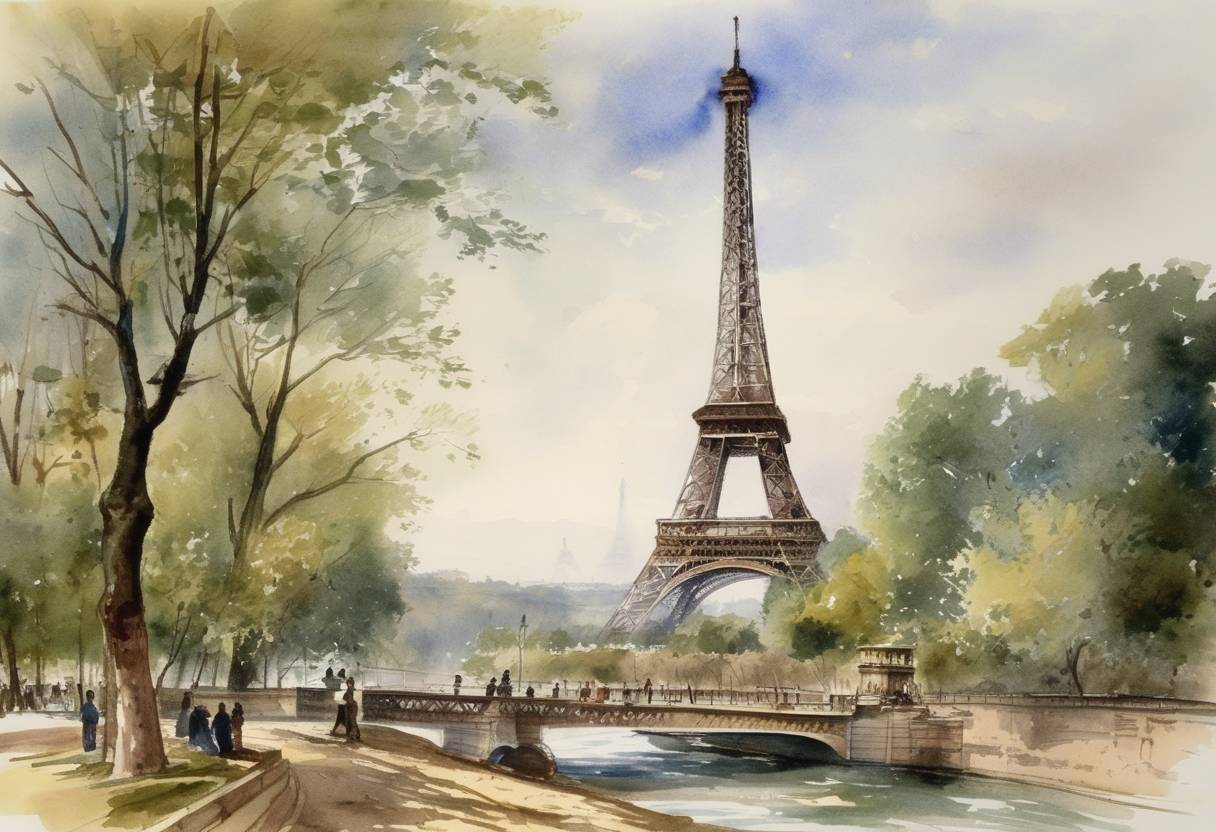
On January 10, 1889, French engineer Gustave Eiffel completed the assembly of the Eiffel Tower in Paris. This date marked the culmination of a groundbreaking endeavor in architectural and engineering innovation. The Eiffel Tower was constructed as the centerpiece for the 1889 Exposition Universelle (World’s Fair), which commemorated the centennial of the French Revolution.
Design and Planning: The Eiffel Tower was designed by Maurice Koechlin and Émile Nouguier, chief engineers working for the architectural firm of Gustave Eiffel. Architect Stephen Sauvestre refined the design further. Although initially met with public criticism, the project went forward, anchored by Eiffel’s commitment and vision.
Commencement: Construction of the tower began on January 28, 1887. The process involved overcoming significant engineering challenges, including the design of the foundations and the assembly of prefabricated iron pieces.
Materials and Assembly: Comprised of iron, the tower utilized around 18,038 individual parts, held together by 2.5 million rivets. The assembly method was pioneering, emphasizing precision and efficiency.
Structural Innovations: Eiffel’s use of lattice iron was revolutionary, making the structure both lightweight and strong. The design considered wind resistance, computationally assessed using methods that were advanced for the time.
Architectural Completion: By January 10, 1889, the main structure of the Eiffel Tower was completed, although the installation of various ancillary facilities continued into March. Standing at approximately 300 meters, it was then the world’s tallest artificial structure.
Cultural Impact: The completion of the Eiffel Tower transformed the Parisian skyline and became a symbol of modern engineering prowess and artistic vision. Initially criticized, it eventually became one of the most recognizable landmarks in the world.
Economic and Tourist Influence: The tower’s completion bolstered tourism, drawing millions to Paris. Over time, it has served various purposes, including as a meteorological and radio transmission tower.
Following its official opening on March 31, 1889, and its public reveal during the World’s Fair, the Eiffel Tower proved to be an enduring emblem of technological advancement and Parisian identity. Today, it stands as a testament to human ingenuity and remains a potent cultural icon, with Gustave Eiffel’s achievement continually celebrated in architecture and engineering circles worldwide.
Source: www.britannica.com