Donus Becomes Pope on November 2, 676
676 · Rome, Italy
Donus becomes Pope, succeeding Adeodatus II.
October 23, 0502
The Synodus Palmaris, a synod of bishops, is convened in Rome to address the schism caused by the excommunication of Pope Symmachus, reflecting the complexities of early Church politics.
Rome, Western Roman Empire | Catholic Church
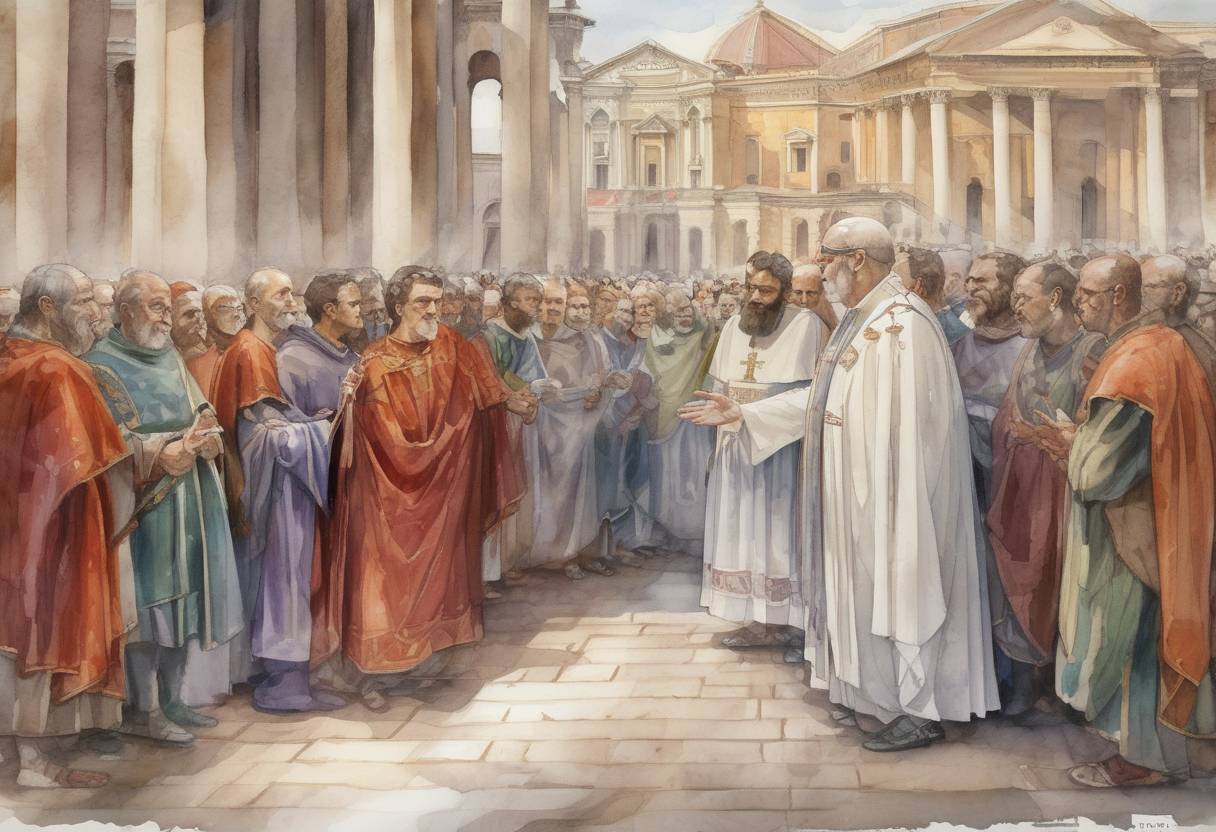
On October 23, 502, the Synodus Palmaris, a significant synod of bishops, was convened in Rome to address the schism that arose from the excommunication of Pope Symmachus. This event is a notable reflection of the complexities and political intricacies of the early Church.
The early 6th century was a turbulent period for the papacy, marked by intense political and theological disputes. Pope Symmachus, who became pope in 498, faced immediate challenges. His election was contested by a rival faction that supported Laurentius, leading to a schism within the Church. The division was exacerbated by the involvement of secular authorities, particularly Theodoric the Great, the Ostrogothic king of Italy, who sought to maintain stability and influence over the papacy.
The schism intensified when accusations of misconduct were levied against Pope Symmachus, leading to his excommunication by a faction of the clergy. This move was not only a religious but also a political maneuver, as it questioned the legitimacy of Symmachus’s papacy and threatened the unity of the Church.
The Synodus Palmaris was convened to resolve this crisis. Held in the Basilica of St. Peter, the synod brought together numerous bishops to deliberate on the charges against Symmachus and the broader implications for the Church’s unity. The synod was named after the “palm” or “palmary” location, a reference to the site where it was held.
Vindication of Symmachus: The synod ultimately vindicated Pope Symmachus, dismissing the charges against him. This decision was crucial in restoring his authority and reaffirming his position as the legitimate pope.
Reaffirmation of Papal Authority: The synod’s decision underscored the importance of papal authority and the need for unity within the Church. It set a precedent for handling disputes involving the papacy and highlighted the role of synods in resolving ecclesiastical conflicts.
Impact on Church Politics: The resolution of the schism through the Synodus Palmaris had lasting implications for Church politics. It demonstrated the intricate interplay between religious and secular powers and the challenges of maintaining ecclesiastical unity in the face of political pressures.
The Synodus Palmaris was a pivotal moment in the history of the early Church. It not only resolved a significant schism but also reinforced the mechanisms for addressing internal disputes. The synod’s outcomes contributed to shaping the future governance of the Church and highlighted the enduring complexities of Church-state relations.
In the broader context of Church history, the Synodus Palmaris serves as an example of the challenges faced by the early papacy in asserting its authority and maintaining unity amidst external and internal pressures. It reflects the ongoing evolution of Church governance and the delicate balance between religious and political influences that characterized this era.