The Allied Invasion of Italy: Operation Baytown
1943 · Messina, Italy
The Allied invasion of Italy began with Operation Baytown, as British and Canadian forces crossed the Strait of Messina.
December 11, 1282
The Sicilian city of Messina surrenders to the forces of Charles of Anjou, marking a significant moment in the War of the Sicilian Vespers.
Messina, Italy | Kingdom of Sicily
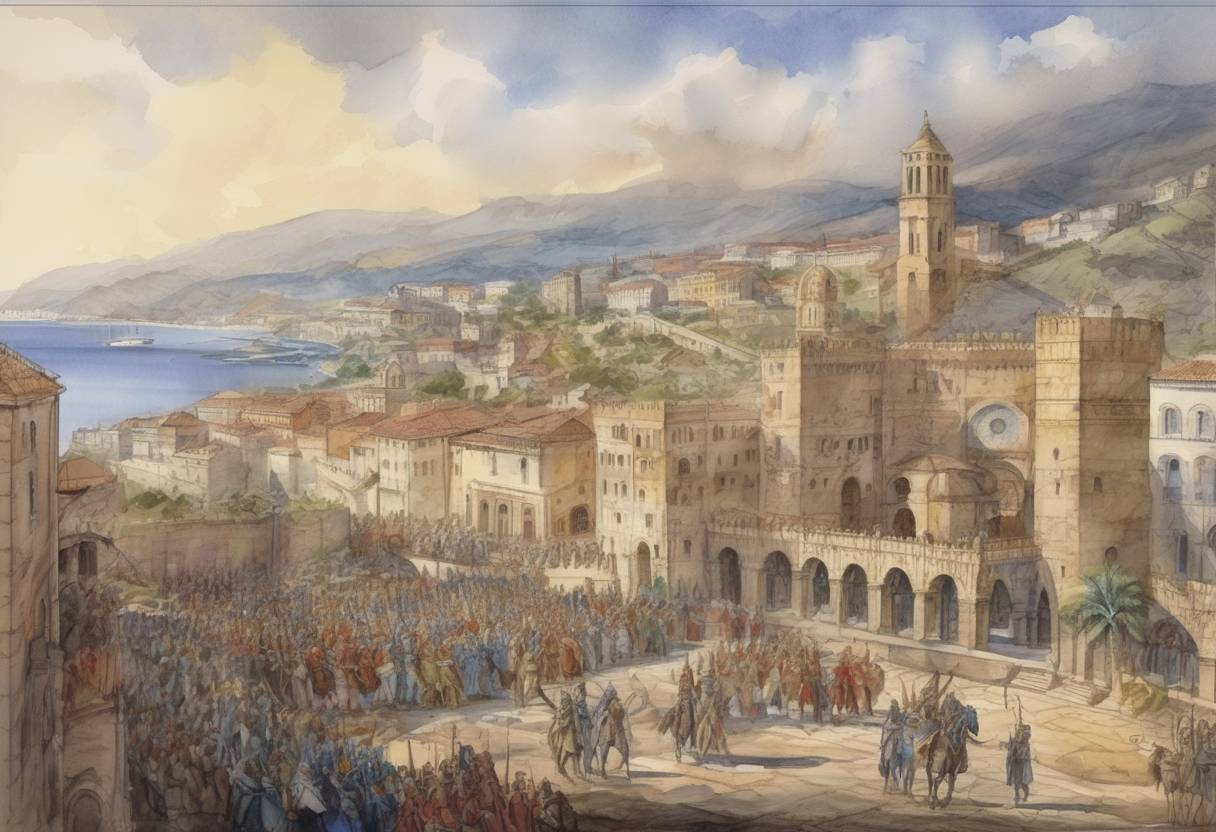
On December 11, 1282, the Sicilian city of Messina surrendered to the forces of Charles of Anjou, marking a pivotal moment in the War of the Sicilian Vespers. This conflict was a significant chapter in the broader struggle for control over the Kingdom of Sicily, which had far-reaching implications for the political landscape of medieval Europe.
The War of the Sicilian Vespers began on March 30, 1282, with a rebellion against the Angevin rule of Charles I of Anjou. The uprising was sparked by widespread discontent among the Sicilian populace due to heavy taxation, oppressive governance, and cultural tensions between the French rulers and the local Sicilian population. The rebellion quickly spread across the island, leading to the expulsion of Angevin forces from most of Sicily.
Messina, a strategically important city due to its location on the northeastern coast of Sicily, became a focal point in the conflict. Charles of Anjou, determined to regain control over Sicily, laid siege to Messina in an attempt to suppress the rebellion and reassert his authority. The siege was marked by intense fighting and significant hardship for the city’s inhabitants.
After months of resistance, the defenders of Messina were compelled to surrender to Charles’s forces on December 11, 1282. The surrender of Messina was a critical event in the war, as it represented a temporary victory for Charles of Anjou and a setback for the Sicilian rebels. However, the conflict was far from over.
Despite the surrender of Messina, the War of the Sicilian Vespers continued for several more years. The conflict eventually drew in other European powers, including the Crown of Aragon, which supported the Sicilian rebels. The war concluded with the Treaty of Caltabellotta in 1302, which resulted in the division of the Kingdom of Sicily. The island of Sicily came under the control of the Aragonese, while the mainland territories remained under Angevin rule.
The events surrounding the War of the Sicilian Vespers and the surrender of Messina had lasting impacts on the political dynamics of the Mediterranean region. They highlighted the complexities of medieval power struggles and the interplay between local resistance and broader European politics.
In summary, the surrender of Messina on December 11, 1282, was a significant moment in the War of the Sicilian Vespers, reflecting the intense conflict between local Sicilian forces and the Angevin rulers, and setting the stage for continued political upheaval in the region.
Source: en.wikipedia.org