South African Referendum on Non-Racial Constitution
1994 · Pretoria, South Africa
In a referendum, South Africans approved a new, non-racial constitution, paving the way for the first democratic elections in the nation's history.
June 16, 1976
The Soweto Uprising began in South Africa as thousands of black school children protested against the Afrikaans Medium Decree, leading to a violent crackdown by police.
Soweto, South Africa | South African government
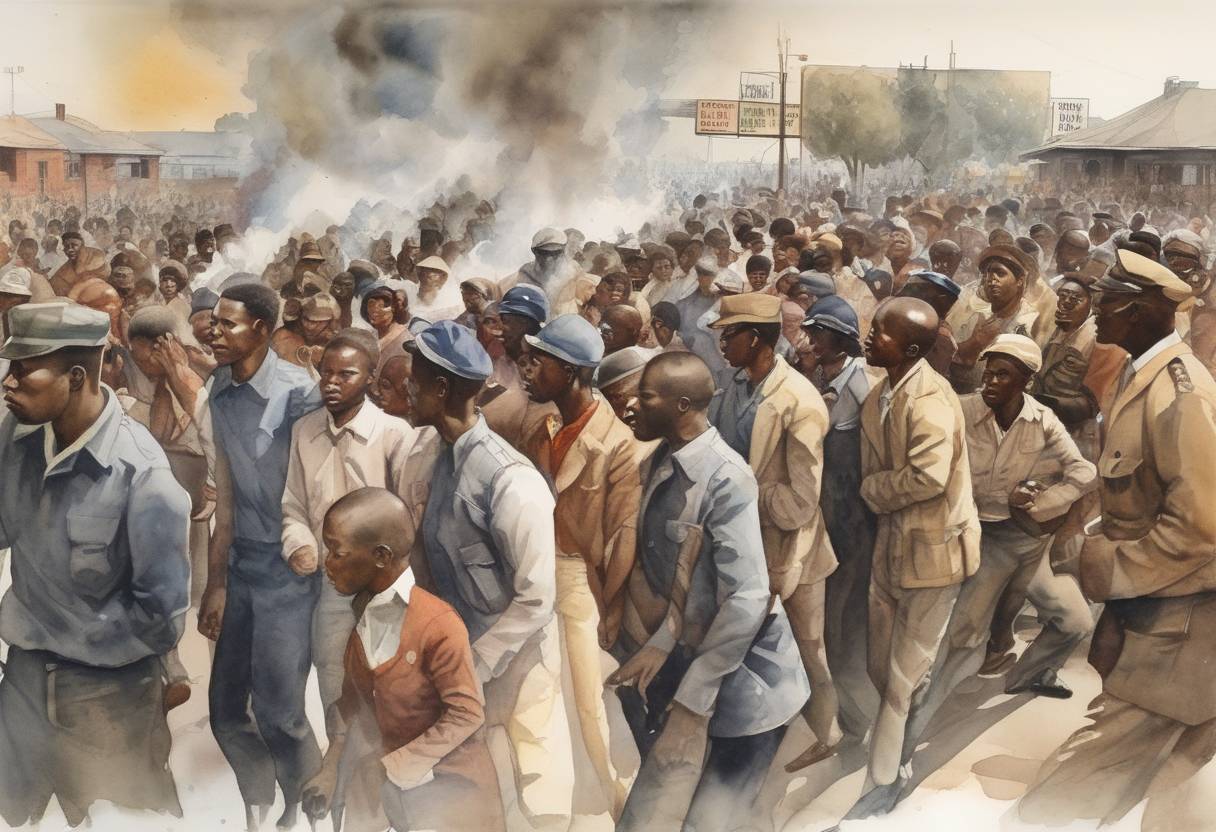
The Soweto Uprising was a pivotal moment in the struggle against apartheid in South Africa. The roots of the uprising lay in the oppressive policies of the apartheid regime, which enforced racial segregation and discrimination against the non-white population. Education was a significant area of contention, with black South African students receiving inferior education compared to their white counterparts.
In 1974, the South African government issued the Afrikaans Medium Decree, mandating that Afrikaans be used alongside English as the medium of instruction in black schools for certain subjects. This decree was deeply unpopular, as Afrikaans was seen as the language of the oppressor, and many black South Africans preferred English, which was perceived as a language of liberation and broader opportunity.
On June 16, 1976, thousands of black school children in Soweto, a township near Johannesburg, organized a peaceful protest against the Afrikaans Medium Decree. The protest was initiated by the South African Students Movement (SASM), which sought to challenge the educational policies that perpetuated inequality.
The students planned to march from their schools to Orlando Stadium. They carried placards with slogans such as “Down with Afrikaans” and “Viva Azania,” expressing their demand for educational reform and broader political change.
As the students marched, they were met by heavily armed police. The situation quickly escalated when the police fired tear gas and live ammunition into the crowd. The first victim was 13-year-old Hector Pieterson, whose death was captured in a photograph that became an iconic image of the uprising and drew international attention to the brutality of the apartheid regime.
The Soweto Uprising sparked a wave of protests across South Africa, leading to increased international condemnation of apartheid. The government’s violent response resulted in hundreds of deaths and thousands of injuries, further galvanizing the anti-apartheid movement.
The Soweto Uprising remains a symbol of resistance and a turning point in South Africa’s history, contributing to the eventual dismantling of apartheid and the establishment of a democratic society. June 16 is now commemorated annually as Youth Day in South Africa, honoring the courage and sacrifice of the students who stood up against oppression.
Source: en.wikipedia.org