Queen Elizabeth I Signs the Death Warrant for Mary, Queen of Scots
1587 · London, England
Queen Elizabeth I of England signs the death warrant for Mary, Queen of Scots.
July 19, 1553
Mary I was proclaimed Queen of England, deposing Lady Jane Grey.
London, England | English Monarchy
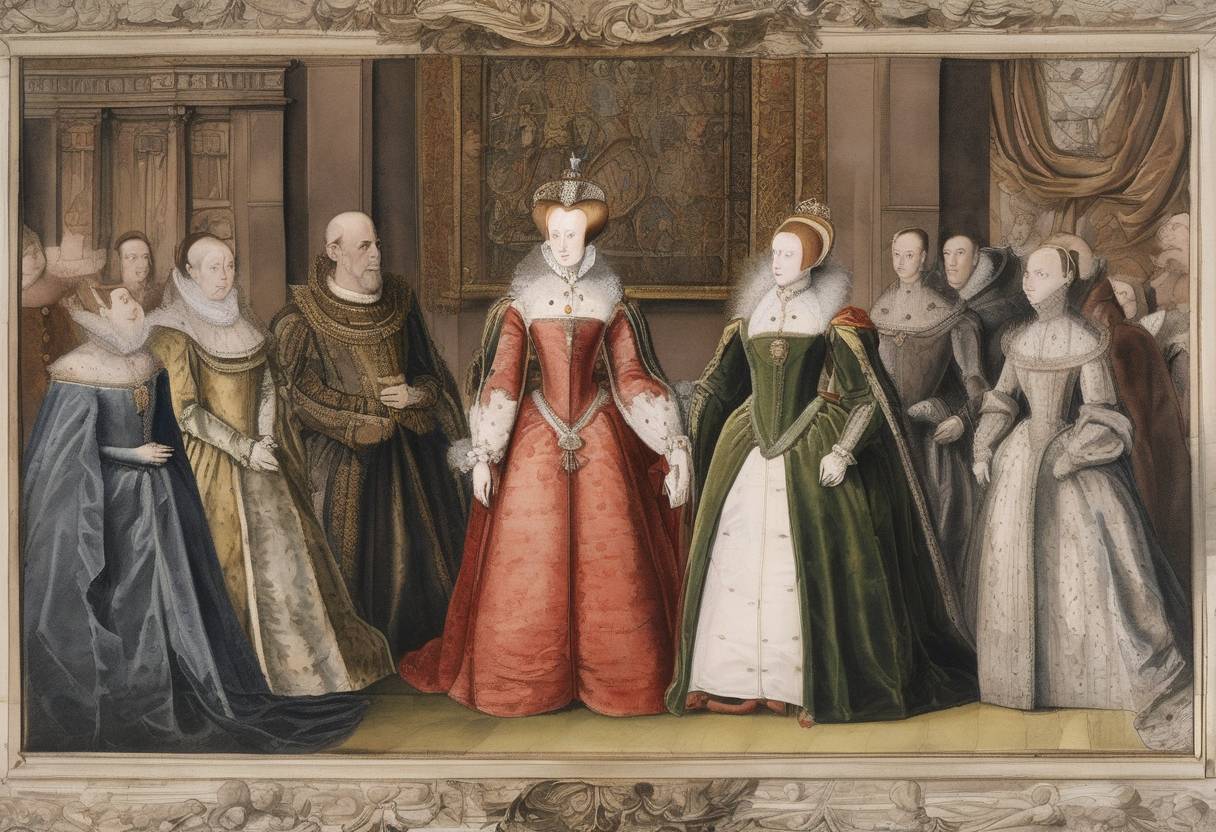
On July 19, 1553, Mary I was proclaimed Queen of England, marking a pivotal moment in English history. This event concluded a brief and tumultuous period known as the succession crisis following the death of Edward VI.
Edward VI’s Reign: Edward VI, the son of Henry VIII and Jane Seymour, ascended to the throne in 1547 at the age of nine. His reign was marked by the further establishment of Protestant reforms initiated by his father.
Succession Crisis: As Edward VI’s health deteriorated, concerns over the succession arose. Edward, a staunch Protestant, sought to prevent his Catholic half-sister, Mary, from ascending the throne. To this end, he devised a “Devise for the Succession,” which named his cousin, Lady Jane Grey, as his successor.
Lady Jane Grey: Known as the “Nine Days’ Queen,” Lady Jane Grey was proclaimed queen on July 10, 1553. Her reign was short-lived due to lack of popular support and political maneuvering.
Mary’s Claim: Mary, the daughter of Henry VIII and Catherine of Aragon, had a legitimate claim to the throne as per the Third Succession Act of 1543. Despite Edward’s efforts to exclude her, she garnered significant support from both the nobility and the general populace.
Popular Support: Mary rallied support in East Anglia, where she gathered an army and declared herself the rightful queen. Her cause was bolstered by widespread discontent with the Protestant reforms and the perceived illegitimacy of Jane’s claim.
Political Shifts: Key political figures, including the Duke of Northumberland, who initially supported Jane, began to defect to Mary’s side as her support grew. The Privy Council, initially backing Jane, switched allegiance to Mary.
Mary’s Proclamation: On July 19, 1553, Mary was officially proclaimed queen in London. Lady Jane Grey was deposed, and Mary entered London in triumph on August 3, 1553.
Consequences: Mary’s accession marked the beginning of her efforts to restore Catholicism in England. Her reign, however, was marred by religious persecution, earning her the moniker “Bloody Mary” due to the execution of Protestant dissenters.
Lady Jane Grey’s Fate: Lady Jane Grey was imprisoned in the Tower of London. Despite initial leniency, she was executed in February 1554 following her father’s involvement in a rebellion against Mary.
Mary I’s proclamation as queen was a significant turning point in English history. It underscored the complexities of succession and religious conflict during the Tudor period. Her reign set the stage for subsequent religious and political developments, including the eventual establishment of Protestantism under her successor, Elizabeth I.
Source: en.wikipedia.org