The Proclamation of William and Mary as Co-Rulers: February 13, 1689
1689 · London, England
William and Mary were proclaimed co-rulers of England, Scotland, and Ireland, marking the beginning of the Glorious Revolution.
January 19, 1764
John Wilkes is expelled from the British House of Commons for seditious libel.
London, England | British House of Commons
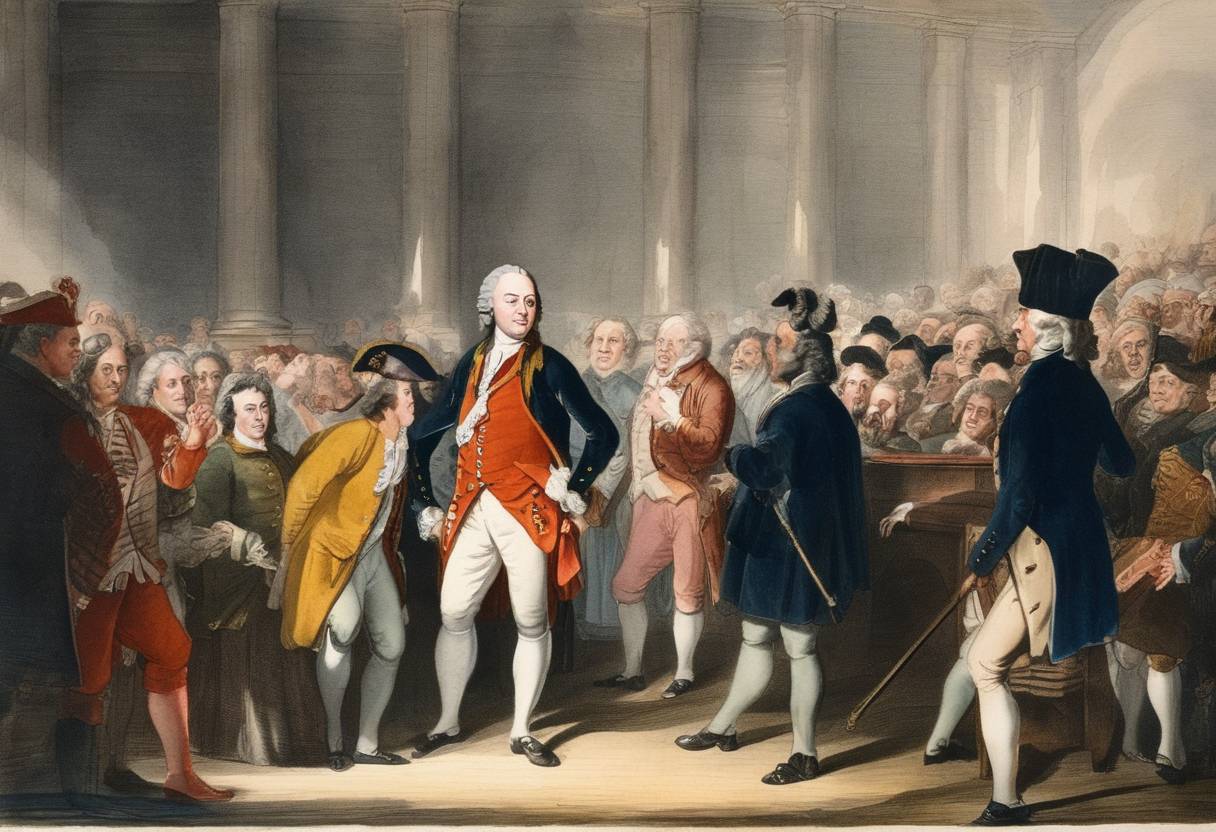
John Wilkes, an influential yet controversial political figure, was expelled from the British House of Commons on January 19, 1764. This event occurred amidst a turbulent period in British politics marked by debates over liberty, freedom of speech, and governmental authority.
John Wilkes, elected as a Member of Parliament for Aylesbury in 1757, was known for his provocative rhetoric and steadfast opposition to the sitting government led by Prime Minister George Grenville. Wilkes was a vocal supporter of radical political ideas and was closely associated with the radicalization of public discourse during the 18th century.
In 1762, Wilkes began publishing “The North Briton,” a series of virulent essays that criticized the government and the monarchy. His criticism reached a crescendo with the publication of Issue No. 45 on April 23, 1763, where he lambasted King George III’s speech from the throne as deceitful and manipulative.
The dissemination of Issue No. 45 led to Wilkes’ arrest for seditious libel – inciting rebellion against the government through his writings. Although he was detained, the subsequent legal battle highlighted significant civil liberties issues. The case notably brought attention to the legality of general warrants, which allowed arresting individuals without specifying the charge, subsequently deemed illegal.
Wilkes’ defiance against the government did not end with legal victories. Instead, these actions heightened tensions and increased his popularity among those seeking parliamentary reform and greater freedom of expression.
Despite his legal challenges, the House of Commons moved to expel Wilkes, arguing that his actions constituted a breach of privilege and decorum. On January 19, 1764, after a divisive session, Parliament officially expelled him from the legislative body for seditious libel, marking a significant moment in British legal history.
The expulsion of John Wilkes had profound implications within and beyond Britain. It underscored the growing dissatisfaction with governmental overreach and aristocratic privileges. Wilkes remained a polarizing figure, symbolizing the struggle for increased political representation and civil liberties.
Subsequent events saw Wilkes re-elected multiple times by his constituents but continuously refused his seat by the House, reflecting the enduring tension between authorities and advocates for parliamentary reform. Ultimately, Wilkes’ legacy contributed significantly to shaping discussions on civil rights and representation, influencing later democratic developments in Britain and elsewhere.
The expulsion of John Wilkes was not merely a political episode, but a catalytic event that reignited debates on governance and personal freedoms. Wilkes’ controversial life and the resultant legislative and social discourse served as a precursor to more democratic reforms in Britain, echoing through history as part of broader Enlightenment ideals.
Source: en.wikipedia.org