Truman Relieves MacArthur of Command - April 11, 1951
1951 · Washington, D.C., United States
President Harry S. Truman relieved General Douglas MacArthur of his command in the Korean War due to insubordination and policy disagreements.
December 16, 1950
The United States President, Harry S. Truman, declared a state of emergency, giving him the authority to mobilize the U.S. military and control domestic industries during the Korean War.
Washington, D.C., United States | U.S. Government
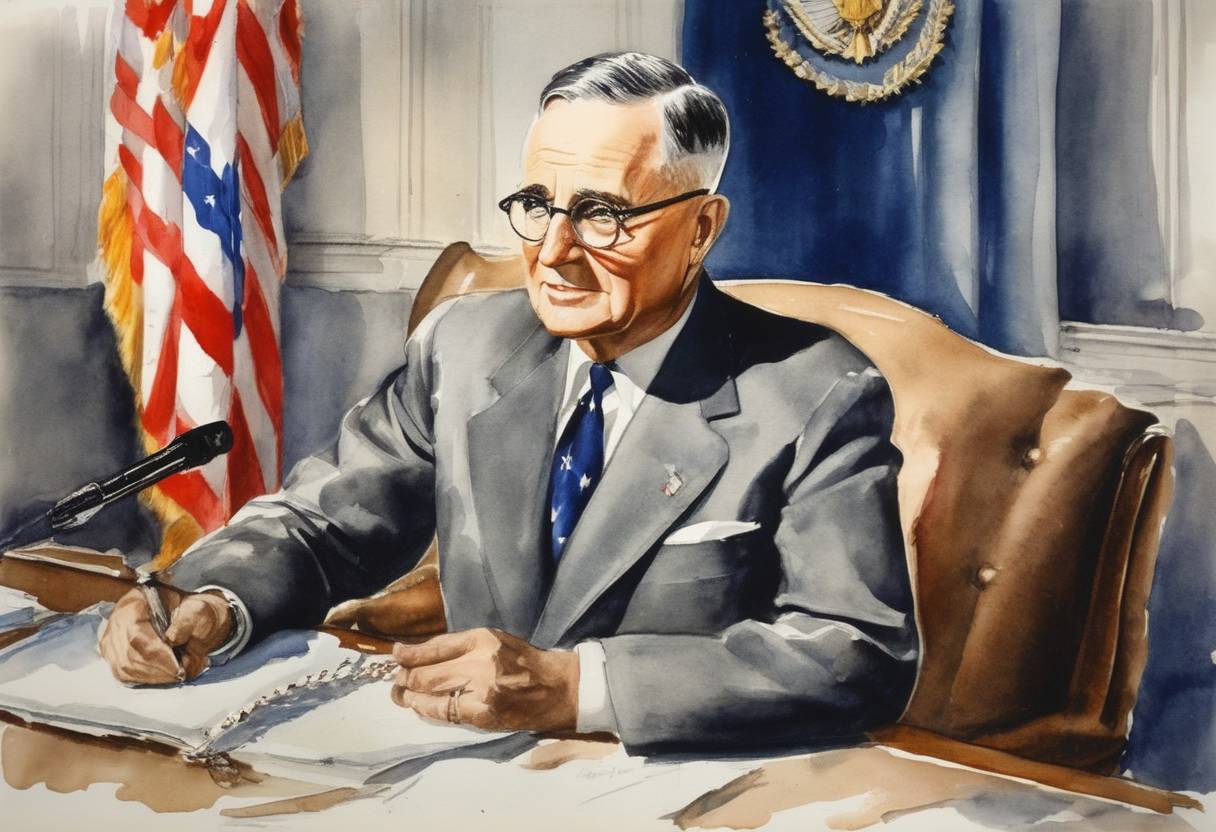
On December 16, 1950, President Harry S. Truman officially declared a national state of emergency in response to the ongoing Korean War and the growing Cold War tensions. This pivotal action was announced during an address to the nation, amidst escalating conflicts in Korea and rising fears of communist expansion in Asia and Europe.
The Korean War had commenced on June 25, 1950, when North Korean forces crossed the 38th parallel, invading South Korea. The United Nations, with substantial involvement from the United States, swiftly intervened in support of South Korea. By December, the situation had intensified significantly. Chinese forces had entered the conflict in support of North Korea, leading to heavy fighting and severe logistical and strategic challenges for U.S. and UN forces.
President Truman’s proclamation of a state of emergency was a response to this high-stakes global situation. By declaring the emergency, Truman invoked additional executive powers aimed at safeguarding national security. These powers allowed him to expedite military preparedness and ensure the efficient functioning of domestic industries vital for war efforts.
The state of emergency provided:
The declaration underscored the administration’s resolve to combat communism aggressively, both abroad and at home. It signaled to allies and adversaries alike the determination of the U.S. to sustain its military and industrial might.
Domestically, Truman’s decision affected various industries, shifting production priorities toward defense needs and fortifying the U.S. economic infrastructure to support prolonged military engagements. This decision also played a role in intensifying the U.S. government’s response to perceived internal threats of communism, setting the stage for increased scrutiny and measures in domestic security policies during the Cold War.
The state of emergency remained in effect until it was formally ended in the early 1950s, long after the conclusion of active hostilities in Korea. Truman’s declaration laid the groundwork for future administrations to manage national crises, demonstrating the extent to which executive powers could be exercised in times of international peril.
This action was one of the many measures taken during Truman’s presidency that demonstrated the era’s complex geopolitical dynamics, significantly impacting U.S. domestic policy and international relations during the Cold War period.
Source: www.trumanlibrary.gov