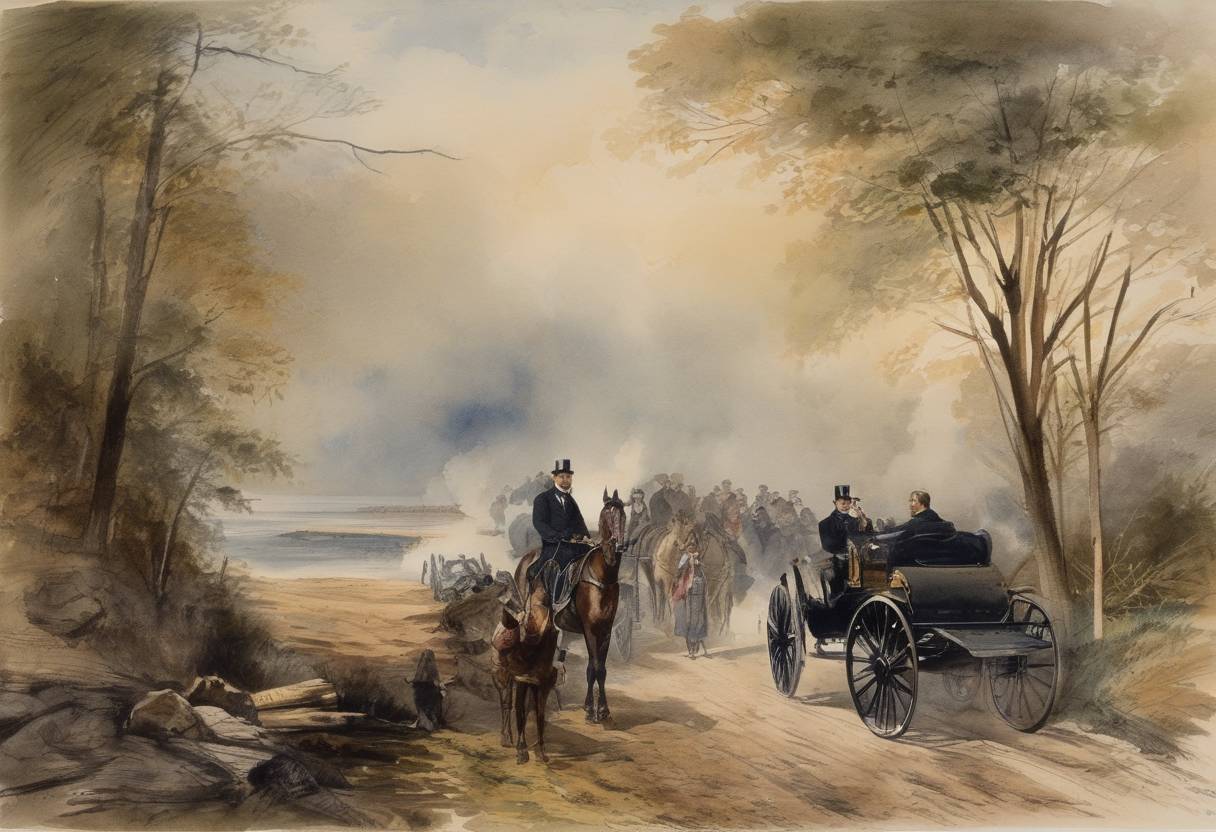
Death of President James A. Garfield
Background
James Abram Garfield, the 20th President of the United States, was shot by Charles J. Guiteau on July 2, 1881. Guiteau was an unstable office-seeker who had been frustrated by the failure to receive a political appointment in the Garfield administration. The assassination attempt occurred at the Baltimore and Potomac Railroad Station in Washington, D.C. Despite initial hopes for his recovery, Garfield’s condition worsened over the ensuing weeks due to infections and inadequate medical care.
Death and Aftermath - September 19, 1881
On September 19, 1881, President Garfield succumbed to his wounds and died, which marked a turning point in American political history. Vice President Chester A. Arthur succeeded him as president. Garfield’s death highlighted the need for reform in the spoiled and patronage-driven political system that characterized much of the era. The assassination brought to light the dangers of using public office appointments as rewards for political support and loyalty.
The outrage following Garfield’s tragic death added momentum to the reform movement which targeted the spoils system, advocating for merit-based appointments rather than politically motivated ones. This led to the eventual passage of the Pendleton Civil Service Reform Act in 1883, under President Chester A. Arthur. The Act established a bipartisan Civil Service Commission, and it began the transition from the patronage system to a merit system, laying the foundation for the modern professional civil service in the United States.
Historical Significance
The death of President Garfield and the subsequent rise of civil service reform marked a critical turning point in U.S. political history. It showcased the vulnerabilities of the political appointment framework of the time and underscored the need for substantial changes to ensure stability and integrity in government functions.