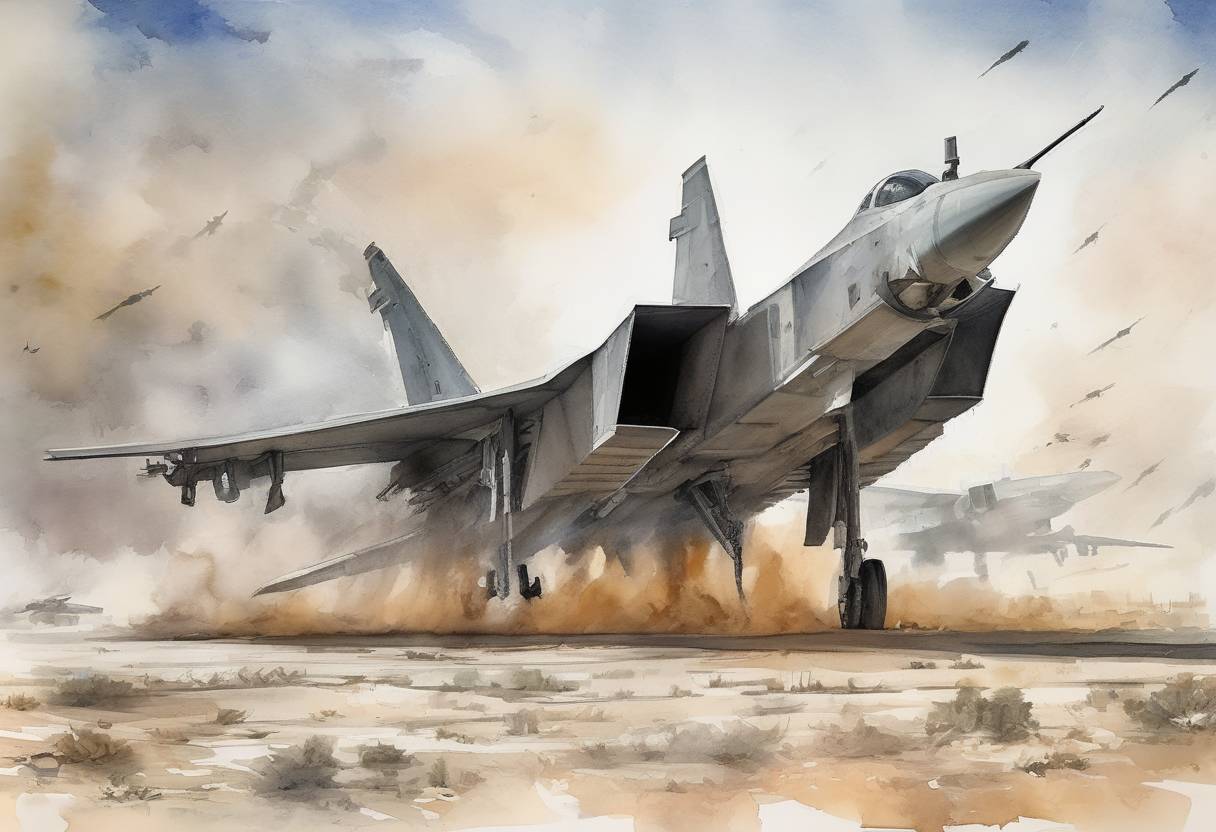
U.S. Missile Strike on Shayrat Airbase - April 6, 2017
On April 6, 2017, the United States launched 59 Tomahawk cruise missiles at the Shayrat Airbase in Syria. This military action marked the first direct American assault on the Syrian government during the ongoing Syrian Civil War. The strike was a response to a chemical weapons attack on civilians in Khan Shaykhun, which occurred on April 4, 2017.
Background
- Syrian Civil War: The conflict began in 2011 as part of the Arab Spring protests, evolving into a complex war involving multiple factions, including the Syrian government led by President Bashar al-Assad, various rebel groups, ISIS, and international actors.
- Chemical Weapons Attack: On April 4, 2017, a chemical attack in Khan Shaykhun, a town in the Idlib province, resulted in the deaths of at least 80 people, including many children. The attack involved the use of sarin gas, a deadly nerve agent, and was widely attributed to the Assad regime.
The U.S. Response
- Decision to Strike: The U.S. government, under President Donald Trump, decided to take military action against the Syrian government as a punitive measure for the chemical attack. The decision was made swiftly, within days of the attack.
- Target - Shayrat Airbase: The Shayrat Airbase was chosen as the target because it was identified as the launch site for the aircraft that carried out the chemical attack.
Execution of the Strike
- Tomahawk Missiles: The U.S. Navy launched 59 Tomahawk cruise missiles from two destroyers, the USS Ross and USS Porter, stationed in the Mediterranean Sea.
- Objective: The strike aimed to degrade the Syrian government’s ability to conduct further chemical attacks by targeting aircraft, hardened aircraft shelters, petroleum and logistical storage, ammunition supply bunkers, air defense systems, and radars.
Aftermath and Consequences
- International Reactions: The strike received mixed reactions globally. Allies such as the United Kingdom, France, and Germany expressed support, while Russia and Iran, key allies of the Assad regime, condemned the action, calling it a violation of international law.
- Impact on U.S.-Russia Relations: The strike heightened tensions between the United States and Russia, as Russia had military personnel stationed at the base and was actively supporting the Assad government.
- Syrian Government’s Response: The Assad regime denied responsibility for the chemical attack and condemned the U.S. strike as an act of aggression.
Broader Historical Significance
- Shift in U.S. Policy: The missile strike represented a significant shift in U.S. policy towards direct military intervention against the Assad regime, contrasting with the previous administration’s more cautious approach.
- Chemical Weapons and International Norms: The event underscored the ongoing challenges in enforcing international norms against the use of chemical weapons, highlighting the complexities of accountability in the Syrian conflict.
The U.S. strike on Shayrat Airbase remains a pivotal moment in the Syrian Civil War, illustrating the intricate dynamics of international military and diplomatic engagements in the region.