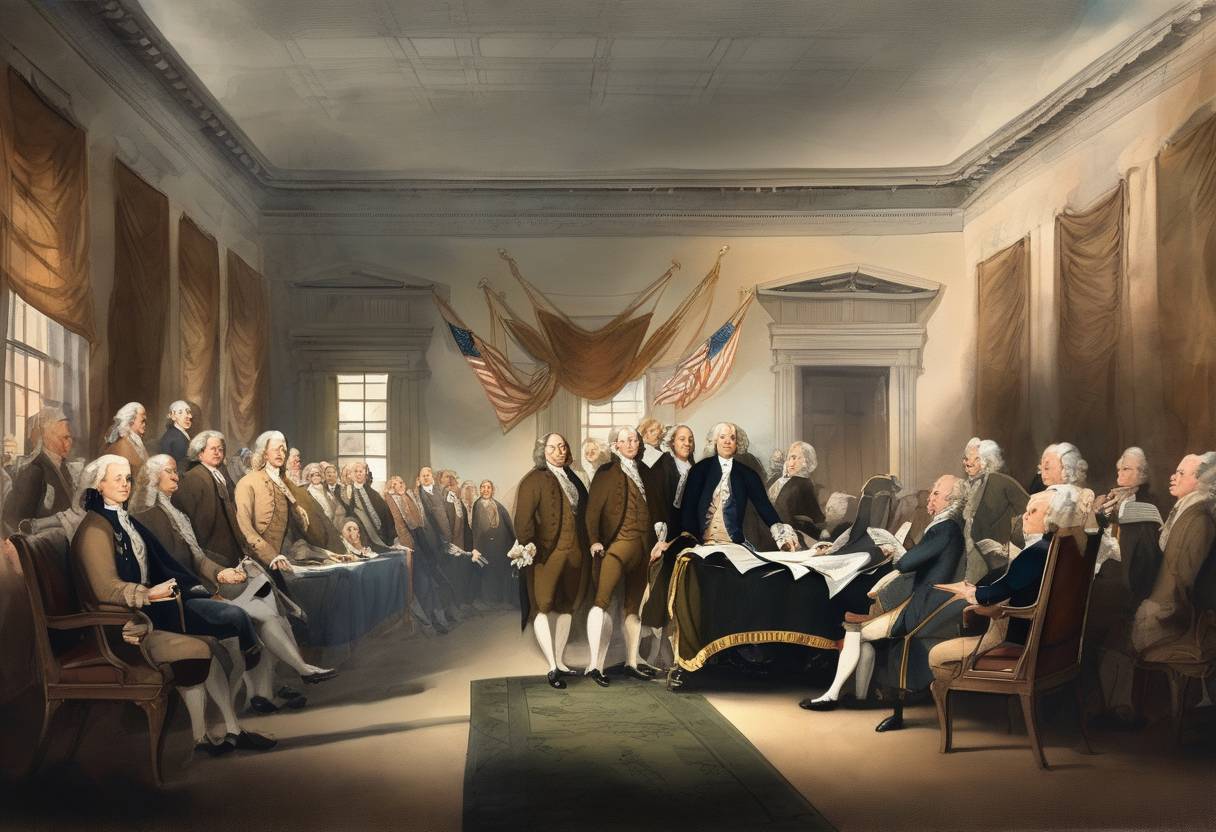
The Continental Congress Votes for Independence: July 2, 1776
On July 2, 1776, a pivotal moment in American history unfolded as the Continental Congress voted in favor of independence from Great Britain. This decisive action set the stage for the formal adoption of the Declaration of Independence two days later, on July 4, 1776.
Context Leading Up to the Vote
The road to independence was marked by escalating tensions between the American colonies and the British Crown. Key events leading up to this moment included:
- The Stamp Act of 1765 and the Townshend Acts of 1767: These acts imposed taxes on the colonies without their consent, fueling resentment and the rallying cry of “no taxation without representation.”
- The Boston Massacre (1770) and the Boston Tea Party (1773): These incidents exemplified the growing unrest and resistance against British rule.
- The Intolerable Acts (1774): In response to the Boston Tea Party, these punitive measures further united the colonies against Britain.
- The First Continental Congress (1774) and the Battles of Lexington and Concord (1775): These events marked the colonies’ initial steps towards collective action and armed resistance.
The Vote for Independence
The Second Continental Congress convened in May 1775, amidst the early battles of the American Revolutionary War. Over the next year, the idea of full independence gained traction, driven by influential pamphlets like Thomas Paine’s “Common Sense” and the realization that reconciliation with Britain was unlikely.
- Richard Henry Lee’s Resolution: On June 7, 1776, Richard Henry Lee of Virginia proposed a resolution declaring the colonies’ independence. This resolution was debated intensely over several weeks.
- The Committee of Five: To draft a formal declaration, the Congress appointed a committee consisting of Thomas Jefferson, John Adams, Benjamin Franklin, Roger Sherman, and Robert R. Livingston.
On July 2, 1776, the Continental Congress voted on Lee’s resolution. Twelve of the thirteen colonies voted in favor, with New York abstaining as it awaited instructions from its provincial congress.
Aftermath and Significance
- Adoption of the Declaration: Following the vote, the Congress turned its attention to the Declaration of Independence, primarily authored by Thomas Jefferson. After further debate and revisions, the Declaration was formally adopted on July 4, 1776.
- Impact: The vote and subsequent adoption of the Declaration marked the birth of the United States of America as an independent nation. It articulated the colonies’ grievances against King George III and expressed the Enlightenment ideals of individual liberty and government by consent.
- Legacy: July 2, 1776, was initially considered the date of America’s independence, as noted by John Adams in his letters. However, July 4th became the celebrated date due to the public announcement of the Declaration.
The decision on July 2nd was a bold assertion of self-determination and set a precedent for future democratic movements worldwide. It remains a cornerstone of American identity and a testament to the enduring pursuit of freedom and equality.