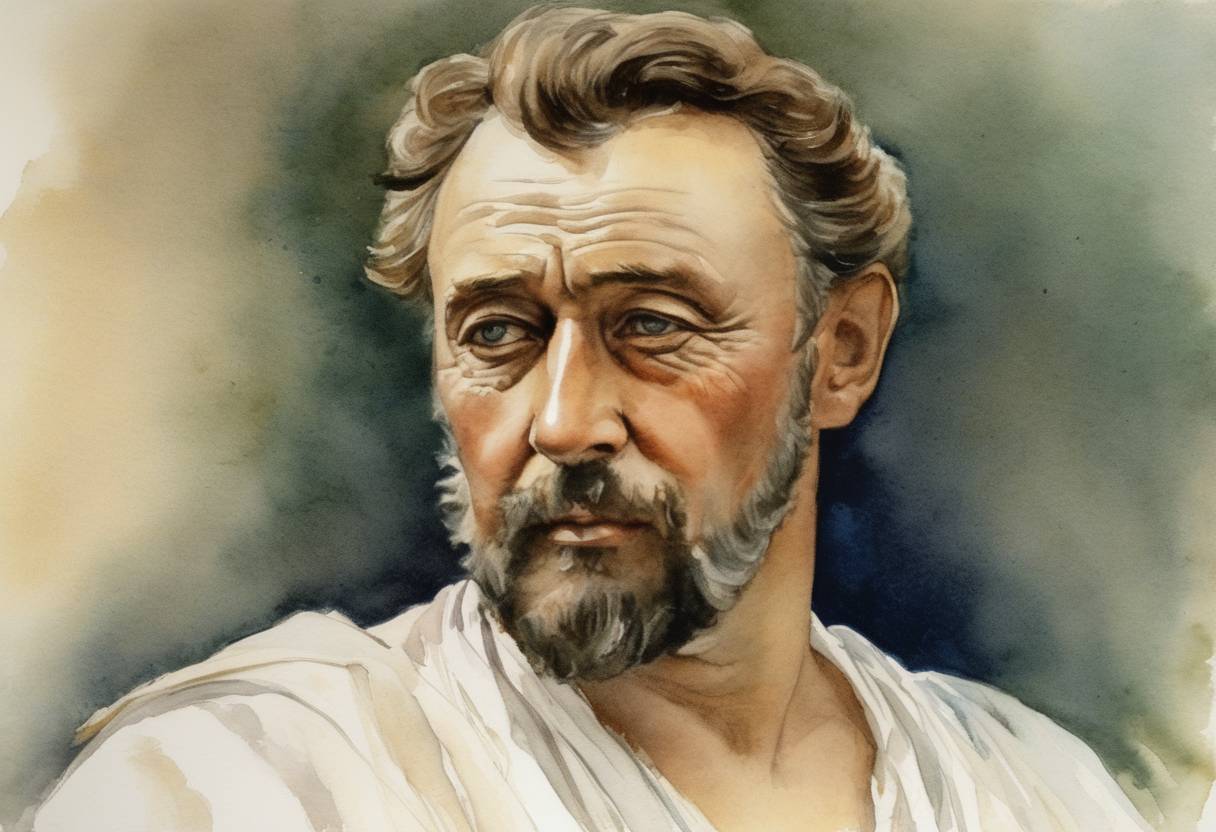
Death of Sir Richard Francis Burton - October 25, 1889
Sir Richard Francis Burton, the renowned British explorer, writer, and translator, passed away on October 25, 1889, in Trieste, which was then part of the Austro-Hungarian Empire (now Italy). Burton’s death marked the end of a remarkable life characterized by adventurous explorations and significant contributions to literature and cultural understanding.
Early Life and Career
Born on March 19, 1821, in Torquay, England, Burton was known for his linguistic prowess, reportedly mastering over 40 languages and dialects throughout his lifetime. He attended Trinity College, Oxford, but left to join the East India Company Army. His service in India fueled his interest in exploration and cultural studies, laying the groundwork for his future endeavors.
Explorations and Discoveries
Burton gained fame through his adventurous explorations. Notably, he was one of the first Europeans to visit the Great Mosque in Mecca and Medina in 1853, undertaking the perilous journey under disguise on account of the sites being off-limits to non-Muslims. His extraordinary travels also included expeditions in Africa, particularly the exploration of the Great Lakes region with John Hanning Speke; their venture is credited with identifying Lake Tanganyika.
Literary Contributions
Burton’s literary work greatly influenced Western perceptions of non-European cultures. Among his most notable achievements is the English translation of “One Thousand and One Nights” (also known as “The Arabian Nights”), published in several volumes from 1885 to 1888. His translation was unique for its unexpurgated form and for capturing the rich cultural tapestry of the tales.
Additionally, Burton translated and popularized several other significant works, including the “Kama Sutra” and the “Perfumed Garden,” which provided insight into Eastern views on sexuality and society, though they were controversial in Victorian England.
Death and Legacy
Sir Richard Burton’s death on October 25, 1889, was followed by his burial in London at Mortlake Cemetery. His legacy persists in the form of extensive writings and translations, which continue to be celebrated both for their scholarly merit and their adventurous spirit.
His life and work have been subject to much retrospective appreciation, acknowledging his role in bridging cultural gaps and expanding the British understanding of the diverse world beyond Europe. Burton’s adventurous spirit and incisive intellect left an indelible mark on the fields of exploration and translation.