Death of Pope Honorius III and Subsequent Papal Transition
1223 · Rome, Papal States
Upon the death of Pope Honorius III, the papal conclave to elect his successor began, ultimately leading to the election of Pope Gregory IX in March 1227.
October 28, 1061
Antipope Honorius II was elected as the Antipope, opposing the reigning Pope Alexander II, during a disputed papal election.
Rome, Papal States | Catholic Church
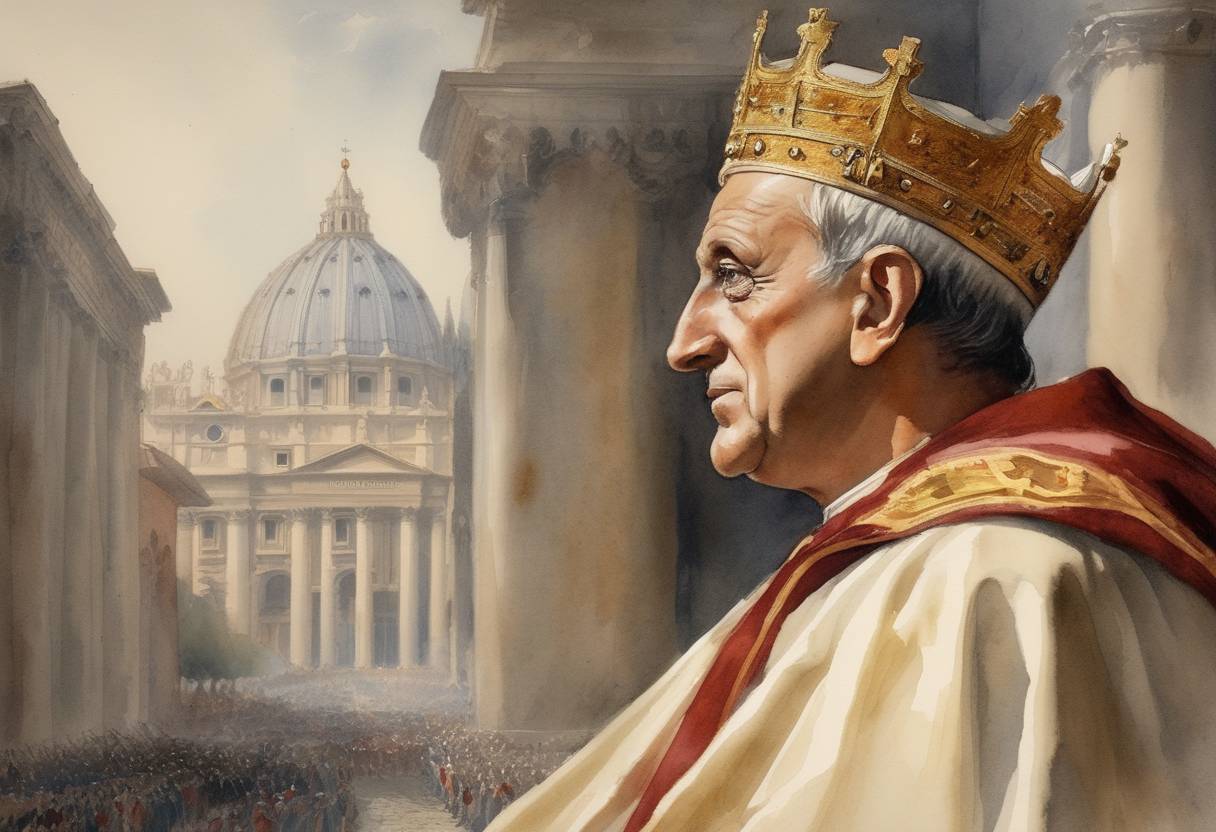
On October 28, 1061, a significant event unfolded within the Catholic Church that highlighted the tensions and political maneuvers characterizing Church leadership in the 11th century. Antipope Honorius II was elected, provoking a power struggle against the legitimate Pope Alexander II.
During the mid-11th century, the papacy was a prize fiercely contested between factions within the Church and secular authorities, particularly those from the Holy Roman Empire. The period was rife with corruption and schism, mainly due to the investiture controversy, which dealt with the appointment and influence over key ecclesiastical positions by secular rulers.
Pope Nicholas II had implemented the Papal Election Decree in 1059, which aimed to reduce secular interference by establishing that future papal elections should be conducted by the cardinal-bishops, with the assent of the clergy and laity and the remaining cardinals. Nevertheless, this did not entirely eliminate exterior influences, especially from noble families and political rulers.
After the death of Pope Nicholas II in 1061, a contested papal election took place. Pope Alexander II was elected by the reformist party and officially installed in Rome. However, the election was not recognized by significant factions within the Church who allied with the German emperor, Henry IV, and who supported the Roman noble family of the Tusculani. This group convened a rival synod in Basel, leading to the election of Antipope Honorius II, born Peter Cadalus, the Bishop of Parma.
The election of Honorius II was primarily driven by those opposed to the Gregorian Reform movement, which sought to address abuses like simony and the moral corruption of the clergy. His supporters sought a pope who would adhere to the prevailing political norms rather than the stricter reforms advocated by Alexander II and his allies.
The conflict between Alexander II and Honorius II led to a schism within the Church, with both parties securing different levels of support. Honorius attempted to install himself in Rome but faced staunch opposition from Alexander’s supporters. This schism lasted until 1064 when the Council of Mantua convened, decisively supporting Alexander II as the legitimate pope, limiting Honorius II’s influence and declaring Alexander as the universally recognized pontiff.
The episode underlined the vulnerabilities and susceptibility of the papal seat to political pressures, as well as the entangled relationship between the Church and secular rulers. The schism also highlighted a crucial moment in the ongoing struggles for reform within the Church, which would continue to unfold in subsequent decades, culminating during the Investiture Controversy with the Concordat of Worms in 1122.
Antipope Honorius II’s claim, though short-lived, exhibited the deep divisions within the Church and foreshadowed ongoing battles between ecclesiastical and secular powers.
Source: en.wikipedia.org