The Haymarket Affair: May 1, 1886
1886 · Chicago, United States
The Haymarket affair began in Chicago as part of a nationwide movement for an eight-hour workday, leading to a violent confrontation.
May 4, 1886
The Haymarket affair occurred in Chicago, where a labor protest rally turned violent after a bomb was thrown at police, leading to deaths and a controversial trial.
Chicago, USA | Labor unions
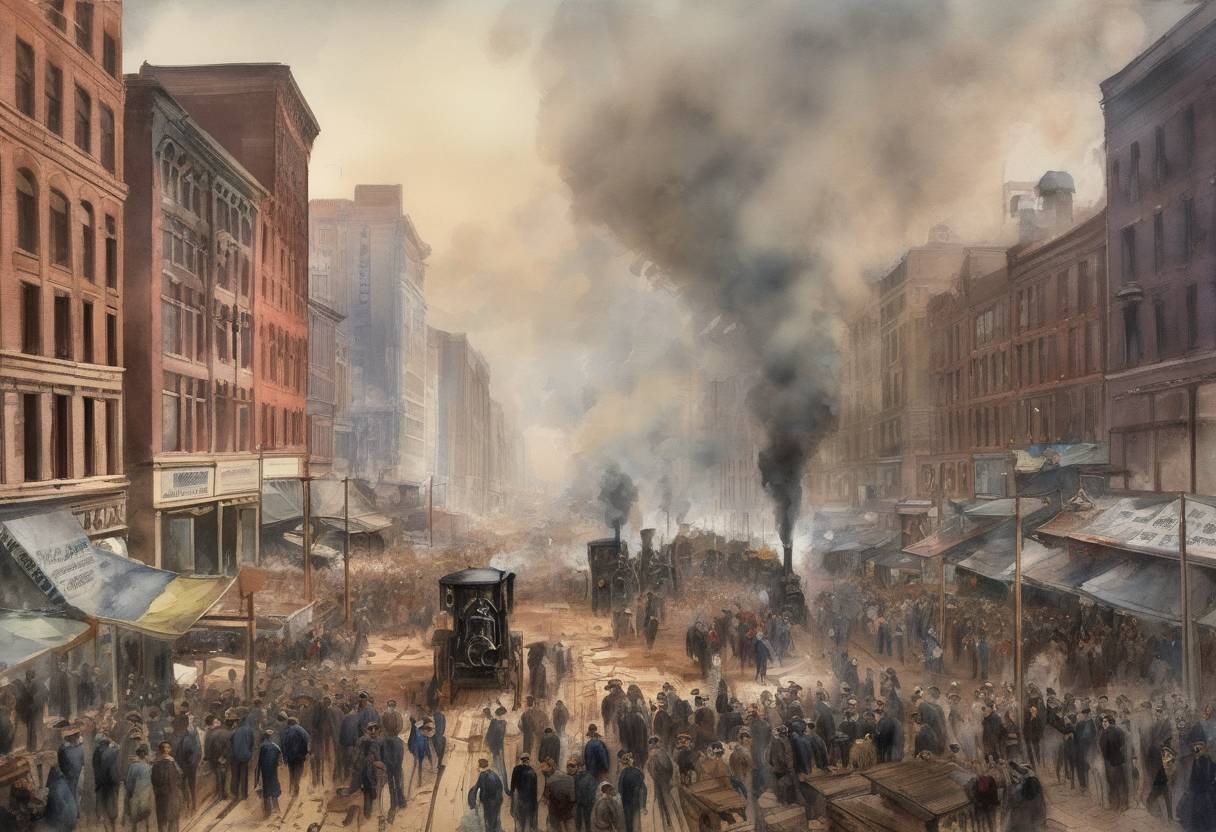
The Haymarket Affair, also known as the Haymarket Riot or Haymarket Massacre, was a pivotal event in the history of labor movements in the United States. It took place on May 4, 1886, in Chicago, Illinois, and had profound implications for labor rights, the perception of anarchism, and the American legal system.
The late 19th century was a period of rapid industrialization in the United States, marked by harsh working conditions, long hours, and low wages for laborers. The labor movement was gaining momentum, with workers increasingly organizing to demand better conditions, including the eight-hour workday.
On May 1, 1886, known as International Workers’ Day or May Day, a nationwide strike was organized to advocate for the eight-hour workday. Chicago was a major center of this movement, with tens of thousands of workers participating in strikes and rallies.
On May 4, a peaceful rally was held at Haymarket Square in Chicago to protest the police violence that had occurred during a strike at the McCormick Harvesting Machine Company the previous day, where several workers were injured and at least one was killed.
The rally at Haymarket Square was initially peaceful, with speeches by labor leaders and activists. However, as the event was winding down, a large contingent of police arrived to disperse the crowd. During this confrontation, an unknown individual threw a bomb into the police line. The explosion killed one police officer instantly and injured several others. In the chaos that ensued, police opened fire on the crowd, and additional casualties occurred on both sides.
The immediate aftermath of the bombing was a wave of panic and anti-labor sentiment. Eight anarchists were arrested and charged with conspiracy in connection to the bombing, despite a lack of concrete evidence linking them to the crime. The trial, held in 1887, was highly controversial and widely criticized for its bias and lack of due process.
Seven of the defendants were sentenced to death, and one to 15 years in prison. Of those sentenced to death, four were executed on November 11, 1887, one committed suicide in prison, and two had their sentences commuted to life imprisonment by Illinois Governor John Peter Altgeld in 1893, who cited the unfairness of the trial.
The Haymarket Affair had lasting impacts on the labor movement and the perception of anarchism in the United States:
Labor Rights: The event galvanized labor activists worldwide and became a symbol of the struggle for workers’ rights. It highlighted the need for fair labor practices and contributed to the eventual establishment of the eight-hour workday.
Legal and Political Repercussions: The trial and its outcomes were seen as a miscarriage of justice, leading to increased scrutiny of legal processes and the rights of defendants.
May Day: The events surrounding the Haymarket Affair contributed to the establishment of May Day as an international day of labor solidarity and protest.
The Haymarket Affair remains a significant chapter in the history of labor rights, illustrating the tensions between labor and capital and the ongoing struggle for justice and equality in the workplace.
Source: en.wikipedia.org