The Siege of Masada: April 15, 73 CE
73 · Masada, Judea
The Siege of Masada ends with the fall of the Jewish fortress to the Roman Empire, marking the end of the First Jewish-Roman War.
July 20, 0070
The Siege of Jerusalem by the Roman army led by Titus reaches a critical point as the Roman forces breach the Antonia Fortress, a key defensive position for the Jewish rebels.
Jerusalem, Judea | Roman Empire
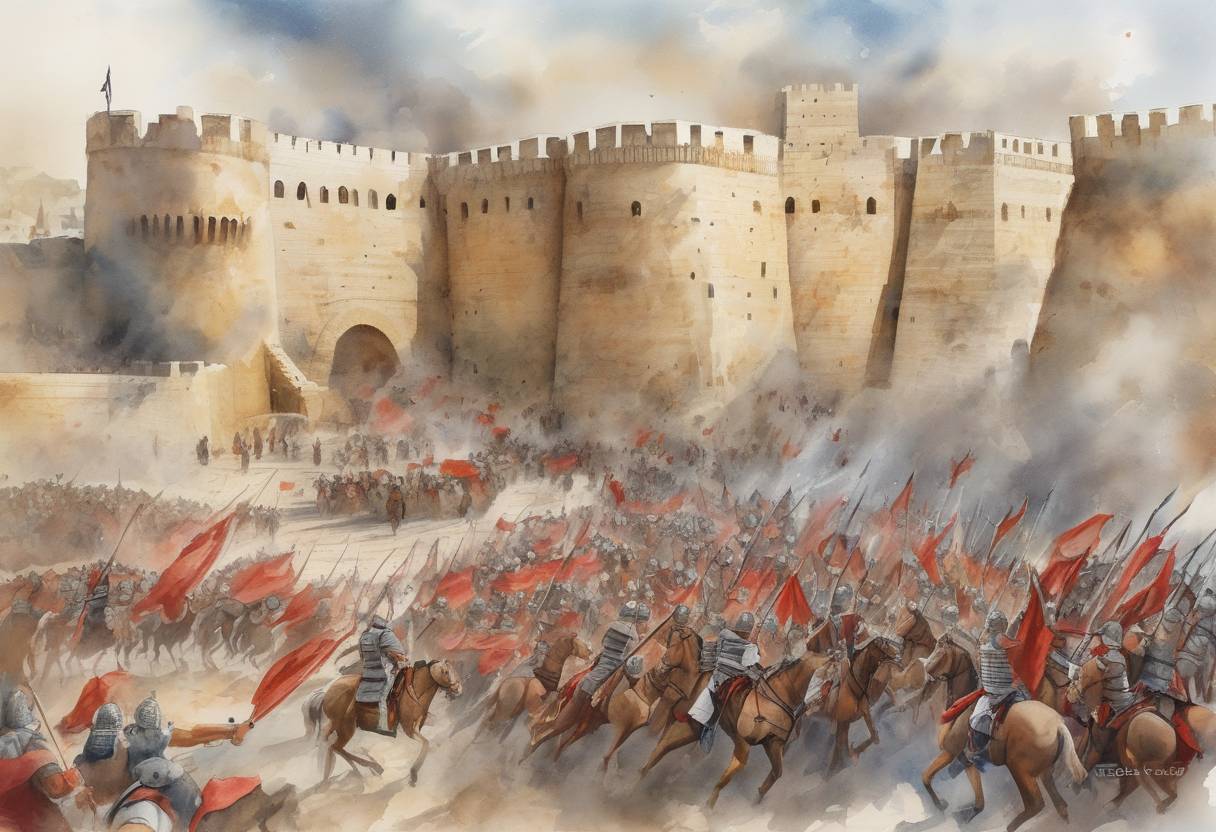
The Siege of Jerusalem in 70 CE was a pivotal event during the First Jewish-Roman War, also known as the Great Jewish Revolt. On July 20, 70 CE, the Roman forces, led by General Titus, reached a critical juncture in their campaign against the Jewish rebels by breaching the Antonia Fortress, a significant defensive stronghold.
The First Jewish-Roman War began in 66 CE as a result of growing tensions between the Roman Empire and the Jewish population in Judea. The conflict was fueled by religious and political unrest, heavy taxation, and Roman disrespect for Jewish customs. The rebellion quickly escalated, and by 67 CE, the Roman Empire dispatched a large military force to suppress the uprising.
Titus, the son of Emperor Vespasian, took command of the Roman forces in 70 CE. His strategy focused on capturing Jerusalem, the heart of the rebellion, to crush the Jewish resistance.
The siege of Jerusalem began in April 70 CE. The city was heavily fortified, with three concentric walls and several strongholds, including the Antonia Fortress, which protected the Temple Mount. The fortress was named after Mark Antony and served as a key defensive position for the Jewish rebels.
Titus’s forces, numbering around 60,000 men, surrounded the city and employed various siege tactics, including building siege ramps and using battering rams. The Romans faced fierce resistance from the Jewish defenders, who were determined to protect their city and temple.
On July 20, 70 CE, the Roman army achieved a significant breakthrough by breaching the Antonia Fortress. This event marked a turning point in the siege, as it allowed the Romans to gain access to the Temple Mount, a critical area for the Jewish defenders.
The fall of the Antonia Fortress demoralized the Jewish resistance and paved the way for the Romans to intensify their assault on the remaining parts of the city. The capture of this strategic position was crucial for the Romans as it provided a vantage point and a staging ground for further attacks.
Following the breach of the Antonia Fortress, the Romans continued their relentless assault on Jerusalem. By late August 70 CE, the Romans had destroyed the Second Temple, a devastating blow to the Jewish people both spiritually and culturally. The city was eventually captured, and the Roman forces systematically razed it, leaving only a few structures standing.
The destruction of Jerusalem and the Second Temple had profound consequences. It marked the end of the Jewish rebellion and led to the dispersal of the Jewish population, known as the Jewish Diaspora. The event also solidified Roman control over Judea and had lasting impacts on Jewish history and identity.
The Siege of Jerusalem and the breach of the Antonia Fortress are significant for several reasons:
The breach of the Antonia Fortress remains a key moment in the history of the Roman Empire and the Jewish people, symbolizing both the might of Rome and the resilience of the Jewish spirit.
Source: en.wikipedia.org