Valentinian III Elevated to Roman Emperor
425 · Rome, Western Roman Empire
Valentinian III is elevated to Roman Emperor at the age of six.
August 25, 0383
The Roman Emperor Gratian is killed in Lugdunum (modern-day Lyon, France) by the forces of the usurper Magnus Maximus.
Lugdunum, Western Roman Empire | Roman Empire
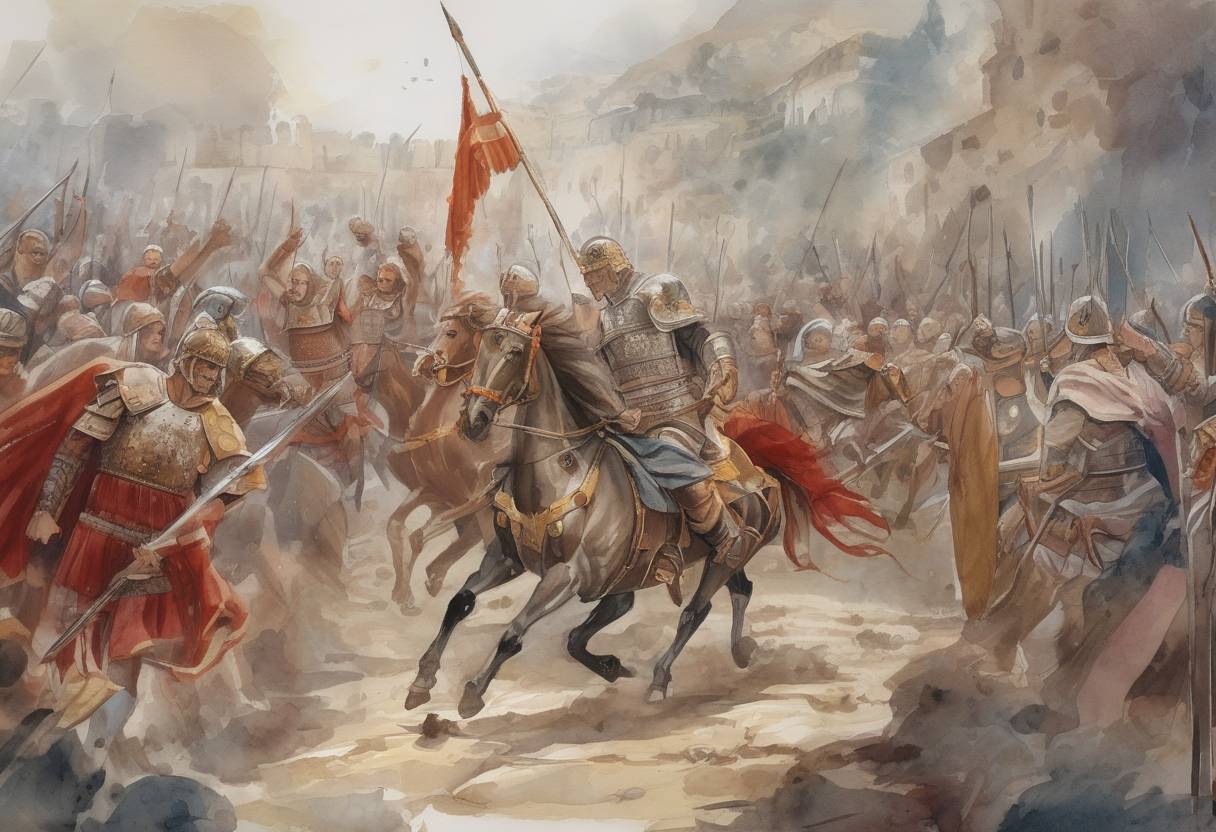
On August 25, 383, a significant event unfolded in the Roman Empire: the assassination of Emperor Gratian in Lugdunum, known today as Lyon, France. This event marked a pivotal moment in the turbulent period of the late Roman Empire, characterized by internal strife and power struggles.
Gratian was born in 359 and became Roman Emperor in 367, initially as a co-emperor with his father, Valentinian I. Upon his father’s death in 375, Gratian became the senior Augustus of the Western Roman Empire. His reign was marked by efforts to strengthen the empire’s borders and a notable inclination towards Christianity, which influenced his policies.
However, Gratian’s rule faced challenges. His favoritism towards the Alans, a group of nomadic tribes, and his perceived neglect of the Roman military alienated many traditional Roman elites and soldiers. Additionally, his decision to remove the Altar of Victory from the Roman Senate was unpopular among the pagan aristocracy.
Magnus Maximus, a Roman general of Spanish origin, emerged as a formidable rival to Gratian. Stationed in Britain, Maximus was proclaimed emperor by his troops in 383. His usurpation was partly fueled by dissatisfaction with Gratian’s leadership and the desire for a more militarily focused ruler.
As Maximus advanced into Gaul, Gratian attempted to muster support but found himself increasingly isolated. His forces dwindled as many defected to Maximus. Eventually, Gratian fled towards the Alps, seeking refuge. However, he was captured in Lugdunum by the forces loyal to Maximus.
On August 25, 383, Gratian was executed, marking the end of his reign. His death was a significant blow to the Valentinian dynasty and highlighted the fragility of imperial power during this era.
The assassination of Gratian had several consequences:
Consolidation of Power by Maximus: Following Gratian’s death, Magnus Maximus solidified his control over the Western Roman Empire, ruling from Gaul and Britain. His reign, however, was short-lived, as he was defeated by Theodosius I in 388.
Religious and Political Shifts: Gratian’s death marked a shift in the religious landscape of the empire. His policies had favored Christianity, and his removal allowed for a temporary resurgence of pagan influence under Maximus.
Continued Fragmentation: The power struggles exemplified by Gratian’s assassination underscored the ongoing fragmentation and instability within the Roman Empire, a precursor to its eventual decline in the West.
In summary, the assassination of Emperor Gratian was a critical event that reflected the internal divisions and challenges facing the late Roman Empire. It set the stage for further conflicts and transformations in the empire’s political and religious landscape.
Source: en.wikipedia.org