Creation of the United States Mint - March 3, 1791
1791 · Philadelphia, United States
The United States Congress passes a resolution creating the U.S. Mint.
January 7, 1782
The first American commercial bank, the Bank of North America, opened in Philadelphia, Pennsylvania, marking a significant development in the financial history of the United States.
Philadelphia, United States | Bank of North America
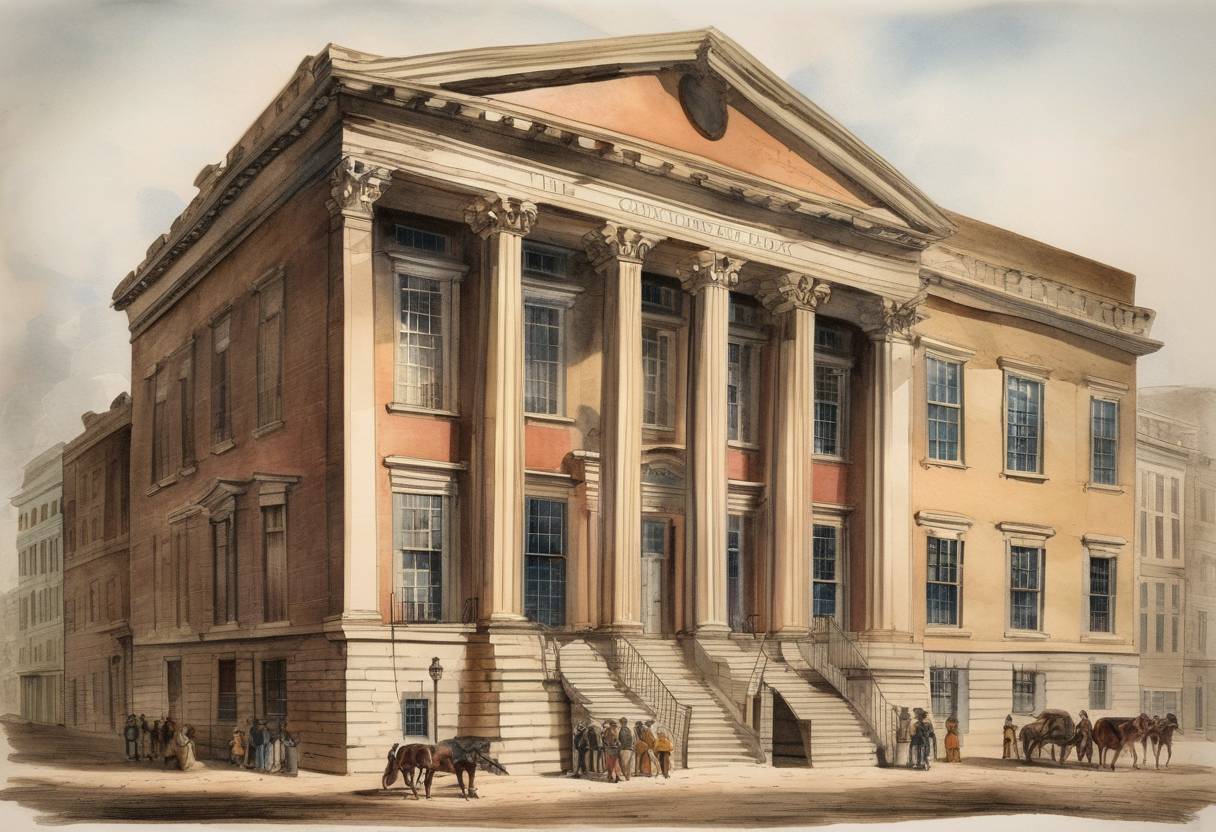
On January 7, 1782, the Bank of North America opened its doors in Philadelphia, Pennsylvania, marking a pivotal moment in the financial history of the United States. This institution was the first commercial bank in the nation and played a crucial role in stabilizing the fledgling American economy during the post-Revolutionary War period.
Economic Challenges: Following the American Revolutionary War, the United States faced significant economic challenges, including war debts, inflation, and a lack of a stable currency. The Continental Congress had issued paper money, known as Continental currency, which had depreciated significantly, leading to financial instability.
Need for a National Bank: The idea of a national bank was championed by Robert Morris, the Superintendent of Finance for the United States. Morris recognized the need for a centralized financial institution to manage the country’s finances, support government credit, and facilitate commerce.
Charter and Legislation: The Bank of North America was chartered by the Continental Congress on December 31, 1781. It was modeled after the Bank of England and was intended to serve as a depository for government funds, issue banknotes, and provide loans to the government and private businesses.
Funding and Operations: The bank was initially capitalized with a combination of specie (gold and silver) and government securities. It began operations with a capital stock of $400,000, a substantial sum at the time. The bank’s operations were overseen by a board of directors, with Robert Morris playing a key role in its management.
Economic Stabilization: The Bank of North America helped stabilize the American economy by providing a reliable currency and facilitating trade. Its banknotes were widely accepted and helped restore confidence in the financial system.
Precedent for Future Banks: The success of the Bank of North America set a precedent for the establishment of future banks in the United States, including the First Bank of the United States in 1791. It demonstrated the viability of a national banking system and influenced the development of the country’s financial infrastructure.
Legacy: The bank continued to operate for many years, eventually merging with other institutions. Its establishment marked the beginning of a structured banking system in the United States, contributing to the nation’s economic growth and development.
In summary, the opening of the Bank of North America on January 7, 1782, was a landmark event in American financial history. It addressed critical economic challenges of the time and laid the groundwork for the modern banking system in the United States.
Source: en.wikipedia.org