Establishment of the Gestapo: April 26, 1933
1933 · Berlin, Germany
The Gestapo, the official secret police of Nazi Germany, is established by Hermann Göring.
February 27, 1943
The Rosenstrasse protest begins in Berlin, where non-Jewish wives of Jewish men protest against their husbands' arrest by the Gestapo.
Berlin, Germany | Gestapo
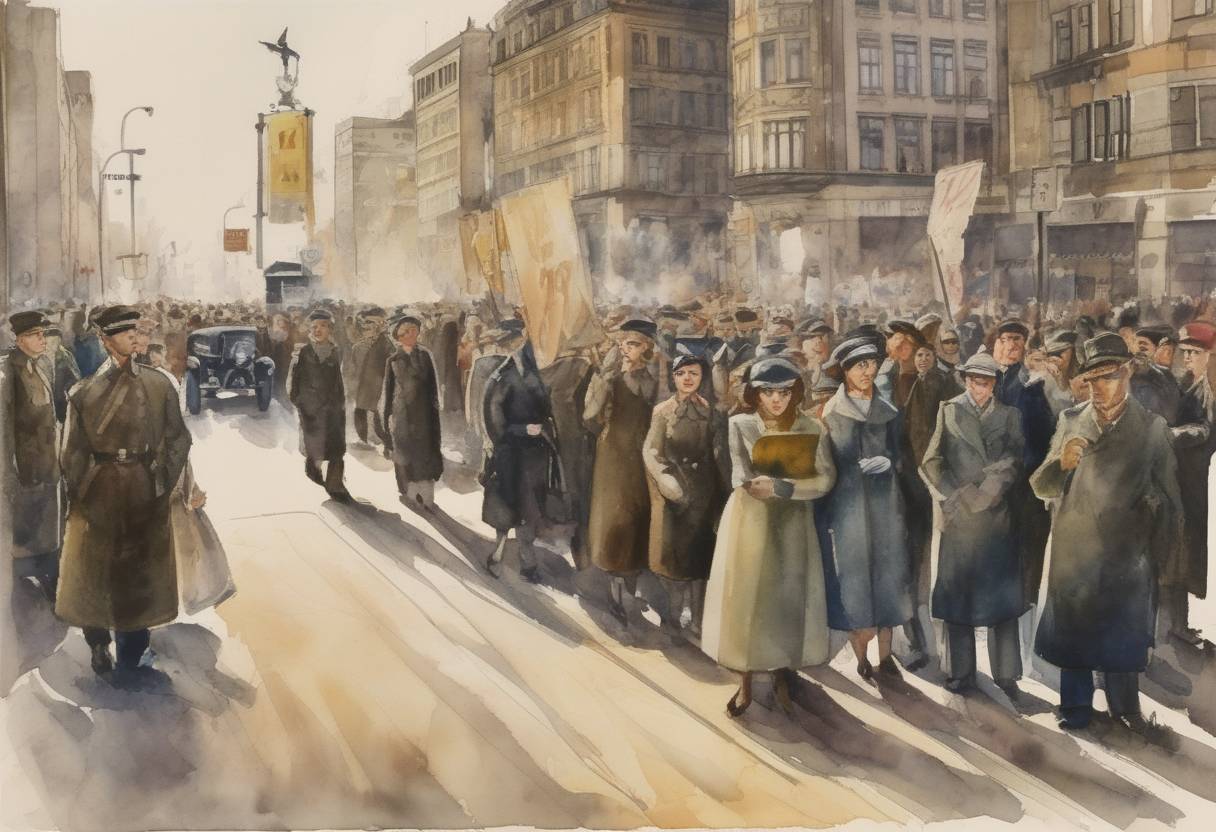
On February 27, 1943, a remarkable act of civil resistance began in Nazi Germany, known as the Rosenstrasse protest. This event took place in Berlin and was a significant demonstration against the Nazi regime’s policies during World War II.
By 1943, the Nazi regime had intensified its efforts to deport Jews from Germany to concentration camps as part of the Holocaust. In a large-scale roundup known as the “Fabrikaktion,” the Gestapo targeted Jewish men who were working in forced labor in Berlin. Many of these men were married to non-Jewish women, which had previously offered them some protection from deportation due to their “mixed marriage” status.
The arrests on February 27, 1943, led to the detention of approximately 1,800 Jewish men at a facility on Rosenstrasse in central Berlin. In response, their non-Jewish wives and other relatives gathered outside the building, demanding the release of their loved ones. The protest was notable for its persistence and the courage displayed by the women, who risked their safety by openly defying the Nazi authorities.
The Rosenstrasse protest is significant for several reasons:
The Rosenstrasse protest remains a poignant example of how ordinary people can challenge injustice, even under the most oppressive circumstances.
Source: en.wikipedia.org