1694 · London, England
British astronomer John Flamsteed observed Uranus without realizing it was an undiscovered planet.
August 11, 1675
The foundation stone of the Royal Greenwich Observatory in London, England is laid.
London, England | Royal Greenwich Observatory
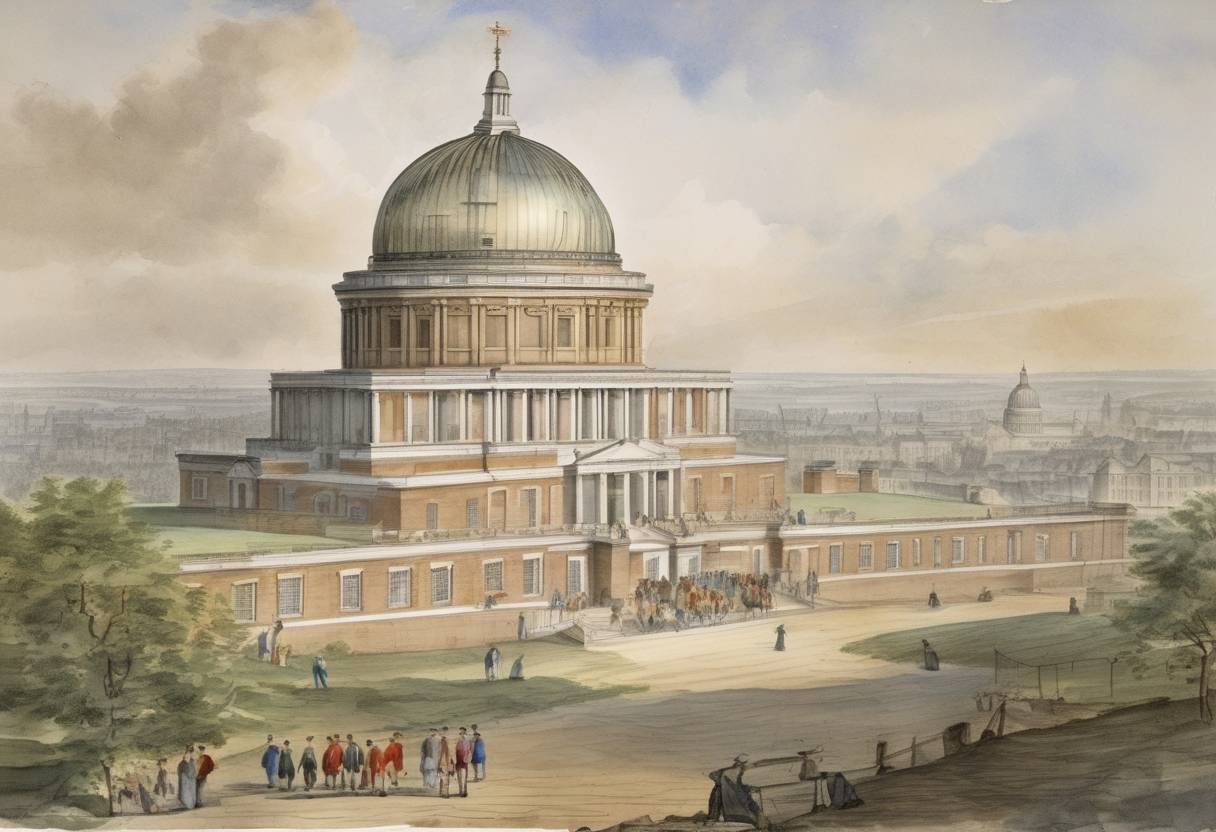
On August 11, 1675, the foundation stone of the Royal Greenwich Observatory was laid, marking the beginning of a significant chapter in the history of astronomy and navigation. This event took place in Greenwich, London, England, and was a pivotal moment in the advancement of scientific endeavors during the 17th century.
The establishment of the Royal Greenwich Observatory was driven by the need for improved navigation at sea, a critical issue for England, a nation with burgeoning maritime ambitions. The lack of accurate methods to determine longitude at sea often led to disastrous consequences for ships. Recognizing this, King Charles II commissioned the observatory to address these navigational challenges.
The observatory was constructed on the site of Greenwich Castle, a location chosen for its strategic vantage point overlooking the River Thames. The building, known as Flamsteed House, was designed by Robert Hooke, incorporating both functional and aesthetic elements suitable for astronomical observations.
The Royal Greenwich Observatory became a center for astronomical research and played a crucial role in the development of the field. It was instrumental in the creation of the Greenwich Meridian, which later became the prime meridian of the world, a reference point for timekeeping and navigation.
The observatory continued to operate in Greenwich until 1948, when it was moved to Herstmonceux Castle in Sussex due to light pollution and other factors. Today, the original site in Greenwich is part of the Royal Museums Greenwich and serves as a museum, preserving its rich history and contributions to science.
The laying of the foundation stone of the Royal Greenwich Observatory on August 11, 1675, was a foundational moment in the history of astronomy and navigation, with its impacts resonating through the centuries.
Source: en.wikipedia.org