1968 · New York City, USA
The musical Hair opened on Broadway. Known for its counterculture-themed content, it became a symbol of the rebellious spirit of the 1960s.
September 26, 1957
The musical 'West Side Story' made its debut on Broadway at the Winter Garden Theatre.
New York City, United States | Broadway
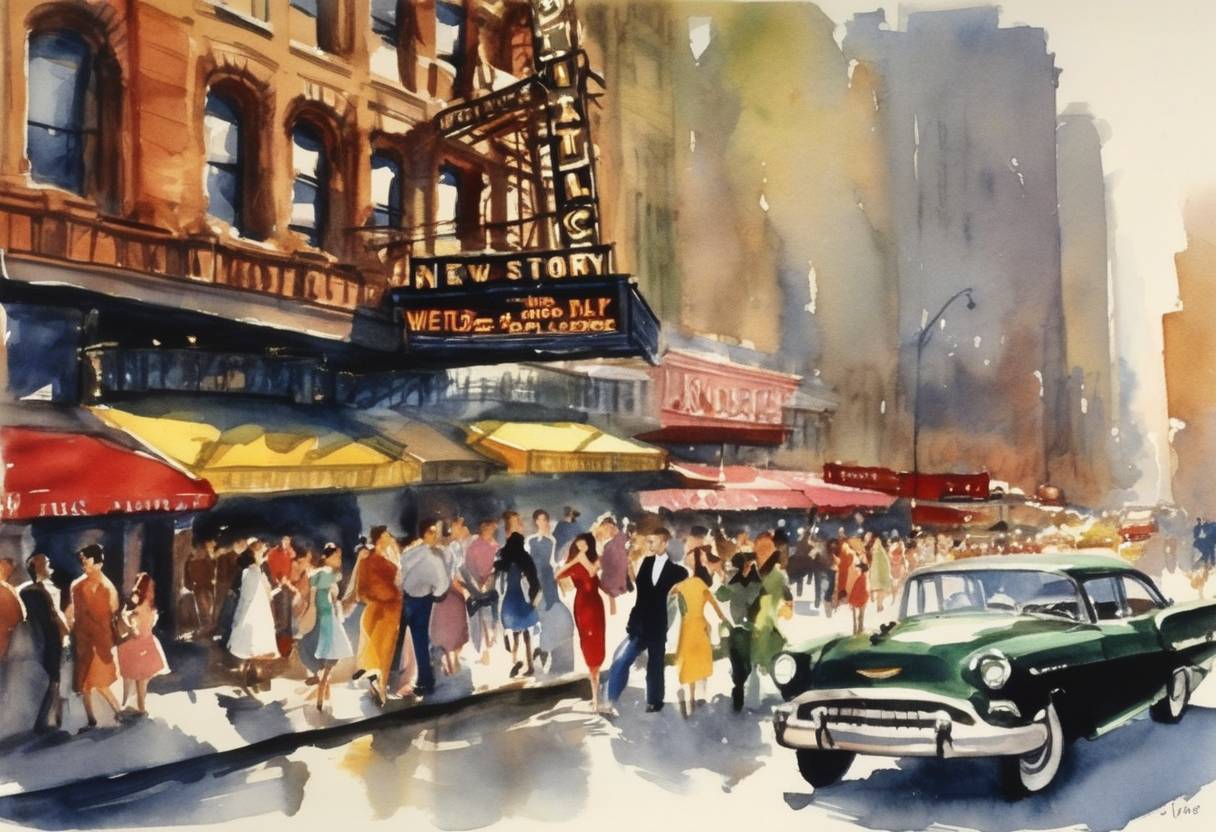
On September 26, 1957, the musical West Side Story made its Broadway debut at the Winter Garden Theatre in New York City. This iconic production marked a significant moment in American theatre history, showcasing an innovative integration of music, dance, and storytelling.
West Side Story was the result of a collaborative effort between several prominent figures in the American theater:
The musical was inspired by William Shakespeare’s tragic play “Romeo and Juliet,” transposing the story of forbidden love and family rivalry to the streets of mid-20th century New York City. It focused on the rivalry between two teenage street gangs of different ethnic backgrounds: the Jets, white Americans, and the Sharks, Puerto Rican immigrants.
The central narrative follows Tony, a former member of the Jets, and Maria, the sister of the Sharks’ leader, Bernardo. Their love struggles to survive amid the escalating tensions between their communities. The story explores themes of prejudice, survival, and the quest for a hopeful future, set against a backdrop of urban strife.
West Side Story was both a critical and commercial success. It received numerous accolades and became renowned for its compelling portrayal of social issues, innovative choreography, and powerful music. The production challenged and expanded the boundaries of traditional musical theater, influencing countless future works.
After its successful Broadway run, West Side Story was adapted into a highly acclaimed film in 1961, which further cemented its place in popular culture. It remains a staple in the repertoire of theater companies worldwide, continually performed and adapted, and its music and themes continue to resonate with audiences.
The debut of West Side Story on this day in 1957 marked the beginning of a legacy that endures more than six decades later, as an exemplar of artistic integration and a poignant social commentary.
Source: www.nytimes.com