Soviet Withdrawal from Afghanistan: February 15, 1989
1989 · Kabul, Afghanistan
The Soviet Union officially announces that all of its troops have left Afghanistan, ending a nine-year military intervention.
December 27, 1979
The Soviet Union invaded Afghanistan, marking the beginning of a decade-long conflict.
Kabul, Afghanistan | Soviet Union
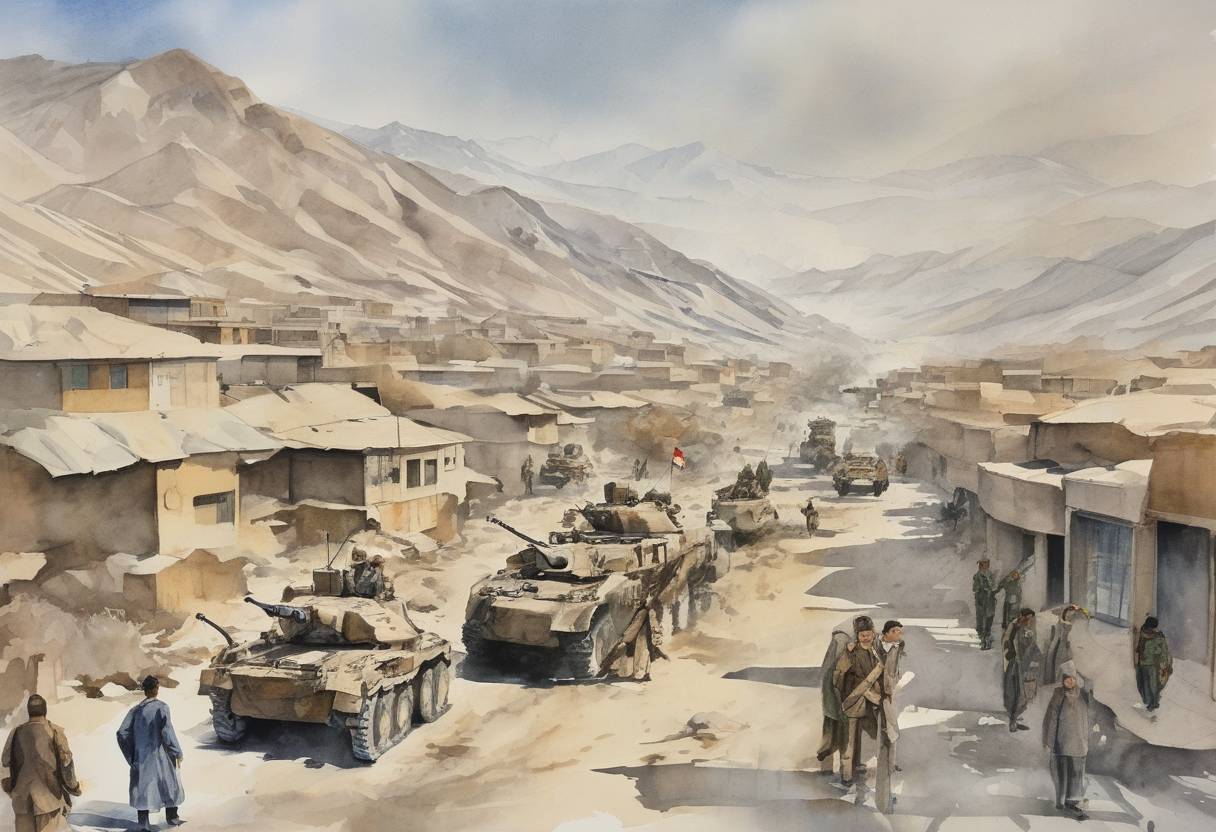
On December 27, 1979, the Soviet Union launched a full-scale invasion of Afghanistan, marking the beginning of a protracted and costly conflict that would last nearly a decade. This military intervention was a pivotal moment in Cold War history, with far-reaching consequences for both Afghanistan and the Soviet Union.
The roots of the Soviet invasion can be traced back to the political instability in Afghanistan during the late 1970s. In April 1978, the People’s Democratic Party of Afghanistan (PDPA), a Marxist-Leninist party, seized power in a coup known as the Saur Revolution. The new government, led by Nur Muhammad Taraki, sought to implement radical socialist reforms, which were met with widespread resistance and unrest across the country.
The internal strife was exacerbated by factionalism within the PDPA, leading to a power struggle. In September 1979, Hafizullah Amin, a rival within the party, orchestrated a coup against Taraki, assuming leadership. Amin’s regime was unstable and faced growing insurgency from various mujahideen groups, who opposed the government’s secular and socialist policies.
Fearing the collapse of a communist ally and the potential spread of Islamic fundamentalism, the Soviet Union decided to intervene. On December 24, 1979, Soviet troops began crossing into Afghanistan. By December 27, they had reached Kabul, the capital, where they executed a swift and decisive operation to overthrow Amin. Soviet special forces stormed the presidential palace, killing Amin and installing Babrak Karmal, a more compliant leader from the PDPA’s Parcham faction.
The Soviet invasion sparked a fierce resistance from Afghan mujahideen fighters, who were supported by the United States, Pakistan, China, and several Arab nations. The conflict quickly devolved into a brutal guerrilla war, with the Soviet military facing significant challenges due to Afghanistan’s rugged terrain and the mujahideen’s effective tactics.
The war had devastating effects on Afghanistan, leading to massive civilian casualties, widespread displacement, and severe economic disruption. It also placed a heavy burden on the Soviet Union, both financially and politically, contributing to growing discontent within the Soviet populace.
The Soviet-Afghan War lasted until February 15, 1989, when the last Soviet troops withdrew from Afghanistan. The conflict is often cited as a contributing factor to the eventual dissolution of the Soviet Union in 1991, as it exposed the limitations of Soviet military power and exacerbated internal economic and political strains.
For Afghanistan, the war left a legacy of destruction and instability, setting the stage for subsequent civil war and the rise of the Taliban in the 1990s. The conflict also had a lasting impact on global geopolitics, intensifying Cold War tensions and shaping U.S. foreign policy in the region for decades to come.
In summary, the Soviet invasion of Afghanistan on December 27, 1979, was a significant event in 20th-century history, with profound implications for both the Soviet Union and Afghanistan, as well as the broader international community.
Source: www.britannica.com