Joshua Slocum's First Solo Circumnavigation of the Globe
1898 · Newport, United States
Joshua Slocum completed the first solo circumnavigation of the globe, arriving in Newport, Rhode Island.
August 9, 1790
The Columbia returned to Boston Harbor after a three-year voyage, becoming the first American ship to circumnavigate the globe.
Boston, United States | none
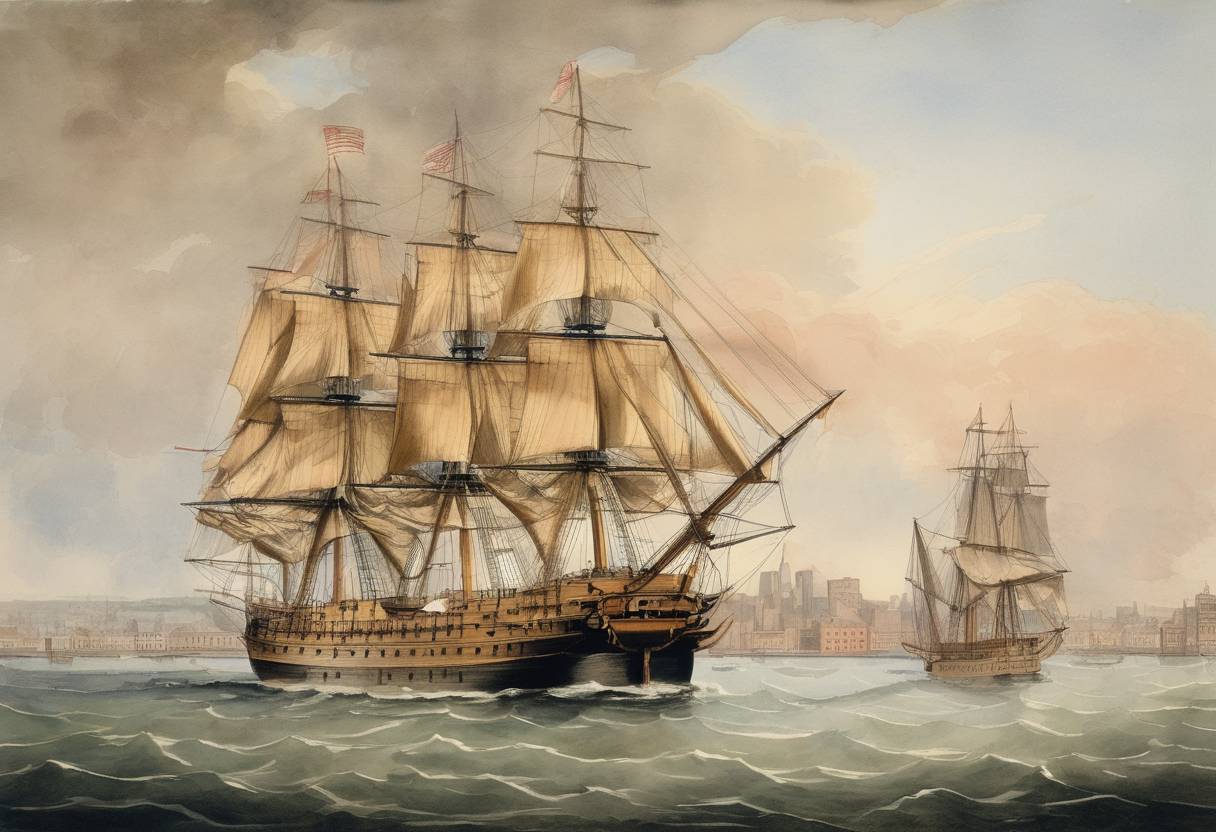
On August 9, 1790, the American ship Columbia Rediviva, commonly known as the Columbia, made history by returning to Boston Harbor after completing a three-year voyage. This marked the first time an American vessel had successfully circumnavigated the globe, a significant milestone in the early maritime history of the United States.
The Columbia’s journey was part of a larger expedition aimed at expanding American trade and influence in the Pacific Northwest and beyond. The voyage was financed by a group of Boston merchants who saw the potential for lucrative trade, particularly in sea otter pelts, which were highly valued in China.
The expedition consisted of two ships: the Columbia, commanded by Captain Robert Gray, and the smaller sloop Lady Washington, under the command of Captain John Kendrick. The two ships set sail from Boston on September 30, 1787, with the primary goal of establishing trade routes and exploring the Pacific Northwest.
During the voyage, the Columbia and Lady Washington navigated around Cape Horn and reached the Pacific Northwest coast of North America. The expedition spent time trading with Indigenous peoples and gathering valuable furs. In 1789, Captain Gray took command of the Columbia, while Kendrick remained with the Lady Washington.
Gray continued the journey across the Pacific Ocean, reaching China, where the furs were exchanged for goods such as tea and porcelain. The Columbia then sailed back to the United States via the Indian Ocean and around the Cape of Good Hope, completing its circumnavigation.
The successful circumnavigation by the Columbia had several important implications:
Maritime Achievement: It demonstrated the capabilities of American ships and sailors, establishing the United States as a burgeoning maritime power.
Economic Impact: The voyage opened new trade opportunities, particularly in the lucrative fur trade with China, which contributed to the economic growth of the young nation.
Exploration and Expansion: The expedition helped to map and explore the Pacific Northwest, laying groundwork for future American claims and settlements in the region.
Cultural Exchange: The interactions with various Indigenous peoples and foreign markets facilitated cultural exchanges and broadened American understanding of global commerce.
Following the successful return of the Columbia, Captain Gray embarked on a second voyage in 1790, during which he famously discovered the Columbia River in 1792, further cementing his legacy as a pioneering American explorer. The Columbia’s circumnavigation remains a celebrated chapter in the history of American exploration and maritime achievement.
Source: en.wikipedia.org