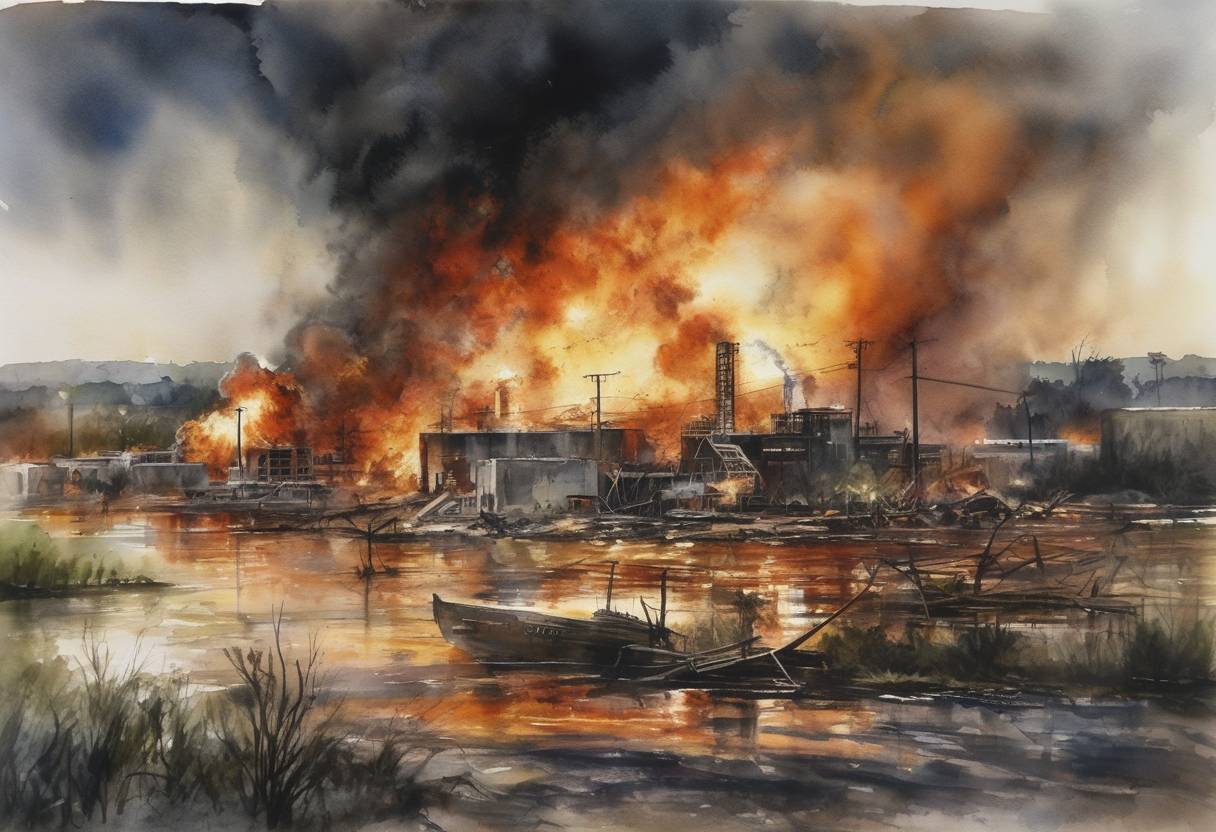
The Phillips Disaster in Pasadena, Texas on March 27, 2000
On March 27, 2000, a significant industrial accident took place at the Phillips Petroleum Company chemical complex located in Pasadena, Texas. This incident is a part of a series of accidents associated with the Phillips plant, known for its historical issues related to industrial safety.
Incident Overview
This particular disaster involved an explosion that occurred within the complex. It resulted in the tragic death of one worker and left seventy-three others injured. The injuries ranged from minor to severe, highlighting the impact of such industrial accidents on plant workers.
Context and Background
The Phillips Petroleum Company’s Pasadena facility had previously experienced significant accidents, including a catastrophic explosion in 1989. At that time, the complex was involved in the production of high-density polyethylene, a material used in various plastic products. The plant’s history of accidents had prompted increased attention to safety protocols and measures to prevent future incidents.
Cause of the Disaster
Investigations into the March 27 explosion indicated that inadequate safety measures and maintenance issues played a role. Although the specific causes may have varied in each case, consistent factors included lapses in process safety management, inadequate training, or failures in adhering to standard safety protocols.
Historical Significance and Consequences
The Phillips disaster on March 27, 2000, underscored ongoing concerns regarding industrial safety practices within chemical processing plants. It highlighted the need for stringent safety regulations, better training for workers, and routine safety audits to prevent similar tragedies.
Furthermore, the recurrence of such incidents raised awareness and led to the implementation of stricter safety laws and regulations, both within the state of Texas and across the chemical industry in the United States. The Occupational Safety and Health Administration (OSHA) often gets involved in investigating such accidents to recommend improvements and enforce compliance with safety standards.
Aftermath
In the wake of the explosion, Phillips Petroleum faced scrutiny and pressure to improve its safety practices. The event served as a catalyst for enhanced industry-wide vigilance and investment in plant safety enhancements, contributing to broader reforms across industrial operations dealing with hazardous materials. Long-term efforts focused on ameliorating safety standards, which became pivotal in reducing the frequency and severity of such industrial accidents in subsequent years.