The Compromise of 1850: Introduction by Henry Clay
1850 · Washington D.C., United States
Henry Clay introduced the Compromise of 1850 to the U.S. Congress, a series of measures intended to ease tensions between slave and free states.
January 31, 1865
The United States Congress passes the Thirteenth Amendment to the Constitution, abolishing slavery in the United States.
Washington D.C., United States | United States Congress
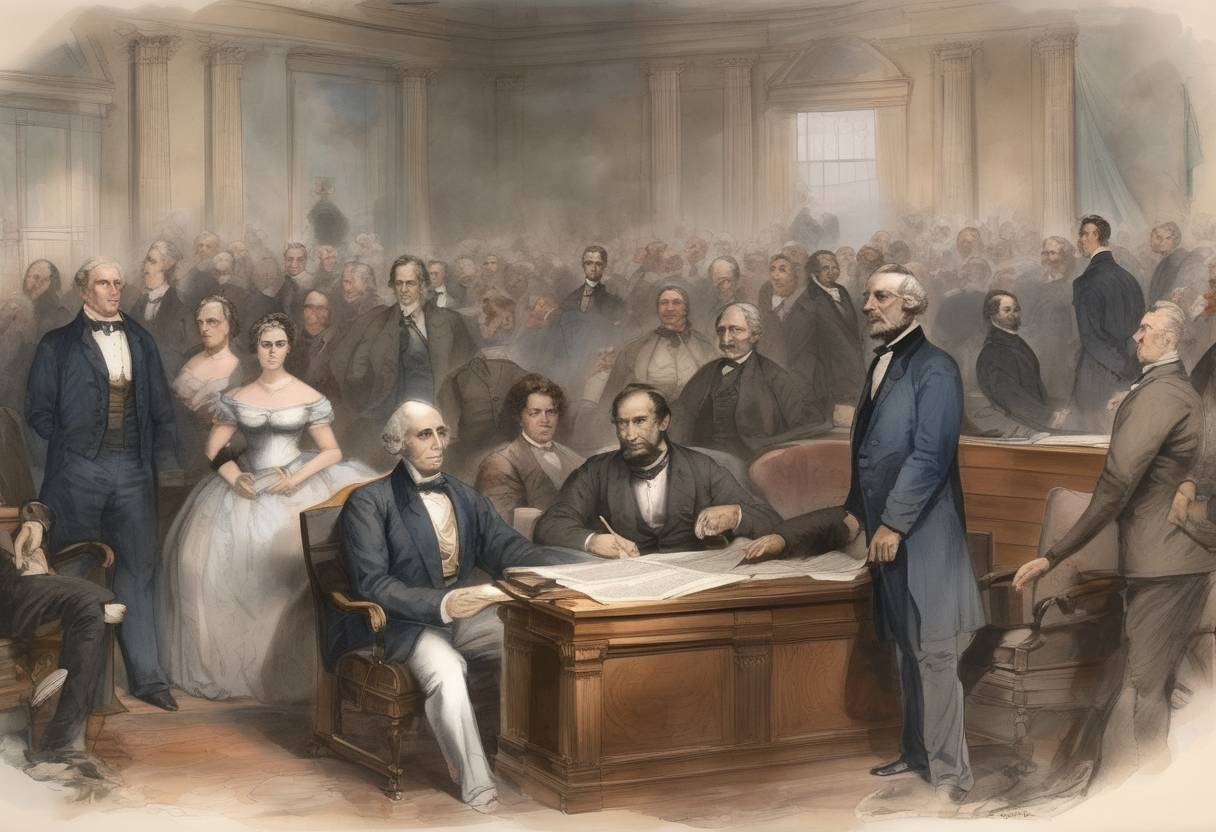
On January 31, 1865, a pivotal moment in American history unfolded as the United States Congress passed the Thirteenth Amendment to the Constitution, a landmark decision that abolished slavery throughout the United States. This event marked a significant turning point in the nation’s long and tumultuous history with slavery.
The Thirteenth Amendment was introduced during the American Civil War, a conflict fundamentally rooted in the issues of slavery and states’ rights. President Abraham Lincoln, who had issued the Emancipation Proclamation on January 1, 1863, sought a more permanent solution to end slavery. The Emancipation Proclamation had declared freedom for slaves in the Confederate states, but it did not apply to border states or areas under Union control. Thus, a constitutional amendment was necessary to ensure the abolition of slavery across the entire nation.
Initial Proposal: The amendment was first proposed in Congress in 1864. It faced significant opposition, particularly from Democrats who were against the abolition of slavery.
Political Maneuvering: President Lincoln and his allies worked tirelessly to garner the necessary support. This involved political negotiations and leveraging the moral and strategic imperatives of ending slavery to unite the nation.
House of Representatives Vote: The amendment required a two-thirds majority in both the House and the Senate. On January 31, 1865, the House of Representatives voted on the amendment, achieving the necessary majority with a vote of 119 to 56.
The Thirteenth Amendment is succinct yet profound in its implications:
Section 1: Neither slavery nor involuntary servitude, except as a punishment for crime whereof the party shall have been duly convicted, shall exist within the United States, or any place subject to their jurisdiction.
Section 2: Congress shall have power to enforce this article by appropriate legislation.
Ratification: Following its passage in Congress, the amendment was sent to the states for ratification. It was ratified by the requisite number of states on December 6, 1865, officially becoming part of the Constitution.
Impact: The Thirteenth Amendment was a monumental step in the struggle for civil rights in the United States. It legally abolished slavery, laying the groundwork for future amendments and legislation aimed at ensuring equality and civil rights for all Americans.
Broader Historical Significance: The amendment not only ended the institution of slavery but also signaled a shift in American society towards greater federal intervention in civil rights issues. It set a precedent for subsequent amendments and civil rights laws that sought to address racial discrimination and inequality.
The passage of the Thirteenth Amendment was a crucial milestone in American history, reflecting the nation’s commitment to liberty and justice. It remains a foundational element of the United States’ legal and moral framework, underscoring the enduring struggle for equality and human rights.
Source: en.wikipedia.org