The Treaty of Basel: Ending the Swabian War
1499 · Basel, Switzerland
The Treaty of Basel was signed, ending the Swabian War between the Swiss Confederation and the Holy Roman Empire.
July 10, 1499
The French army, led by Louis de La Trémoille, defeated the Swiss in the Battle of Dornach, closing the Swabian War.
Dornach, Switzerland | French Army
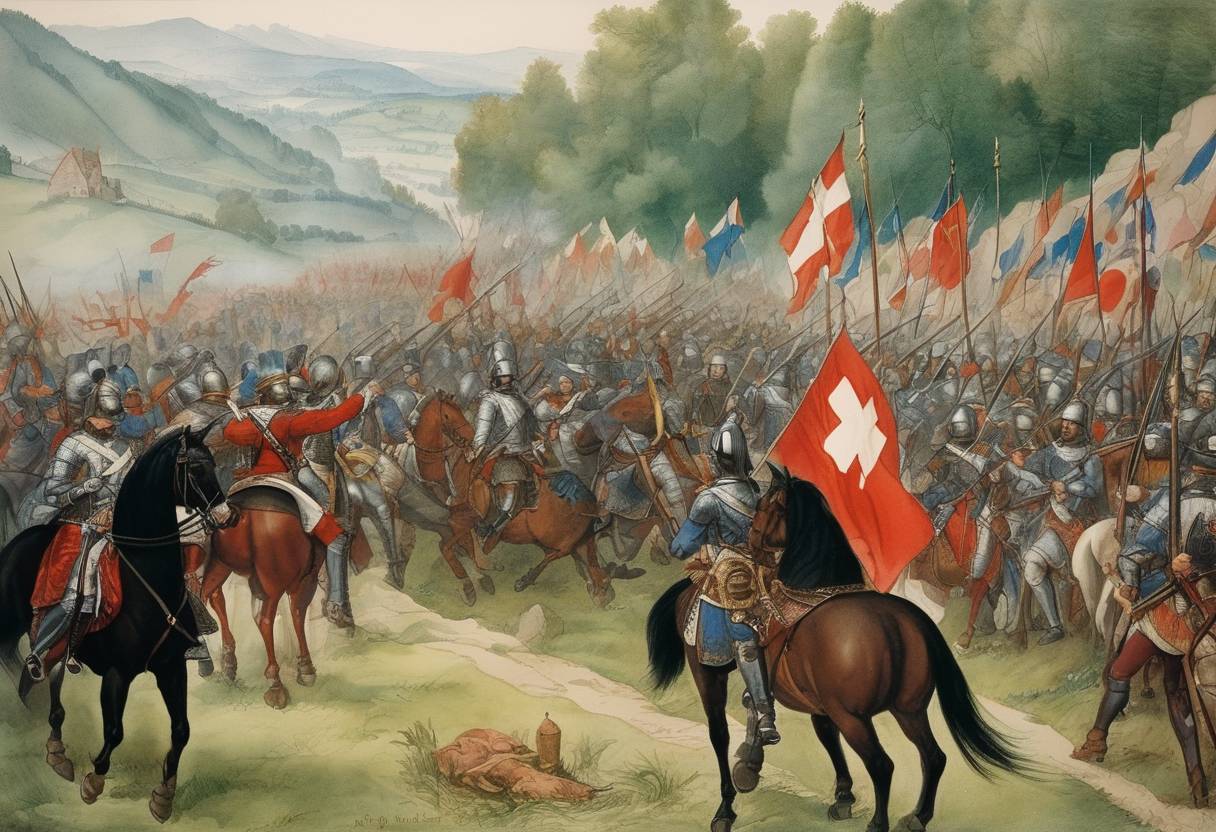
The Battle of Dornach was a critical engagement that marked the culmination of the Swabian War, a conflict fought primarily between the Swiss Confederacy and the forces of the Swabian League, which was closely aligned with the Holy Roman Empire. This battle occurred on July 22, 1499, although some earlier sources may record differing dates due to historical calendar transitions.
The Swabian War, initiated in 1499, was characterized by skirmishes and regional hostilities primarily over territorial disputes and the Swiss resistance against the influence of the Hapsburg dynasty, which sought to consolidate its authority over the region.
End of the Swabian War: The victory at Dornach was pivotal in forcing the Swabian League and Emperor Maximilian I to concede. It led to the Peace of Basel, signed on September 22, 1499, which exempted the Swiss from Imperial legislation, effectively granting them de facto independence within the Holy Roman Empire.
Swiss Autonomy: This battle and the subsequent treaty significantly enhanced the independence and cohesion of the Swiss Confederacy. It marked a decisive step toward Swiss neutrality, a cornerstone of its modern foreign policy.
Impact on Holy Roman Empire: The defeat highlighted the limitations of the central Imperial authority, setting a precedent for the autonomy of regions within the empire.
The Battle of Dornach and the closure of the Swabian War marked a turning point in the struggle for Swiss independence and altered the political landscape of Central Europe during the late 15th century.
Source: en.wikipedia.org