The Battle of Freiberg - October 29, 1762
1762 · Freiberg, Holy Roman Empire
During the Seven Years' War, the Battle of Freiberg took place, resulting in a Prussian victory over Austrian forces.
November 9, 1313
Louis IV, Duke of Bavaria, defeated Frederick I of Austria in the Battle of Gammelsdorf, which was a significant conflict in the continuing struggle between the Wittelsbach and Habsburg dynasties over influence in the Holy Roman Empire.
Gammelsdorf, Holy Roman Empire | House of Wittelsbach
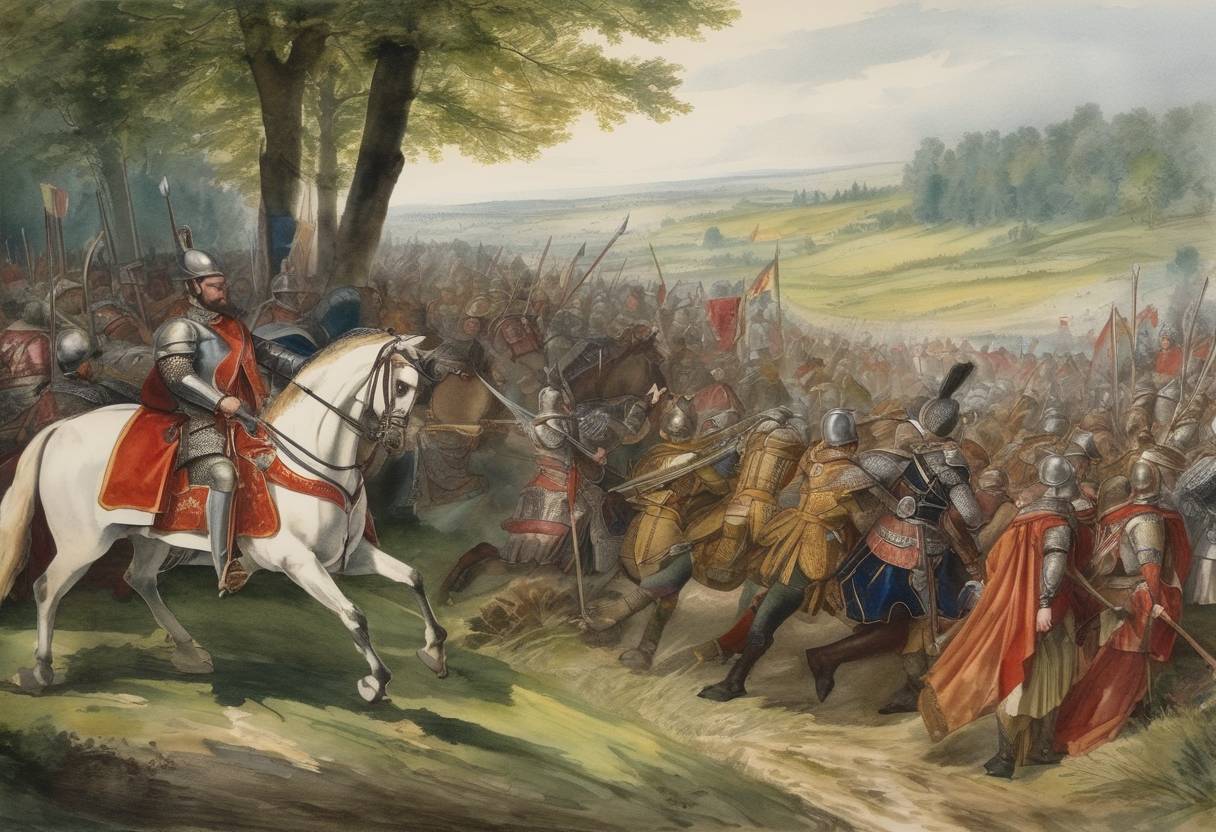
On 9 November 1313, the Battle of Gammelsdorf marked a pivotal moment in the power struggle between the Wittelsbach and the Habsburg dynasties within the Holy Roman Empire. This conflict, which unfolded in the small village of Gammelsdorf in present-day Bavaria, was fundamentally a dynastic battle over territorial influence and control.
The origins of this battle lay in the ongoing rivalry between the House of Wittelsbach, led by Louis IV of Bavaria, and the House of Habsburg, represented by Frederick I of Austria. Tensions had been escalating due to disputes over succession rights and territorial claims, particularly in the rich and strategically important regions of the Holy Roman Empire.
Louis IV was eager to strengthen his position in Bavaria and counteract the growing influence of the Habsburgs. Meanwhile, Frederick I sought to assert his family’s claims and extend their influence over neighboring territories, which brought the two houses into direct conflict.
The confrontation at Gammelsdorf unfolded as both Louis IV and Frederick I mobilized their forces to assert control over disputed domains. Louis IV’s strategic acumen and leadership played a decisive role in the ensuing battle. His forces, although possibly outnumbered, were able to effectively engage and ultimately decisively defeat the troops commanded by Frederick I.
The victory at Gammelsdorf bolstered Louis IV’s position, enhancing his reputation as a military leader and significantly weakening Habsburg claims in the region. This battle demonstrated the volatility of territorial and dynastic politics within the Holy Roman Empire at the time.
The defeat of Frederick I in the Battle of Gammelsdorf had far-reaching consequences for the power dynamics within the Holy Roman Empire. It consolidated Louis IV’s control over Bavaria, strengthening the Wittelsbach hold on the region and diminishing Habsburg influence.
While this victory solidified Wittelsbach power, it was not the end of the tensions between the two houses. The struggle for dominance continued as both Louis IV and his descendants continued to vie for greater influence within the Holy Roman Empire.
In the broader context of European history, the Battle of Gammelsdorf highlighted the shifting alliances and enduring conflicts among noble families vying for power. This confrontation was a precursor to further conflicts that would shape the political landscape of Central Europe in subsequent decades.
Source: en.wikipedia.org