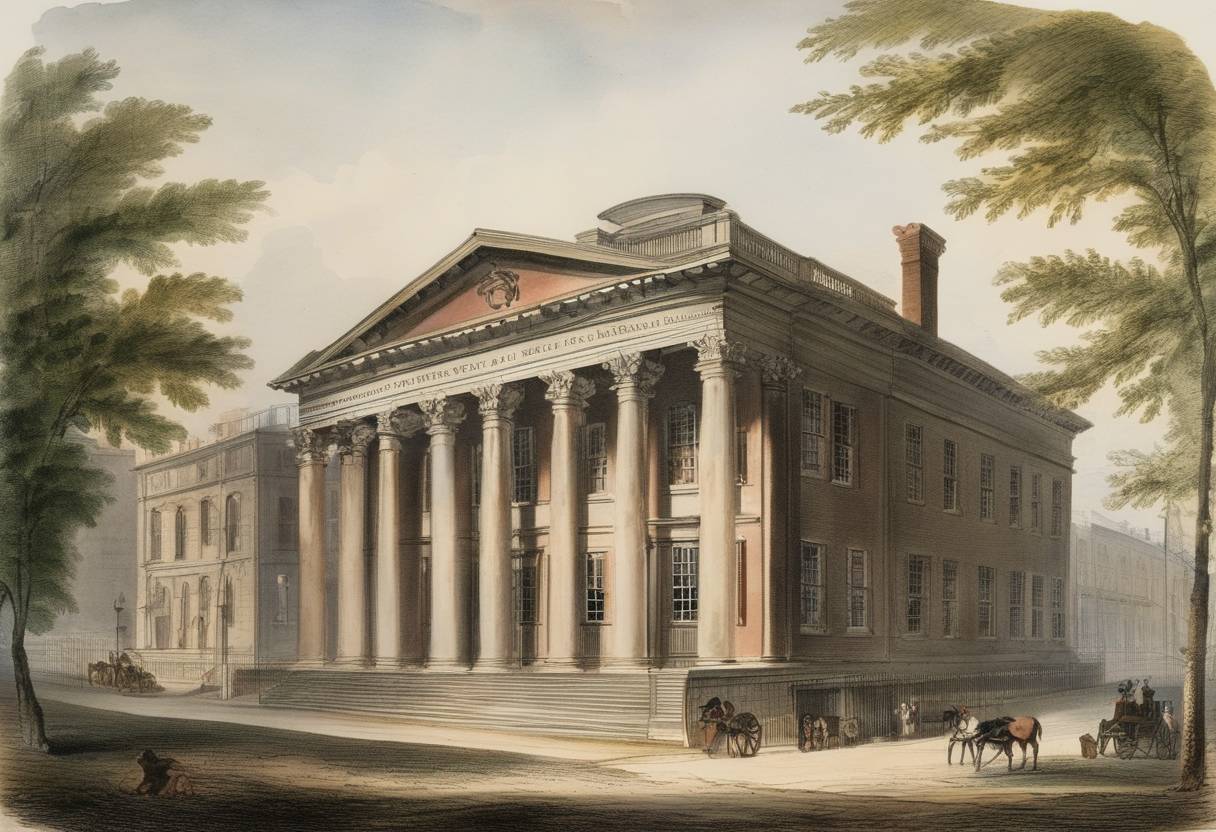
The Chartering of the Bank of North America on February 15, 1786
The Bank of North America, recognized as the first commercial bank in the United States, was granted its charter by the Commonwealth of Pennsylvania on February 15, 1786. This action reaffirmed the bank’s status after it initially received a charter from the Continental Congress on May 26, 1781. The 1786 charter was crucial in solidifying the bank’s operations under state law following some resistance and challenges to its authority and legitimacy.
Background
Establishment and Initial Challenges
Founding Vision: The Bank of North America was conceived to stabilize and support the budding economy of the United States during the Revolutionary War. It aimed to address the critical shortage of currency and improve financial infrastructure to support both public and private sectors.
Key Figure: Robert Morris, the Superintendent of Finance, was instrumental in its establishment. He foresaw the need for a centralized institution that could loan funds to the government and provide a stable currency.
Early Operations: Opened in Philadelphia in 1782, it initially operated under the charter granted by Congress. However, questions about Congress’s power to establish such entities led to efforts to obtain additional state-level authorization.
Challenges and Charter Affirmation
State Opposition: Following its opening, the bank faced opposition primarily from local interests and other states, who questioned the concentration of financial power. This necessitated obtaining a separate charter to operate more securely within Pennsylvania’s legal framework.
February 15 Charter: The charter granted by Pennsylvania on February 15, 1786, was a formal acknowledgment of the bank’s role and importance. It endorsed the bank’s operations and secured its future within the state’s jurisdiction.
Historical Significance
Financial Stability: The bank played a pivotal role in stabilizing the early American economy by providing necessary loans and acting as a depository for government funds.
Precursor to Modern Banking: As the first bank in the fledgling nation, it set precedents concerning banking operations, monetary policy, and regulation that influenced the development of future financial institutions.
Legacy: The practices and policies instituted by the Bank of North America laid foundational aspects for future American financial systems and institutions, including the demand for sound currency and credit mechanisms.
In summary, the formal chartering of the Bank of North America on February 15, 1786, marked a foundational moment in U.S. economic history, bridging the gap between Revolutionary aspirations and the economic realities of a new nation.