Shenzhou 9 Mission: China's Milestone in Space Exploration
2012 · Jiuquan, China
China launched its Shenzhou 9 spacecraft, carrying the country's first female astronaut, Liu Yang, into space.
September 25, 2008
China launches Shenzhou 7, its third human spaceflight mission, which included the country's first spacewalk.
Jiuquan, China | China National Space Administration
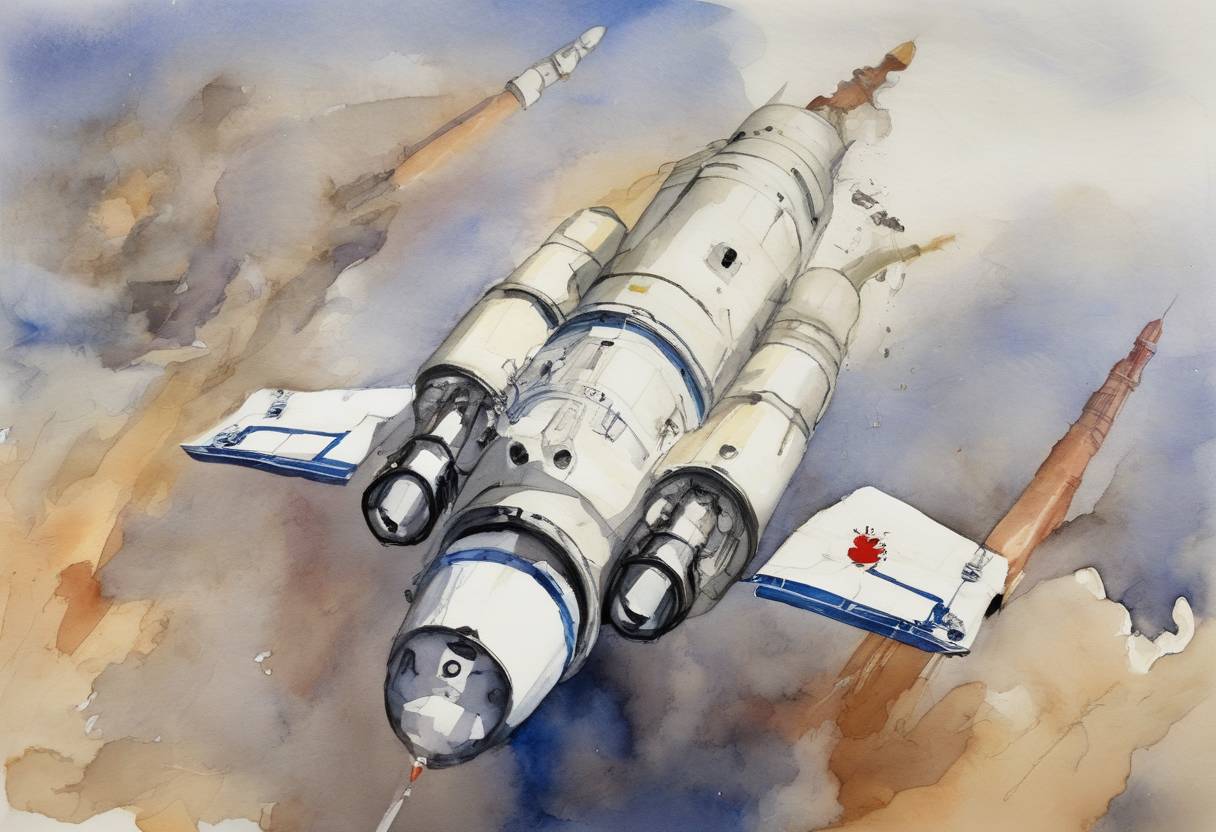
On September 25, 2008, China launched Shenzhou 7, marking a significant milestone in its space exploration efforts. This mission was China’s third human spaceflight and was particularly notable for including the country’s first-ever spacewalk, a crucial step in advancing its capabilities in human space exploration.
China’s space program, managed by the China National Space Administration (CNSA), had been steadily progressing since the launch of its first manned mission, Shenzhou 5, in 2003. The successful completion of Shenzhou 6 in 2005 further demonstrated China’s growing expertise in human spaceflight. The Shenzhou program was part of China’s broader ambitions to establish itself as a major player in space exploration.
The Shenzhou 7 mission was crewed by three astronauts, known as taikonauts:
The primary objective of Shenzhou 7 was to conduct China’s first extravehicular activity (EVA), or spacewalk. This was a critical step in demonstrating the ability to perform complex tasks in space, essential for future missions, including the construction of a space station.
The successful completion of Shenzhou 7 and its spacewalk was a major achievement for China’s space program, showcasing its growing technological capabilities and commitment to becoming a leading spacefaring nation. This mission laid the groundwork for future endeavors, including the development of the Tiangong space station and further lunar exploration missions.
The mission was widely celebrated in China and marked a moment of national pride, reflecting the country’s ambitions in space exploration and its desire to compete with other major spacefaring nations like the United States and Russia.
Shenzhou 7 was a pivotal moment in China’s space exploration history, demonstrating its ability to conduct complex human spaceflight operations. The mission’s success not only advanced China’s technological capabilities but also inspired future generations of scientists and engineers to contribute to the nation’s ambitious space goals.
Source: www.nasa.gov