Afghanistan, Iceland, and Sweden Join the United Nations on November 19, 1946
1946 · Lake Success, United States
Afghanistan, Iceland, and Sweden joined the United Nations.
April 25, 1945
The United Nations Conference on International Organization began in San Francisco, leading to the creation of the United Nations.
San Francisco, United States | United Nations
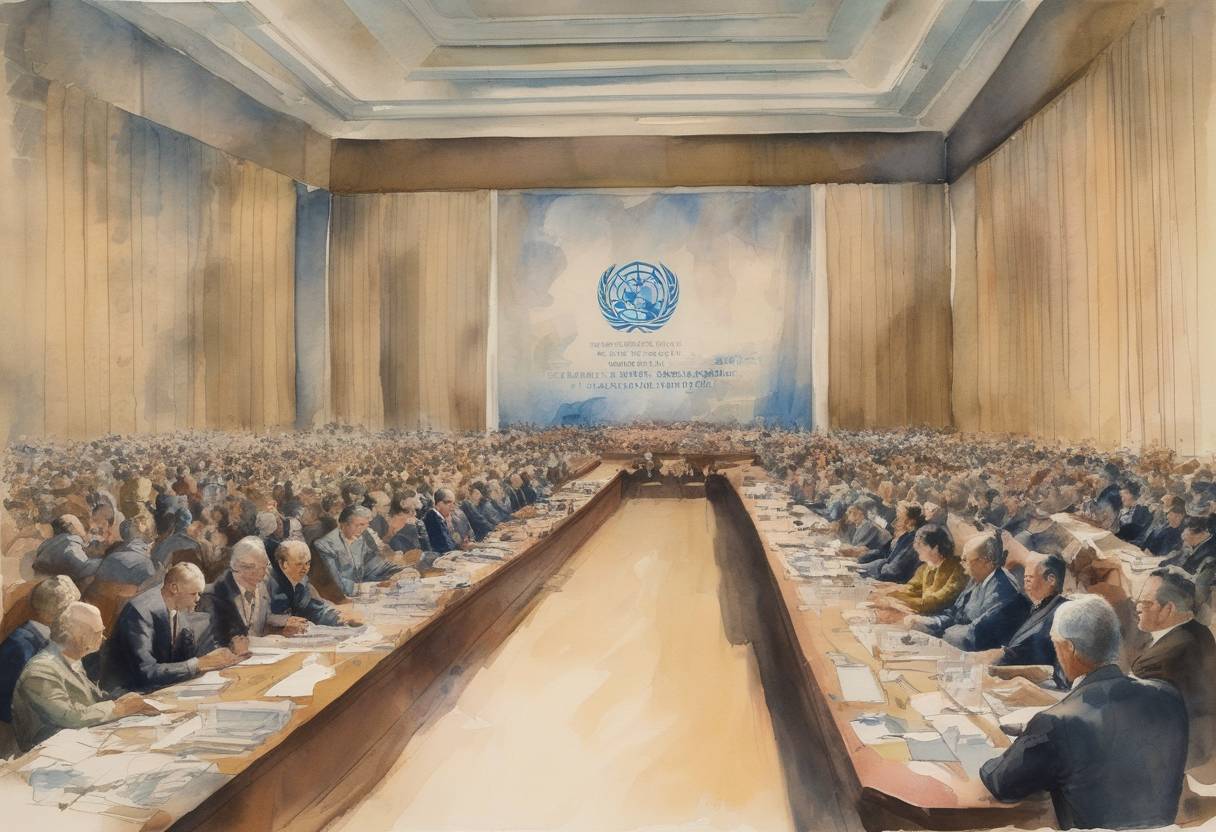
On April 25, 1945, the United Nations Conference on International Organization commenced in San Francisco, California. This pivotal gathering marked the beginning of the process that would lead to the establishment of the United Nations, an international body aimed at fostering peace and cooperation among nations following the devastation of World War II.
The idea of an international organization to prevent future conflicts had been gaining traction even before World War II ended. The League of Nations, established after World War I, had failed to prevent the outbreak of another global conflict, highlighting the need for a more effective international body. During the war, Allied leaders, including U.S. President Franklin D. Roosevelt, British Prime Minister Winston Churchill, and Soviet Premier Joseph Stalin, discussed the formation of a new organization to maintain peace and security.
The Atlantic Charter (1941): This pivotal document, agreed upon by Roosevelt and Churchill, outlined the Allies’ vision for a post-war world, including the establishment of a system of general security.
The Declaration by United Nations (1942): Signed by 26 nations, this declaration formalized the Allies’ commitment to the principles of the Atlantic Charter and laid the groundwork for a new international organization.
The Dumbarton Oaks Conference (1944): Held in Washington, D.C., representatives from China, the Soviet Union, the United Kingdom, and the United States drafted proposals for the structure and function of the United Nations.
The Yalta Conference (February 1945): The Allied leaders agreed on the voting procedures for the United Nations Security Council, a critical component of the new organization.
The conference brought together delegates from 50 nations, representing a diverse array of cultures and political systems. The primary objective was to draft a charter for the United Nations, which would outline its purposes, principles, and structure.
The United Nations Charter: The conference resulted in the drafting of the United Nations Charter, which established the UN’s main bodies, including the General Assembly, the Security Council, the International Court of Justice, and the Secretariat.
Principles of the UN: The charter emphasized the importance of maintaining international peace and security, promoting social progress, and encouraging respect for human rights.
Membership and Structure: The charter outlined the criteria for membership and the roles of various UN bodies, ensuring a balance between the influence of major powers and the participation of smaller nations.
The United Nations Charter was signed on June 26, 1945, and came into force on October 24, 1945, marking the official establishment of the United Nations. The creation of the UN represented a significant step toward international cooperation and collective security, aiming to prevent the recurrence of global conflicts.
The UN has since played a crucial role in various international issues, including peacekeeping, humanitarian aid, and the promotion of human rights. Its establishment marked a new era in international relations, reflecting a collective commitment to a more peaceful and cooperative world order.
Source: en.wikipedia.org