India Launches PSLV-C15 Rocket
2010 · Sriharikota, India
India launched the PSLV-C15 rocket carrying five satellites, including the remote-sensing satellite, Cartosat-2B.
October 23, 2008
India successfully launches its first lunar mission, Chandrayaan-1, marking the country's significant step in space exploration.
Sriharikota, India | Indian Space Research Organisation (ISRO)
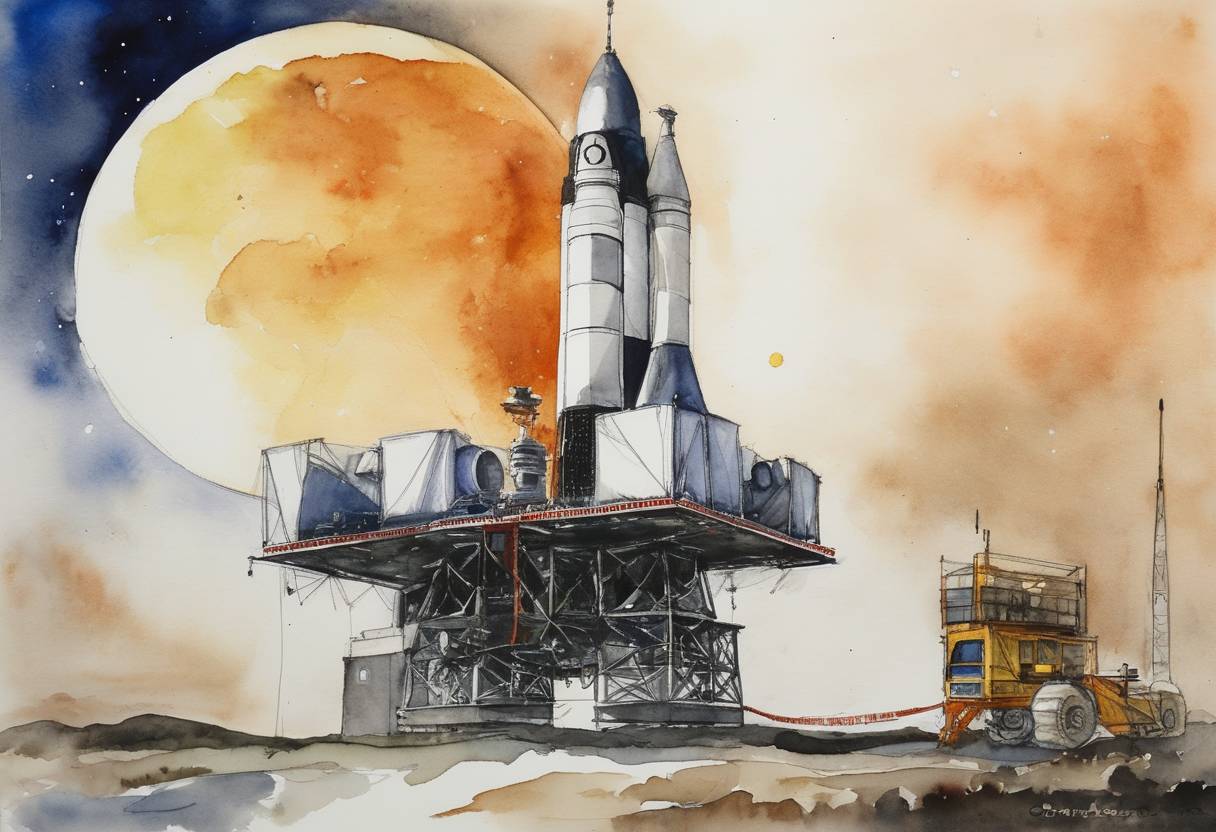
On October 22, 2008, India marked a historic milestone in space exploration with the successful launch of Chandrayaan-1, its first lunar mission. This event propelled India into the ranks of an elite group of nations with the capability to explore the moon.
Before Chandrayaan-1, only the United States, the Soviet Union, Japan, and the European Space Agency had conducted lunar missions. India’s entry into this exclusive domain was driven by a desire to expand its scientific knowledge and technological prowess, while also demonstrating its growing capabilities in space exploration.
Chandrayaan-1 was launched aboard the Polar Satellite Launch Vehicle (PSLV-C11) from the Satish Dhawan Space Centre, located on Sriharikota Island in Andhra Pradesh. The launch was executed precisely at 06:22 IST, amidst a crowd of anticipation and excitement. PSLV-C11 delivered the spacecraft into a highly elliptical geosynchronous transfer orbit, from where it gradually moved to lunar orbit.
The main objectives of Chandrayaan-1 included:
The spacecraft carried 11 scientific instruments, with significant contributions from international partners including NASA, ESA, and Bulgaria. Some key instruments included:
Chandrayaan-1 made several significant discoveries, including the detection of widespread water molecules in lunar soil, revolutionizing understanding of the moon’s environment and altering future lunar exploration strategies. Despite its mission life being curtailed to 312 days from the intended two years due to communication loss, the mission was deemed a resounding success.
Chandrayaan-1’s success was a catalyst for India’s ambitious space program, paving the way for subsequent missions such as Chandrayaan-2 and promising exploration of other celestial bodies. It bolstered India’s position as a leader in space technology and demonstrated its commitment to advancing scientific research and discovery.
Through Chandrayaan-1, India not only achieved its scientific objectives but also inspired a new generation of scientists and engineers, leaving an indelible mark on the history of space exploration.
Source: www.isro.gov.in