The Palomares Incident: January 17, 1966
1966 · Palomares, Spain
A B-52 bomber collides with a KC-135 tanker over Spain, dropping three 70-kiloton hydrogen bombs near the town of Palomares.
January 24, 1961
A B-52 bomber carrying two nuclear bombs crashed near Goldsboro, North Carolina, narrowly avoiding a nuclear disaster.
Goldsboro, United States | United States Air Force
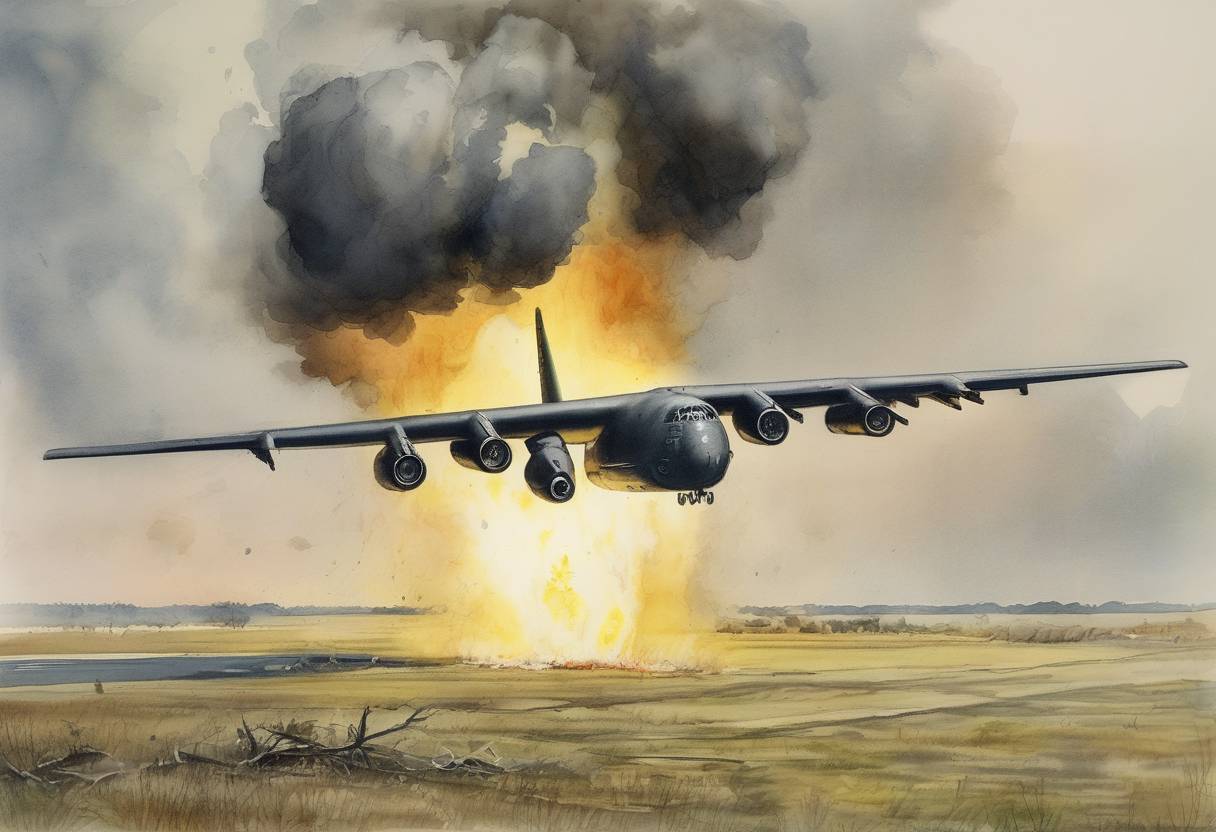
On January 24, 1961, a United States Air Force B-52 bomber experienced a catastrophic failure and crashed near Goldsboro, North Carolina. This incident is particularly significant due to the fact that the aircraft was carrying two Mark 39 hydrogen bombs, each with a destructive capacity of approximately 3.8 megatons.
During the Cold War, the U.S. maintained a policy of continuous airborne alert, known as Operation Chrome Dome, where B-52 bombers armed with nuclear weapons were kept in the air at all times. This was intended to ensure a rapid response capability in the event of a Soviet attack.
The B-52 was on a routine patrol when it encountered a fuel leak. As the situation worsened, the crew lost control of the aircraft, leading to a mid-air breakup. Five of the eight crew members ejected safely, while three perished.
The two Mark 39 hydrogen bombs were released during the breakup of the aircraft. One bomb’s parachute deployed, allowing it to land relatively intact, while the other bomb fell freely and disintegrated upon impact.
The bomb that landed with its parachute deployed came perilously close to detonation. It was later revealed that three of the four safety mechanisms designed to prevent accidental detonation had failed. Only a single low-voltage switch prevented a nuclear explosion.
The Goldsboro incident is often cited as one of the closest instances of an accidental nuclear detonation on U.S. soil. It underscored the inherent dangers of the Cold War nuclear arms race and the importance of stringent safety measures in the handling of nuclear arsenals.
This event remains a sobering reminder of the potential for catastrophic accidents involving nuclear weapons and has been a point of reference in discussions about nuclear safety and disarmament.
Source: en.wikipedia.org