The Surrender of Messina: December 11, 1282
1282 · Messina, Italy
The Sicilian city of Messina surrenders to the forces of Charles of Anjou, marking a significant moment in the War of the Sicilian Vespers.
March 30, 1282
The Sicilian Vespers, a rebellion against the rule of the French king Charles I of Anjou, began with a massacre of French inhabitants in Palermo, leading to the War of the Sicilian Vespers.
Palermo, Kingdom of Sicily | None
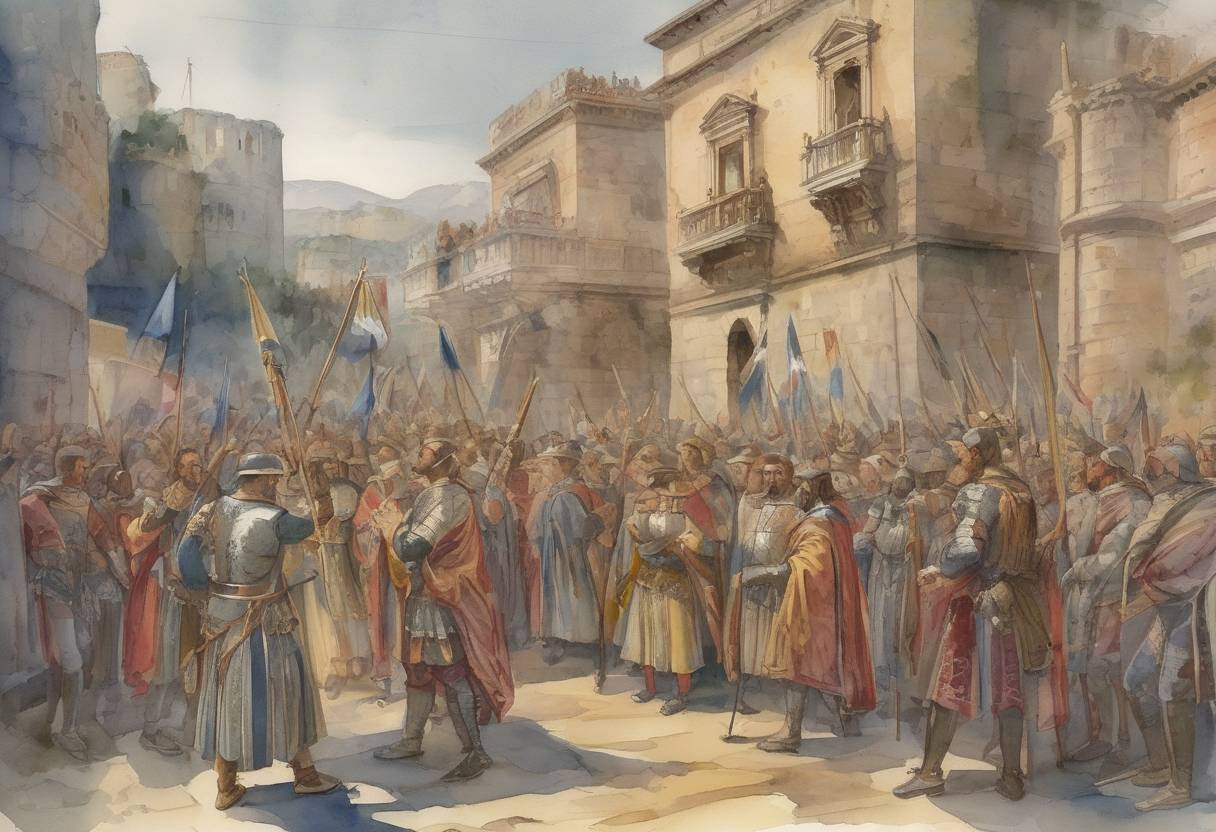
The Sicilian Vespers was a pivotal event in the history of Sicily, marking the beginning of a widespread rebellion against the rule of Charles I of Anjou, the French king who had been ruling the Kingdom of Sicily since 1266. This uprising on March 30, 1282, led to a protracted conflict known as the War of the Sicilian Vespers.
The roots of the rebellion can be traced back to widespread dissatisfaction among the Sicilian populace with the Angevin rule. Charles I of Anjou, who had been installed as the ruler of Sicily by Pope Clement IV, was unpopular due to his oppressive taxation and the preferential treatment given to French officials and soldiers over the local Sicilian nobility. The resentment was further fueled by cultural and linguistic differences, as well as the heavy-handed governance that alienated the local population.
The rebellion began in Palermo on Easter Monday, March 30, 1282. The event that sparked the uprising occurred during the evening vespers service at the Church of the Holy Spirit. A French soldier allegedly insulted a Sicilian woman, leading to a violent confrontation. This incident quickly escalated into a full-scale massacre of the French inhabitants in Palermo. The local population, driven by pent-up anger and resentment, took up arms against the French, resulting in the deaths of thousands of French men, women, and children.
The revolt in Palermo rapidly spread across the island of Sicily. Towns and cities joined the uprising, expelling or killing French officials and soldiers. The rebellion was characterized by its intensity and the widespread participation of the Sicilian populace, who saw it as a fight for their freedom and autonomy.
The initial massacre in Palermo marked the beginning of the War of the Sicilian Vespers, a conflict that lasted until 1302. The war saw the intervention of several European powers, including the Kingdom of Aragon, which supported the Sicilian rebels. Peter III of Aragon, who had a claim to the Sicilian throne through his marriage to Constance, the daughter of Manfred of Sicily, landed on the island and was proclaimed king by the Sicilians.
The War of the Sicilian Vespers had significant consequences for the region and beyond:
The Sicilian Vespers remains a significant event in Sicilian history, symbolizing the struggle for autonomy and resistance against foreign domination. Its legacy is reflected in the cultural and historical identity of Sicily and its people.
Source: en.wikipedia.org