The Siege of Antioch: October 20, 1097
1097 · Antioch, Turkey
The First Crusade: Crusaders led by Godfrey of Bouillon began the Siege of Antioch, a pivotal event in the First Crusade aimed at capturing the city from the Seljuk Turks.
July 1, 1097
The Siege of Nicaea ends as the city surrenders to the Crusaders during the First Crusade.
Nicaea, Byzantine Empire | Crusaders
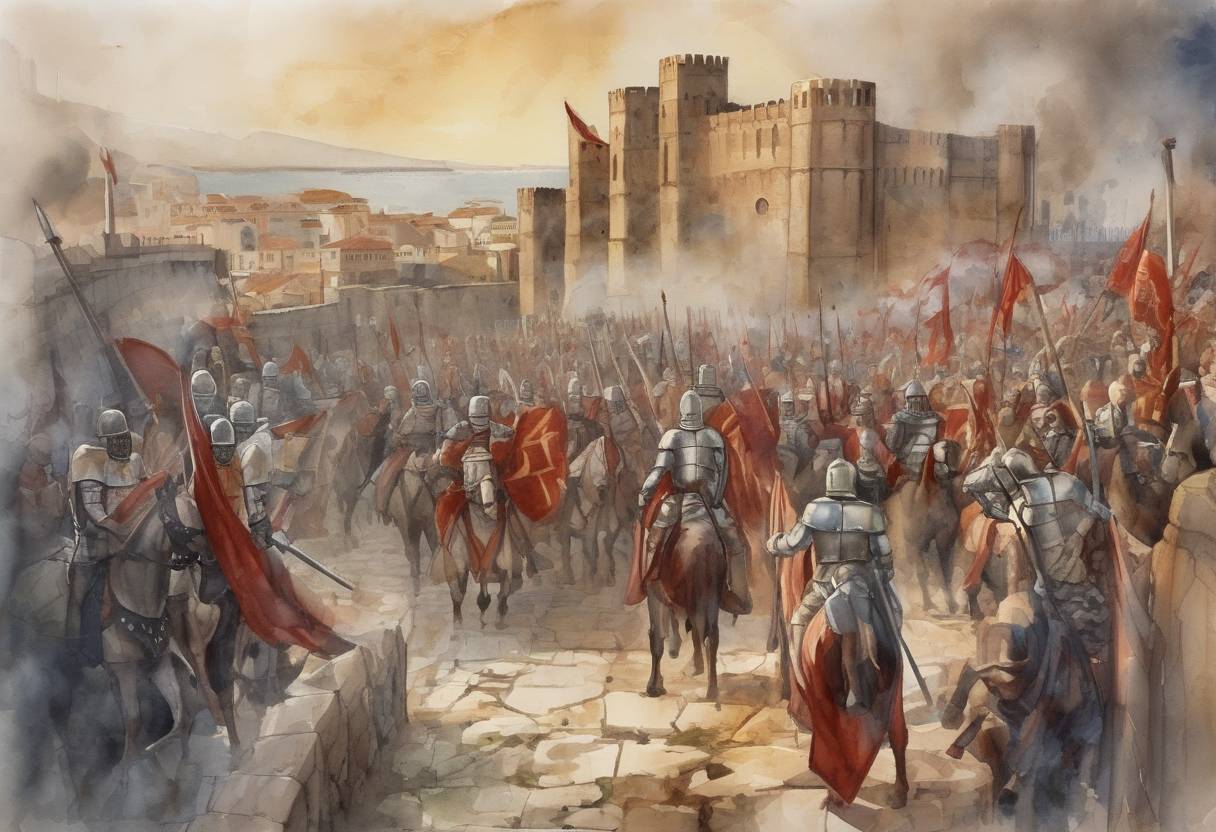
The Siege of Nicaea, a pivotal event during the First Crusade, concluded on July 1, 1097, with the surrender of the city to the Crusaders. This event marked a significant early victory for the Crusaders in their campaign to reclaim the Holy Land from Muslim control.
The First Crusade was initiated in 1095 by Pope Urban II, who called upon Western European Christians to aid the Byzantine Empire against the advancing Seljuk Turks and to reclaim Jerusalem. The response was overwhelming, leading to the mobilization of a large force of knights and soldiers from various European regions.
Nicaea, located in modern-day Turkey, was a strategic city for the Seljuk Turks and served as the capital of the Sultanate of Rum. Its capture was crucial for the Crusaders as it lay on the path to Jerusalem and was a significant obstacle to their progress.
The siege began in May 1097, with the Crusader forces, estimated to be around 60,000 strong, encircling the city. The Crusaders were joined by Byzantine forces led by General Manuel Boutoumites and Admiral Tatikios, who provided naval support on Lake Askania, adjacent to Nicaea.
The siege was characterized by a series of assaults and the construction of siege engines. The Crusaders faced challenges due to the city’s formidable defenses, including strong walls and a well-supplied garrison. However, the combined pressure from land and lake eventually weakened the city’s resolve.
On July 1, 1097, the city of Nicaea surrendered, but not directly to the Crusaders. The Byzantine Emperor Alexios I Komnenos had negotiated a secret agreement with the city’s defenders, allowing the Byzantines to take control of Nicaea peacefully. This arrangement ensured that the city was returned to Byzantine control, rather than being sacked by the Crusaders.
The surrender of Nicaea was a significant morale booster for the Crusaders and marked the first major victory of the First Crusade. It also highlighted the complex relationship between the Crusaders and the Byzantine Empire, as the latter sought to regain lost territories while the former pursued their religious and military objectives.
The capture of Nicaea set the stage for further Crusader advances into Asia Minor and ultimately towards Jerusalem. It demonstrated the effectiveness of the Crusader-Byzantine alliance, albeit with underlying tensions due to differing goals. The event also underscored the strategic importance of cooperation between land and naval forces in medieval warfare.
The Siege of Nicaea is remembered as a crucial early success in the First Crusade, contributing to the momentum that would eventually lead to the capture of Jerusalem in 1099. It remains a significant example of medieval siege warfare and the complex political dynamics of the Crusades.
Source: en.wikipedia.org