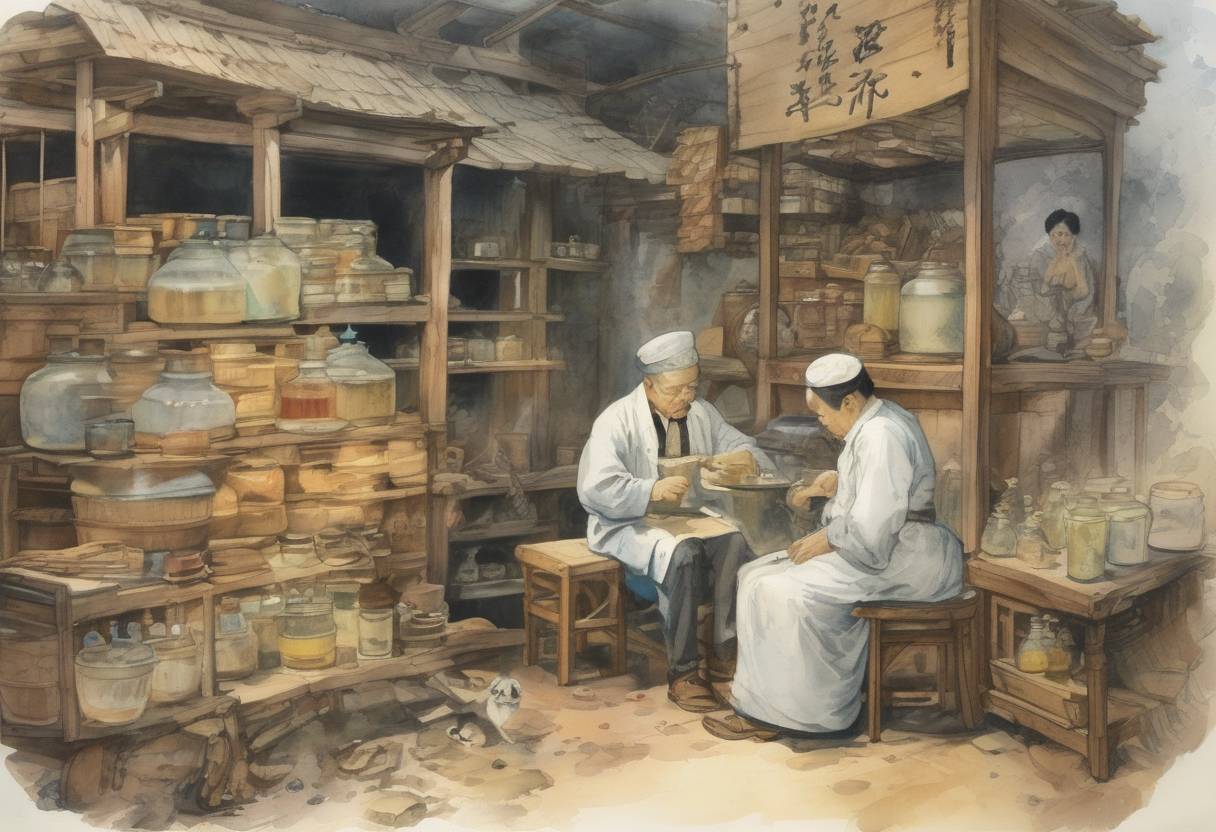
Discovery of the Bubonic Plague Bacterium: Kitasato Shibasaburō and Alexandre Yersin
On August 25, 1894, two prominent bacteriologists, Kitasato Shibasaburō and Alexandre Yersin, independently identified the bacterium responsible for the bubonic plague, later named Yersinia pestis. This discovery was pivotal in understanding and controlling one of history’s most devastating diseases.
Context and Background
The bubonic plague, known for causing the Black Death in the 14th century, had re-emerged in the late 19th century, causing significant concern globally. The outbreak in Hong Kong in 1894 prompted urgent scientific investigation to identify the causative agent of the disease.
Kitasato Shibasaburō
- Background: Kitasato Shibasaburō was a Japanese physician and bacteriologist, renowned for his work on tetanus and diphtheria. He had trained under Robert Koch, a leading figure in bacteriology.
- Discovery: Kitasato arrived in Hong Kong in June 1894. He successfully isolated the bacterium from patients’ blood and buboes (swollen lymph nodes), identifying it as the causative agent of the plague.
- Methodology: His approach involved culturing the bacterium and demonstrating its presence in infected individuals, which was consistent with Koch’s postulates for establishing a causative relationship between a microbe and a disease.
Alexandre Yersin
- Background: Alexandre Yersin was a Swiss-French physician and bacteriologist, who had previously worked with Louis Pasteur and Émile Roux.
- Discovery: Yersin arrived in Hong Kong shortly after Kitasato. He independently isolated the bacterium from buboes and confirmed its role in the disease.
- Methodology: Yersin’s work was notable for his detailed observations and experiments, which included demonstrating the bacterium’s presence in rats, linking the disease to rodent populations.
Significance and Aftermath
- Naming: The bacterium was later named Yersinia pestis in honor of Yersin, recognizing his contributions to the discovery.
- Impact: The identification of Yersinia pestis was crucial for developing strategies to combat the plague, including improved sanitation, pest control, and eventually, the development of vaccines and antibiotics.
- Legacy: Both Kitasato and Yersin are celebrated for their contributions to bacteriology and public health. Their work laid the foundation for modern infectious disease research and control.
The simultaneous discovery by Kitasato and Yersin highlights the collaborative and competitive nature of scientific research during this period, as well as the global effort to address public health crises.