The Battle of Dara: A Decisive Byzantine Victory
530 · Dara, Byzantine Empire
The Battle of Dara concludes with a decisive victory for the Byzantine Empire over the Sassanid Empire.
September 22, 0530
The Battle of Satala takes place, where the Byzantine forces under Sittas defeat the Sassanid Persians.
Satala, Byzantine Empire | Byzantine Army
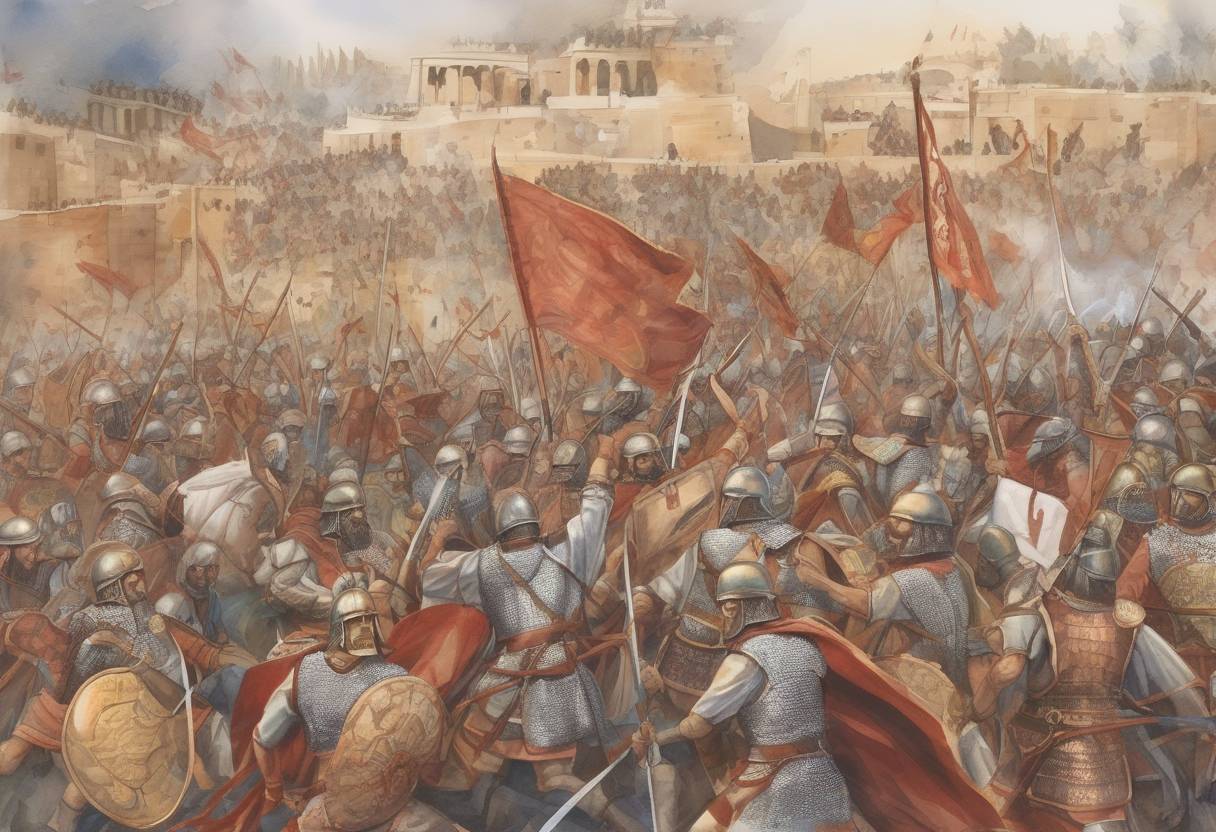
The Battle of Satala, fought on September 22, 530, was a significant military engagement between the Byzantine Empire and the Sassanid Persian Empire. This battle was part of the larger conflict known as the Iberian War, which was fought over control of the Caucasus region.
The Iberian War (526–532) was primarily a struggle for influence over the Kingdom of Iberia (modern-day Georgia), a strategically important region situated between the Byzantine and Sassanid empires. The conflict was fueled by both empires’ desire to expand their territories and influence in the Caucasus.
By 530, the war had seen several engagements, with both sides experiencing victories and setbacks. The Byzantine Emperor Justinian I was determined to secure a decisive victory to strengthen his position in the region.
Sittas: A prominent Byzantine general, Sittas was a trusted military leader under Emperor Justinian I. He played a crucial role in the Byzantine military campaigns during the Iberian War.
Sassanid Forces: The Sassanid army was a formidable opponent, known for its heavy cavalry and disciplined infantry. The exact identity of the Sassanid commander at Satala is not well-documented.
The battle took place near the town of Satala, located in what is now northeastern Turkey. Sittas, leading the Byzantine forces, employed strategic maneuvers to confront the Sassanid army. The Byzantines, leveraging their knowledge of the terrain and employing effective military tactics, managed to outflank and surprise the Sassanid forces.
The Byzantine army’s success at Satala was attributed to Sittas’s leadership and the disciplined execution of battle plans by his troops. The Sassanids, despite their strength, were unable to withstand the Byzantine assault and ultimately suffered a defeat.
The victory at Satala was a significant boost for the Byzantine Empire in the Iberian War. It demonstrated the effectiveness of Byzantine military strategy and bolstered the morale of Justinian’s forces. The defeat weakened the Sassanid position in the region, although the war continued for a few more years until the signing of the “Eternal Peace” in 532.
The battle also highlighted the importance of skilled leadership and strategic planning in military engagements. Sittas’s success at Satala cemented his reputation as a capable general and contributed to the Byzantine Empire’s military prestige during Justinian’s reign.
In the broader context of Byzantine-Sassanid relations, the Battle of Satala was one of many conflicts that characterized the long-standing rivalry between the two empires, a rivalry that would continue to shape the political landscape of the region for centuries.
Source: en.wikipedia.org