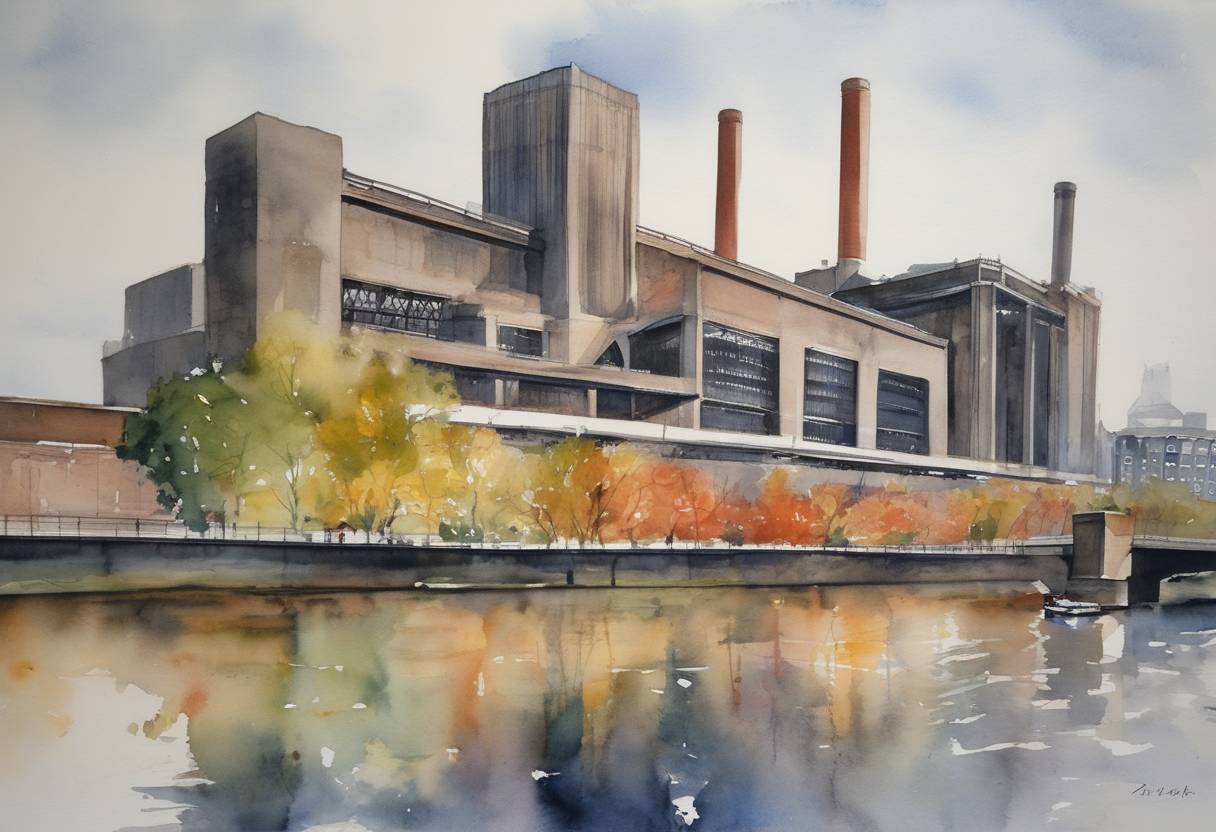
Opening of Tate Modern - May 12, 2000
The Tate Modern art gallery officially opened its doors on May 12, 2000, in London. Housed in the repurposed Bankside Power Station, the gallery quickly became one of the largest and most significant museums of modern and contemporary art in the world.
Historical Context
Bankside Power Station: Constructed between 1947 and 1963, the Bankside Power Station was initially a coal-fired power plant designed by Sir Giles Gilbert Scott, who was also known for designing the Battersea Power Station and the iconic red telephone box. The power station ceased operations in 1981, leaving the imposing brick building vacant on the south bank of the Thames.
Selection of Location: In the late 1990s, the Tate Gallery group, which already oversaw the original Tate Gallery (now Tate Britain) and Tate Liverpool, sought to expand its collection to include modern and contemporary works. The location was chosen for its central position in London and the availability of a large industrial structure suitable for transformative reuse.
Design by Herzog & de Meuron: In 1995, the Swiss architectural duo Jacques Herzog and Pierre de Meuron were selected to convert the power station into a modern art gallery. Their innovative design retained the building’s original industrial character while adding new spaces, such as the striking light beam roof and the colossal Turbine Hall, which stretches the entire length of the building.
Turbine Hall: The central feature of Tate Modern, the Turbine Hall, measures 3,400 square meters and has since hosted a series of monumental art installations commissioned from artists worldwide. This space became iconic for its ambitious temporary exhibitions, which have featured works by artists such as Louise Bourgeois, Olafur Eliasson, and Ai Weiwei.
Impact and Significance
Art Collections: Upon opening, Tate Modern curated collections featuring significant modern works by masters like Pablo Picasso, Andy Warhol, Salvador Dalí, and Jackson Pollock. The museum continues to expand its collection with contemporary pieces, always striving to reflect the diversity of modern artistic expression.
Cultural Influence: Tate Modern altered the art landscape in London and beyond, becoming a major cultural attraction and a catalyst for revitalizing the surrounding South Bank area. Quickly establishing itself as an essential stop for tourists and art enthusiasts, it has consistently ranked among the most visited attractions in the United Kingdom.
Expansion: Due to its success, the museum underwent expansion with the completion of the Blavatnik Building (initially called the Switch House) in 2016, further bolstering its exhibition spaces and facilities to host a broader array of artworks and performances.
The Tate Modern’s inception marked a pivotal moment in London’s cultural history, celebrating a blend of historical architecture and cutting-edge art. It continues to influence the global art scene with forward-thinking exhibitions and a commitment to diversity in art representation.