Battle of Roosebeke: November 27, 1382
1382 · Roosebeke, Belgium
The Battle of Roosebeke is fought, with the French army defeating the forces of the Flemish rebels.
July 1, 1302
The army of the French king, Philip IV, begins the siege of Courtrai, leading up to the Battle of the Golden Spurs later that month. This is a key conflict in the Franco-Flemish War.
Courtrai, Modern-day Belgium | French Army
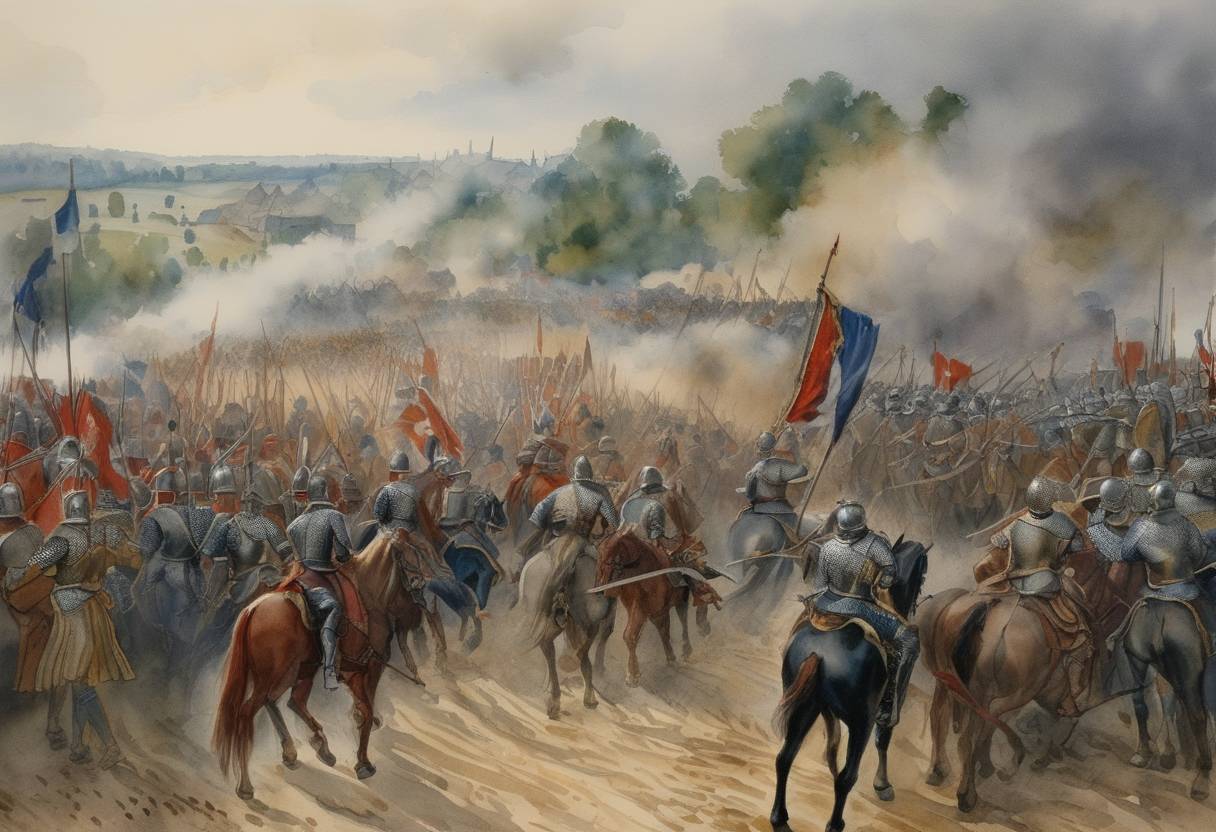
On July 1, 1302, the army of French King Philip IV began its siege of Courtrai, a significant military action during the Franco-Flemish War (1297–1305). This conflict arose from tensions between the Kingdom of France and the County of Flanders, primarily driven by economic disputes and territorial ambitions.
Tensions in Flanders: Flanders, a prosperous region due to its cloth industry, found itself politically divided. The local aristocracy and wealthy urban merchant class often clashed with the French Crown’s interests. These internal and external frictions escalated into open hostilities.
King Philip IV’s Ambitions: Known as Philip the Fair, the French king sought to exert control over the affluent Flanders region. His centralizing policies and fiscal demands put him at odds with the Flemish leaders, causing a backlash.
Battle of the Golden Spurs: Anticipating the major conflict later in July, this siege set the stage for the famous Battle of the Golden Spurs, which would occur on July 11, 1302.
Flemish Uprising: Prior to the siege, a significant rebellion by the Flemish citizens against French occupation marked a pivotal moment. The city of Bruges, under the leadership of Pieter de Coninck and Jan Breydel, witnessed the notorious “Matins of Bruges,” an uprising against the French garrison.
Strategic Importance: Courtrai (modern-day Kortrijk) was crucial due to its position and symbolic value. Control over the city was vital for asserting dominance in the region.
French Preparations: Philip IV’s army, composed primarily of knights and heavily armed infantry, initiated the siege as part of their broader campaign to quell the Flemish rebellion.
Prelude to the Battle: The siege of Courtrai heightened tensions and directly led to the critical confrontation at the Battle of the Golden Spurs. The unexpected Flemish victory at this battle had enduring impacts on both the regional balance of power and medieval warfare.
Symbol of Flemish Resistance: Courtrai’s siege and subsequent events became emblematic of the Flemish struggle for autonomy against French dominance. The outcome invigorated nationalist sentiments and fostered a sense of identity among the Flemish people.
In summary, the siege of Courtrai marked a defining moment in the escalating conflict between France and Flanders, directly contributing to the legendary military encounter soon to follow.
Source: en.wikipedia.org