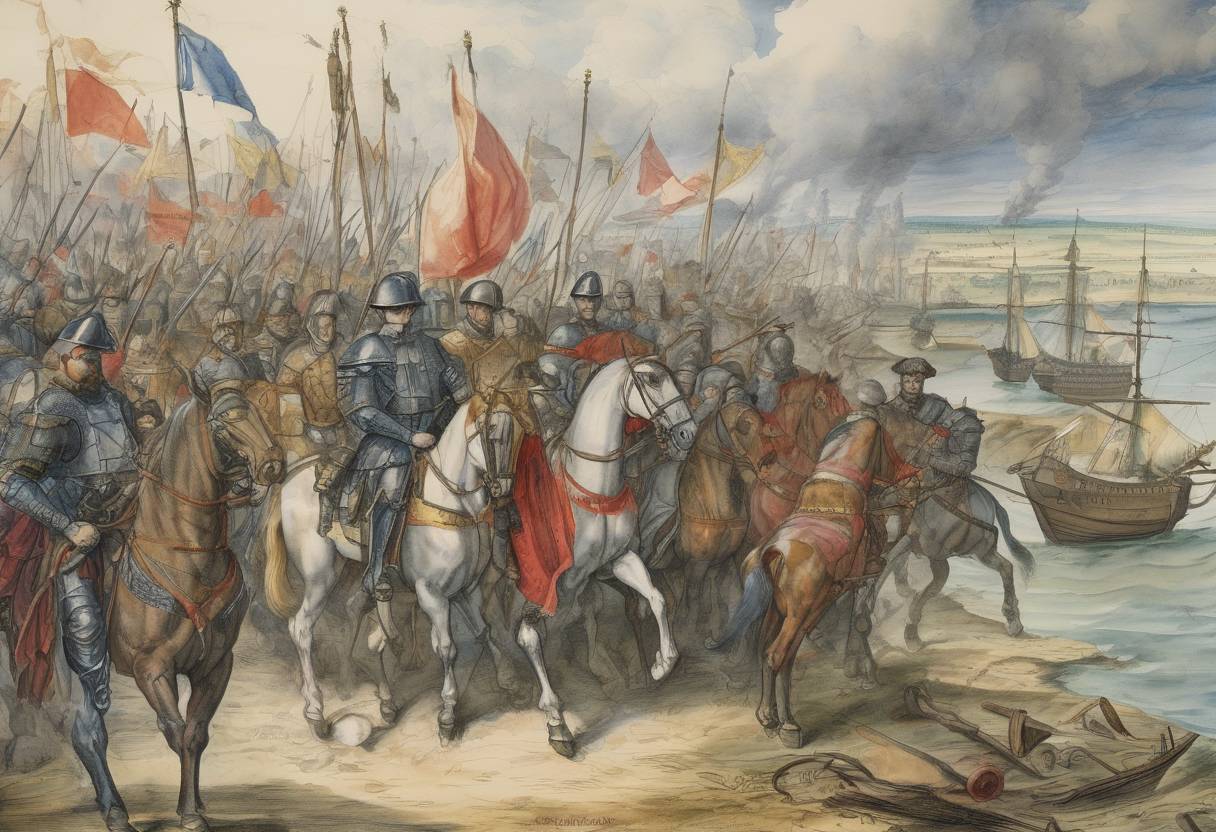
On January 7, 1558, French forces led by Francis, Duke of Guise, successfully captured Calais, marking the end of England’s territorial claims in mainland France. This event was a significant turning point in the long-standing conflict between England and France, known as the Hundred Years’ War, which had seen intermittent hostilities since the mid-14th century.
Background
- Historical Context: Calais had been under English control since 1347, following its capture by King Edward III during the Hundred Years’ War. It served as a crucial English foothold on the continent, facilitating trade and military operations.
- Political Climate: By the mid-16th century, the balance of power in Europe was shifting. The marriage of Mary I of England to Philip II of Spain had drawn England into the Habsburg-Valois conflict, aligning it against France.
- Strategic Importance: Calais was not only a symbol of English prestige but also a strategic military and economic asset. Its loss would significantly weaken England’s influence in European affairs.
The Siege
- French Strategy: Under the command of Francis, Duke of Guise, the French launched a surprise winter campaign against Calais, exploiting the element of surprise and the weakened state of the English garrison.
- Military Tactics: The French forces employed a combination of artillery bombardment and infantry assaults. The English defenses, unprepared for a winter siege, quickly crumbled under the pressure.
- Outcome: After a brief but intense siege, the English garrison surrendered on January 7, 1558. The capture of Calais was swift, taking only a few weeks from the initial French advance.
Aftermath and Significance
- End of English Rule in France: The fall of Calais marked the end of nearly two centuries of English territorial claims in France, effectively concluding the territorial disputes that had persisted since the Hundred Years’ War.
- Impact on England: The loss of Calais was a significant blow to English pride and influence. Queen Mary I reportedly lamented that when she died, “Calais” would be found engraved on her heart.
- French Consolidation: For France, the recapture of Calais was a triumph, consolidating its control over its northern territories and enhancing its national prestige.
Broader Historical Implications
- Shift in Power Dynamics: The capture of Calais signaled a shift in the power dynamics of Europe, with France emerging stronger and England turning its focus towards internal consolidation and maritime expansion.
- Prelude to Future Conflicts: The loss of Calais did not end Anglo-French rivalry but rather shifted the nature of their conflicts, setting the stage for future colonial and naval competitions.
The capture of Calais remains a pivotal moment in European history, illustrating the ebb and flow of territorial control and the enduring legacy of medieval conflicts into the early modern period.