Johann Sebastian Bach and the Brandenburg Concertos
1721 · Cöthen, Germany
Johann Sebastian Bach dedicated the Brandenburg Concertos to Christian Ludwig, Margrave of Brandenburg-Schwedt.
March 31, 1717
The premiere of Johann Sebastian Bach's 'St John Passion' took place.
Leipzig, Germany | St. Thomas Church
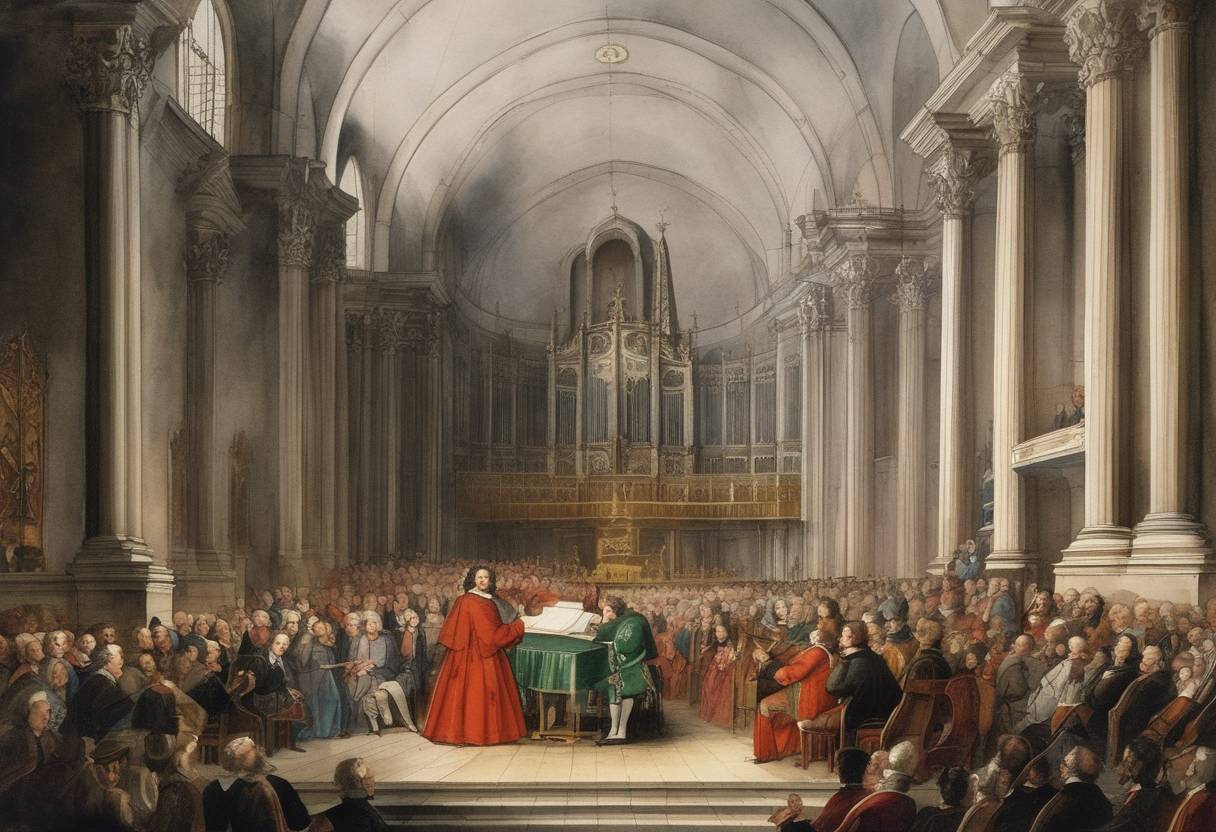
Johann Sebastian Bach’s ‘St John Passion’ (Johannes-Passion), BWV 245, is a pivotal work in the history of choral and sacred music. However, the premiere of this significant composition was not on March 31, 1717, as the piece was first performed on April 7, 1724, at the St. Nicholas Church in Leipzig, Germany.
Bach composed the ‘St John Passion’ during his first year as the Thomaskantor in Leipzig, a position he took up in 1723. The work was part of Bach’s duties to provide music for church services in both the St. Thomas and St. Nicholas churches. The ‘St John Passion’ was initially performed as part of the Vespers service on Good Friday.
The piece, based on the Passion narrative from the Gospel of John, is one of Bach’s two surviving Passion settings, the other being the ‘St Matthew Passion.’ It demonstrates Bach’s profound ability to blend choral, solo, and orchestral components to convey the dramatic and emotional story of Jesus Christ’s crucifixion.
The ‘St John Passion’ is structured in a series of chorales, arias, recitatives, and choruses with a strong emphasis on the biblical narration of the Passion story. Bach uniquely combines German Lutheran chorales with more complex baroque musical elements, enhancing both the musical and narrative impact.
The work is noted for its emotional depth, particularly in its portrayal of the crowd scenes and the introspective arias that reflect the spiritual and moral lessons of the Passion story. Bach’s innovative approach to choral music in this piece set a new precedent for church compositions at the time.
The premiere of the ‘St John Passion’ marked a significant event in Bach’s career and the broader landscape of sacred music. It demonstrated his capability as a composer who could vividly depict biblical stories and emotions through music. Despite its initial performance in 1724, Bach revised the work several times, indicating its continuous importance to him.
The piece remains a cornerstone of choral repertoire and has influenced countless composers and musicians. Its rich texture, emotive power, and masterful use of musical narrative continue to captivate audiences three centuries later, ensuring its lasting legacy as one of Bach’s most profound creations.
Source: www.bach-cantatas.com