The Release of *The Freewheelin' Bob Dylan*
1963 · New York City, United States
The Freewheelin' Bob Dylan, the second studio album by American singer-songwriter Bob Dylan, is released, featuring the hit song 'Blowin' in the Wind'.
July 25, 1965
Bob Dylan goes electric as he plugs in his electric guitar for his performance at the Newport Folk Festival, marking a significant change in his musical direction.
Newport, USA | Newport Folk Festival
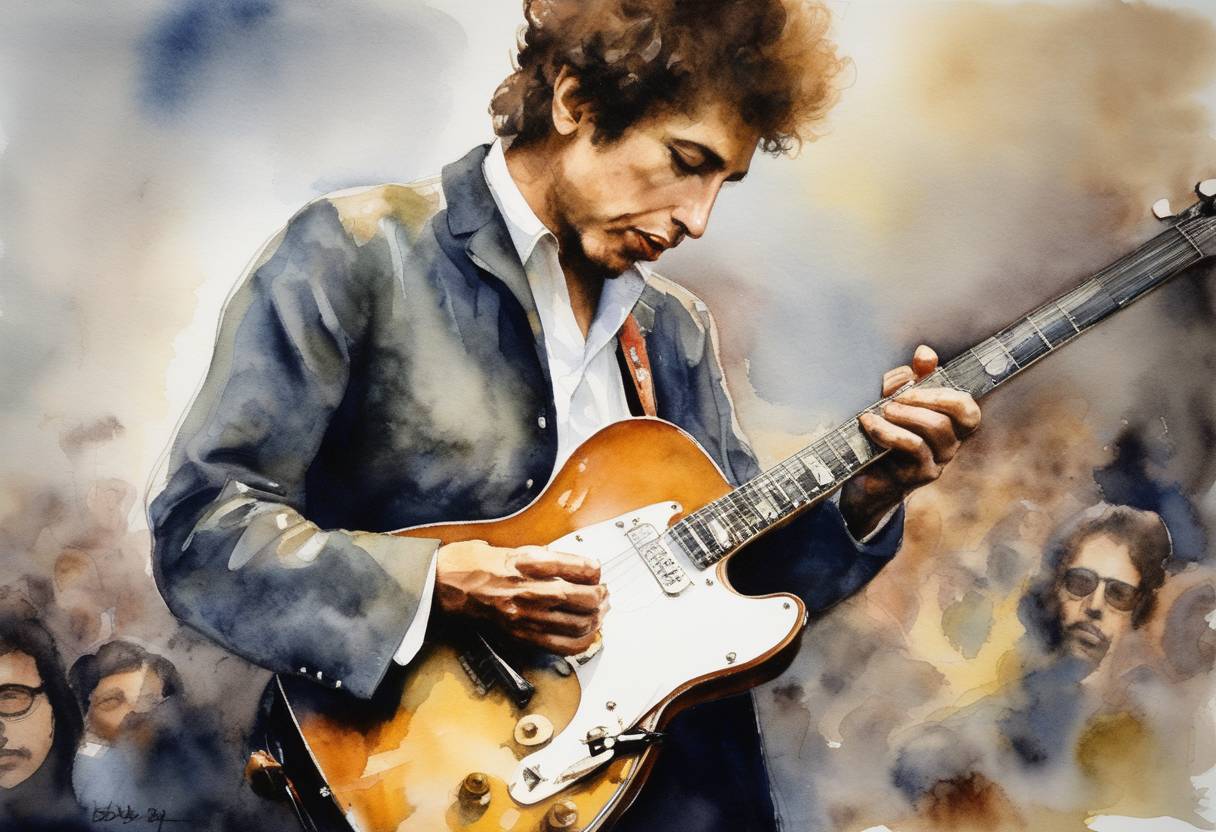
On July 25, 1965, Bob Dylan took the stage at the Newport Folk Festival and delivered a performance that would come to be seen as a defining moment in music history. This event marked Dylan’s first public performance with an electric guitar, symbolizing his shift from traditional folk music to a more rock-oriented sound. The decision to go electric was both controversial and transformative, signaling a new direction not only for Dylan’s career but also for the evolution of popular music in the 1960s.
The Newport Folk Festival, held in Newport, Rhode Island, had been a bastion of traditional folk music since its inception in 1959. It celebrated acoustic sounds and was a key venue for artists who were rooted in the folk movement. Bob Dylan himself had performed at the festival in previous years with great acclaim, solidifying his reputation as a leading figure in folk music.
Dylan’s set on July 25, 1965, lasted approximately 15 minutes and consisted of three songs: “Maggie’s Farm,” “Like a Rolling Stone,” and “Phantom Engineer” (an early version of “It Takes a Lot to Laugh, It Takes a Train to Cry”). He performed with a band that included members of the Paul Butterfield Blues Band and guitarist Mike Bloomfield. The set startled the audience due to the unexpected volume and energy, contrasting sharply with the acoustic performances typically associated with the festival.
The reaction from the audience was mixed. While some attendees appreciated Dylan’s bold move, others were dismayed, reportedly booing during or after the performance. The boos have been debated among historians and music critics, attributed variously to dissatisfaction with the sound quality, dissatisfaction from traditional folk enthusiasts, or a culmination of both.
Despite the controversy, Dylan’s electric performance was a watershed moment. It symbolized the merging of folk music with rock and roll, paving the way for future artistic experimentation within the genre. The event marked a pivotal turning point in Dylan’s career, showcasing his willingness to defy convention and signaling a larger shift in the music industry as artists began to blend genres and embrace new forms of expression.
Following the Newport performance, Dylan continued to embrace electric instrumentation on his recordings, most notably on the albums “Highway 61 Revisited” and “Blonde on Blonde.” This transition broadened his audience and influenced countless musicians across genres. The event underscored Dylan’s status as a musical innovator and exemplified the cultural shifts occurring during the 1960s.
The significance of Dylan’s 1965 Newport Folk Festival performance endures in musical lore, representing a moment when musical boundaries were pushed and history was made in the evolution of modern music.
Source: en.wikipedia.org